How To Get Around Vietnam: Detailed Transport Options
Planning to travel across Vietnam from north to south, but not sure how to get around? From quick domestic flights and scenic train rides to overnight buses, boats, taxis and even scooters, Vietnam offers many ways to move between its contrasting landscapes. This guide will help you choose the right transport options for your route, budget and travel style, so you can enjoy the journey as much as the destination.
Written by Oliver PHUNG (Tour Guide)
Updated on Jul 13, 2026
0 comment
Oliver Phung is a Northern Vietnam-based tour guide and blogger. His favorite topics to write about include cuisine, culture, travel, and under-the-radar experiences. Oliver possesses a deep, detailed understanding of the region, from the indigenous culture of the Hmong in the Northwest to the highland lifestyle of the Tay in the Northeast. Whether he is exploring ancient architecture or geological landscapes, he is always eager to share his insights with his readers.
Beyond his work at Kampá Tour, he produces specialized travel content on platforms such as Reddit, Instagram, LinkedIn, and various other publications.
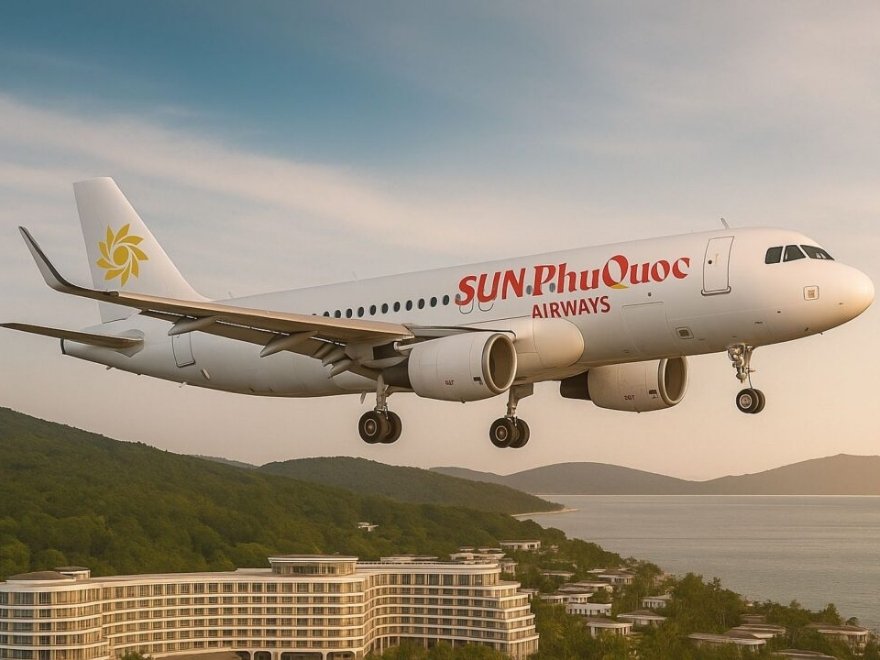
For long distances in Vietnam, flying often saves the trip. A route that looks simple on a map can take a full day by road or rail, especially when you move between the North, Central Vietnam and the South. Domestic flights link the main travel hubs, including Hanoi, Da Nang, Ho Chi Minh City and Phu Quoc. Most flights take around 1 hour 15 minutes to 2 hours, which is why we often recommend them for travelers with limited time.
As a rough guide, a domestic economy ticket usually costs between USD 100 and USD 200 per person. The final fare depends on the route, season, how early you book and the time of day. Checked luggage of around 20 to 25 kg may be included, but never assume it is: low-cost fares can be attractive at first glance, then less so once luggage is added.
Main domestic airlines in Vietnam
Vietnam Airlines is the national carrier and the most reassuring choice when reliability, service and smoother airport handling matter more than the lowest fare.
Vietjet Air is the best-known low-cost airline. It can be good value, but be careful with baggage rules, 7 kg hand-luggage limits on some fares, and possible schedule changes.
Bamboo Airways and Vietravel Airlines can be good alternatives on routes where their schedules work well. Always check the current route and timing before choosing.
>>> Oliver's local tip:
Give yourself at least two hours at the airport for domestic flights. This is especially important at Tan Son Nhat Airport in Ho Chi Minh City, where traffic and security checks can quickly eat into your margin.
When possible, take an early morning flight. Delays tend to build up later in the day as aircraft rotate through several routes.
Book through the airline website or a reliable platform so baggage conditions are clear before payment.
From the city center, the ride to the airport often takes 45 minutes to one hour. Add more time during rush hour or heavy rain.
For a domestic flight before an international departure, keep at least a five-hour buffer. It may feel long, but it is safer than missing a long-haul flight.
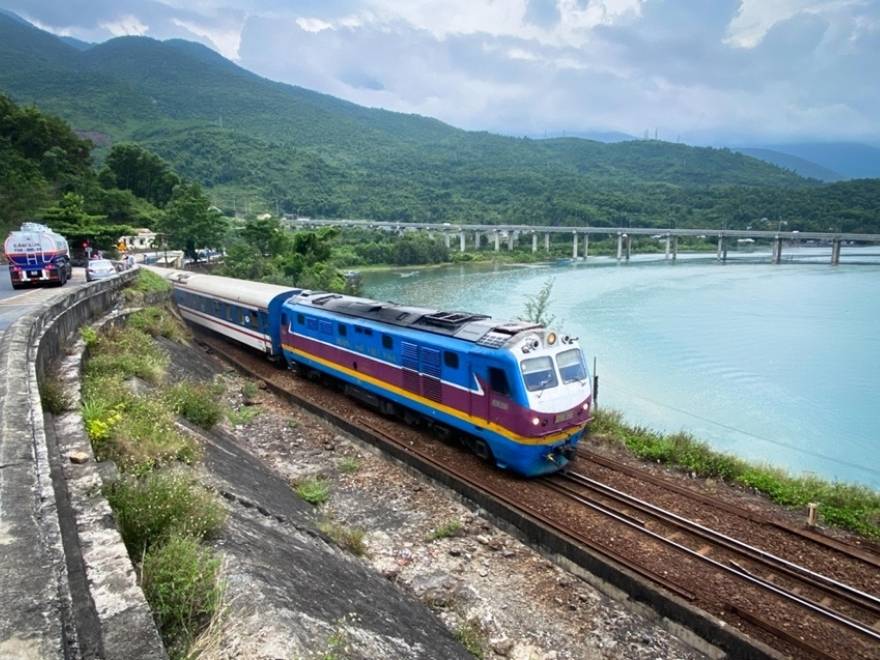
The train is rarely the fastest way to travel in Vietnam. That is not really the point. It is for travelers who enjoy slower journeys, changing landscapes and a more local rhythm. From the window, you see rice fields, coastal cliffs, small stations and everyday scenes that simply disappear when you fly.
The main railway line, often called the Reunification Line, runs for more than 1,700 km between Hanoi and Ho Chi Minh City. Along the way, it serves useful stops such as Ninh Binh, Dong Hoi, Hue, Da Nang and Nha Trang.
Main train routes to know
SE1/SE2, SE3/SE4, SE5/SE6, SE7/SE8, SE9/SE10: the main north-south trains on the Reunification Line, with both daytime and overnight options.
SE19/SE20: a good option between Hanoi and Da Nang if you want a more comfortable long-distance journey.
QB1/QB2: useful for the Hanoi – Dong Hoi route, especially if you plan to visit Phong Nha or Quang Binh.
NA1/NA2: trains between Hanoi and Vinh, suitable for shorter regional trips.
Hanoi – Lao Cai: the classic overnight route for travelers continuing to Sapa.
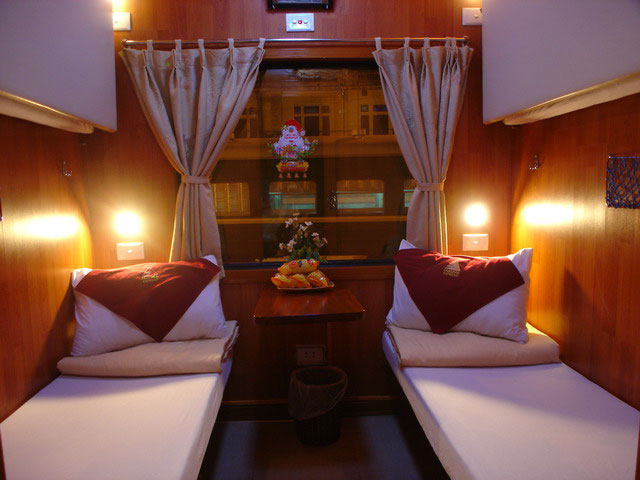
For long journeys, choose a soft sleeper cabin if your budget allows. These cabins usually have four air-conditioned berths and bedding, which makes a real difference overnight. On some routes, private carriages such as Livitrans or Violette Express offer a more polished experience while still running on national trains.
The most beautiful section is often the short ride between Hue and Da Nang. The train crosses the Hai Van Pass, with mountains on one side and the sea on the other. For the best view, sit on the right side when traveling south from Hue to Da Nang, and on the left side when traveling north.
Book early for soft sleepers, especially around holidays and on popular routes such as Hanoi – Hue, Hanoi – Da Nang and Hanoi – Lao Cai.
If you book from abroad, use the official railway website or reliable platforms such as 12Go Asia.
Vietnamese trains are lively: people board and leave at small stations, vendors pass through, and cabins are not silent hotel rooms. For many travelers, that is exactly the charm.
Buses are still the budget backbone of travel in Vietnam. They are useful when a flight would be unnecessary, when a train does not fit your timing, or when you need to reach towns that are not well served by rail. The choice is wide: local buses, sleeper buses, cabin buses, limousine vans and tourist buses all have their place.
Local buses
Local buses are the cheapest option, often around 6,000 to 30,000 VND. They work well inside cities and toward suburban areas, but they are not always simple for first-time visitors. Stops can be hard to identify, routes are not always clear in English, and buses can be crowded during rush hour.
Free buses in Ho Chi Minh City in 2026
>>> Good to know:
From July 1 to December 31, 2026, Ho Chi Minh City applies a full fare-support policy on 134 urban bus routes. For curious travelers, this makes public buses more tempting, especially for daytime rides when you are not carrying much luggage.
July 1 – September 30, 2026: passengers can board covered city buses free of charge without mandatory identification.
October 1 – December 31, 2026: the free-fare policy continues, but usage may be recorded or verified through a bank card, e-wallet, QR code, VNeID, Citizen ID or the MultiGo app.
For foreign travelers, a bank card or onboard QR-code option is usually the easiest solution if identification is required.
The MultiGo app can help you check routes, nearby stops and schedules in real time.
Free buses in Hanoi from July 2026
>>> Good to know:
From July 1, 2026 to June 30, 2027, Hanoi waives bus fares for passengers traveling within or from the Ring Road 1 area, except for buses operated for tourism business purposes.
This policy is designed to support people affected by Hanoi’s upcoming low-emission zone in the city center. By making buses free in the first stage, the city aims to reduce travel costs, encourage people to use public transport and make the transition away from fossil-fuel vehicles easier.
For visitors, this may be useful for short daytime rides around central Hanoi, especially near Hoan Kiem Lake, the Old Quarter and the French Quarter. Still, for airport transfers, late-night rides or trips with luggage, taxis or ride-hailing apps remain more convenient.
Sleeper buses
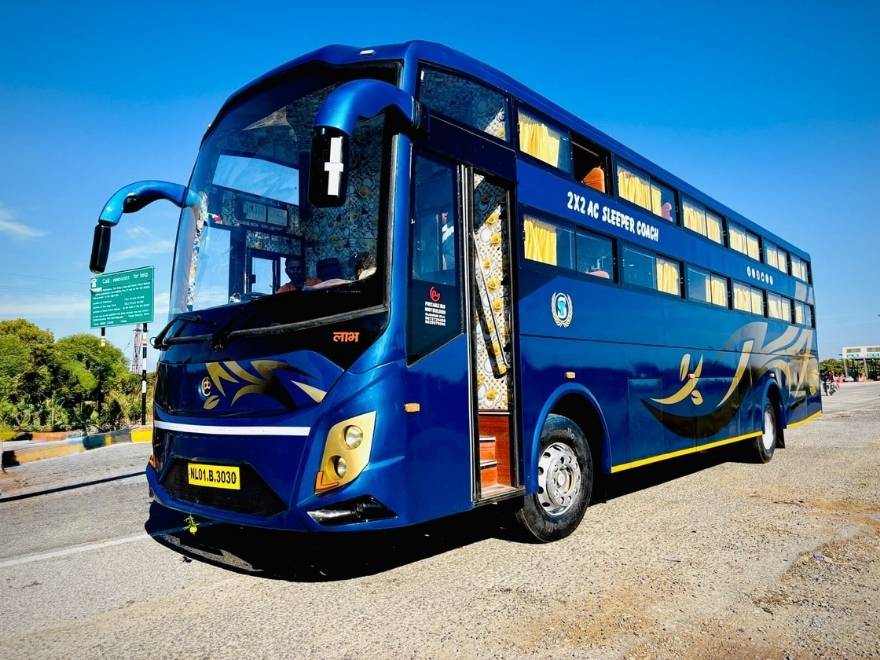
Sleeper buses connect many major cities at low cost. Companies such as Phuong Trang (Futa Bus), The Sinh Tourist and Hanh Cafe are familiar names for travelers. They are not luxurious, but they do the job on long routes if you choose carefully.
One thing to know before booking: standard sleeper buses are built for the average local height. If you are taller than 1.8 m, the fixed footwells can feel cramped. In that case, look for a cabin bus or bus cung điện, where each berth is more private and usually comes with a curtain, charging port and flatter bed.
VIP sleeper bus in Vietnam
VIP and limousine buses
On shorter regional routes, a limousine van is often worth the small extra cost. You usually get fewer passengers, better seats, air conditioning, charging ports and sometimes hotel pickup. They are convenient for routes such as Hanoi – Ninh Binh, Hanoi – Ha Long, Hanoi – Sapa, Da Nang – Hoi An and Ho Chi Minh City – Mekong Delta.
Hop On Hop Off buses
Hop On Hop Off buses operate in cities such as Hanoi and Ho Chi Minh City. They are not meant for daily transport, but they can be handy if you want a simple overview of the main landmarks without planning every stop yourself.
4. Taking a taxi or motorbike taxi
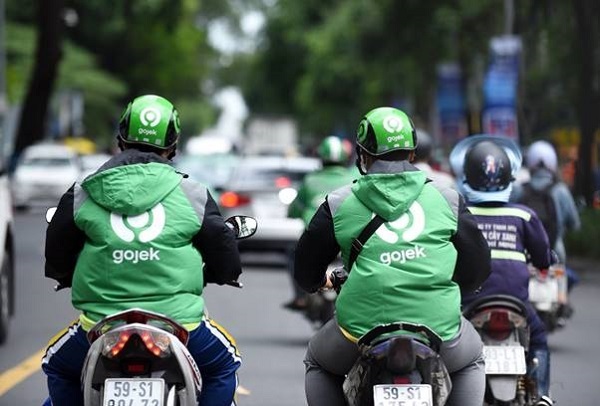
In Vietnamese cities, taxis and motorbike taxis are often easier than public transport. A motorbike taxi can slip through traffic and save time on short rides. A car taxi is better when it rains, when you have luggage, when you travel with children, or when the distance is longer.
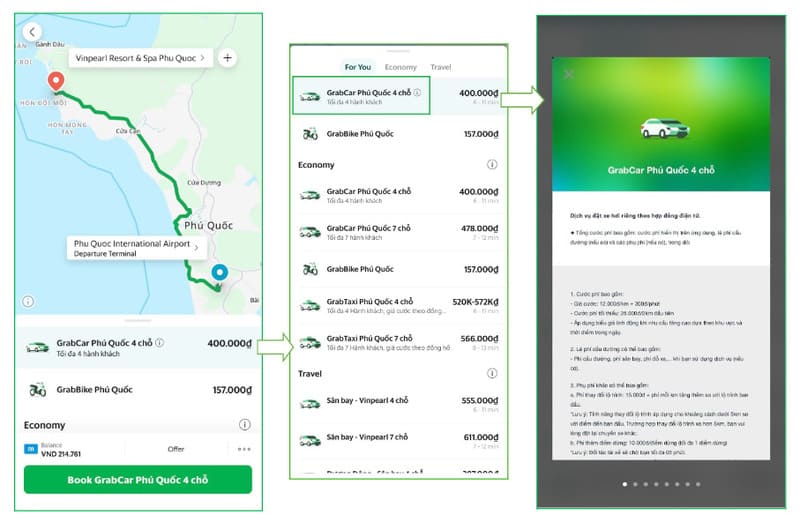
Ride-hailing apps such as Grab, Be and Xanh SM are popular in Vietnam
The most practical transport apps
Grab: the most widely used app, with motorbike taxis, cars and delivery services. It is often the easiest first app to install.
Be: a Vietnamese ride-hailing app with clear pricing and both car and motorbike options.
Xanh SM: a Vietnamese electric taxi brand. The cars are usually quiet, clean and comfortable, which makes them a good choice for airport transfers, families and travelers with luggage.
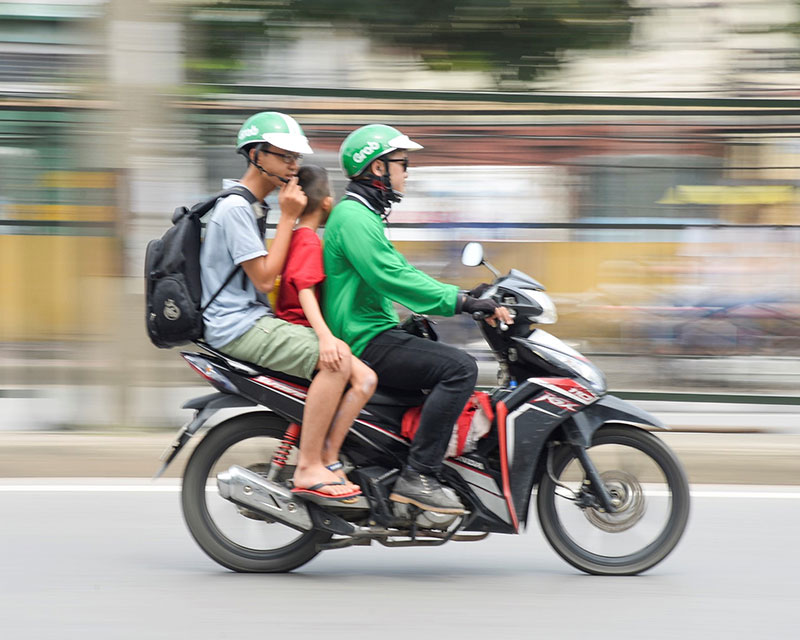
Helmets are mandatory. Drivers normally provide one, but make sure it fits before leaving.
When using an app, always check the license plate before getting on.
If you take a traditional street-side xe om, agree on the total price in Vietnamese dong before the ride starts.
Skip motorbike taxis if you have large luggage, travel with young children, feel nervous in heavy traffic or move around during heavy rain.
Getting around by Grab motorcycle taxi
5. Getting around by bicycle or cyclo
Not every journey in Vietnam needs an engine. In the right place, a bicycle or cyclo gives you a better rhythm: slow enough to notice daily life, but still easy enough to explore without rushing.
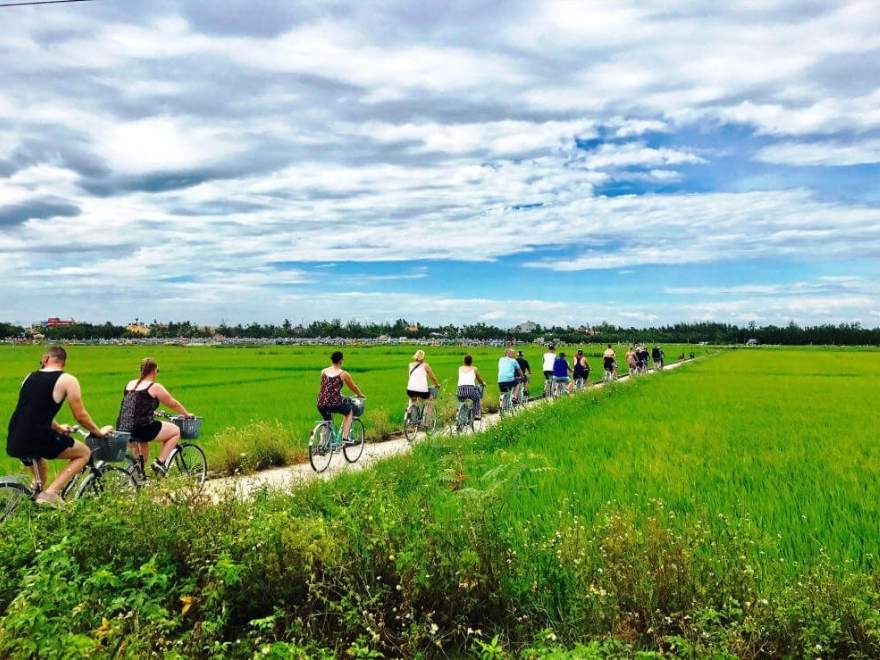
Cycling in the countryside
Bicycles are especially enjoyable in Hoi An, Ninh Binh, Mai Chau and the Mekong Delta. Small roads, village lanes and riverside paths make cycling part of the experience, not just a way to move around. Many hotels and homestays provide bicycles for free or for a small fee, often around 30,000 VND per day.
E-bikes are a good alternative in hot weather or when you want to cover more ground. Before leaving, check the brakes, battery level and lights, especially on rural roads.
Mai Chau - Vietnam
Cyclo rides in historic centers
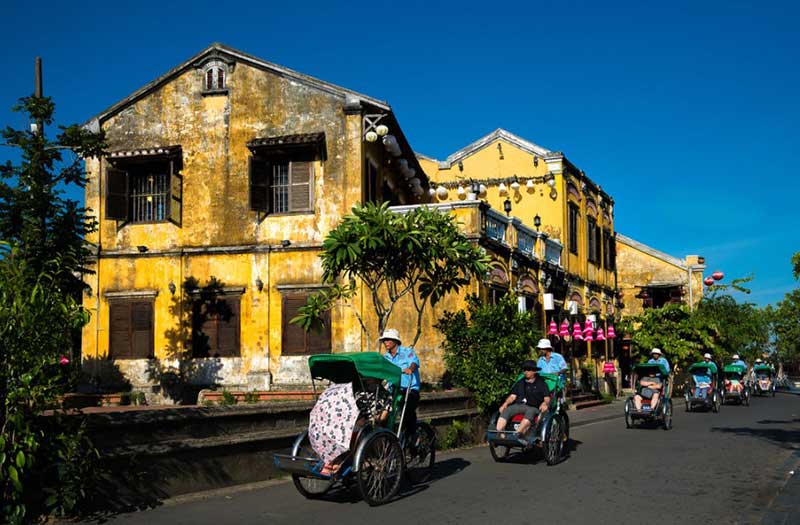
The xich lo, or cyclo, is no longer a practical daily transport tool. It is better seen as a slow city experience. You sit at the front, the driver pedals behind, and the streets unfold around you at camera speed. You can find cyclo rides in tourist areas of Hanoi, Ho Chi Minh City, Hoi An and Hue.
Use a cyclo for atmosphere, photos and street life, not for getting somewhere quickly. Always agree on the total fare in Vietnamese dong before boarding. A one-hour loop often costs around 150,000 to 200,000 VND, depending on the city and route.
The cyclo moves through the old quarters of Hoi An
6. Getting around Vietnam by boat
Boats are not the main way to cross Vietnam from north to south. They are, however, one of the best ways to feel the country. The most memorable boat experiences are in Halong Bay, Lan Ha Bay, Ninh Binh and the Mekong Delta. From the south, you can also continue by boat toward Cambodia.
In Halong Bay and Lan Ha Bay
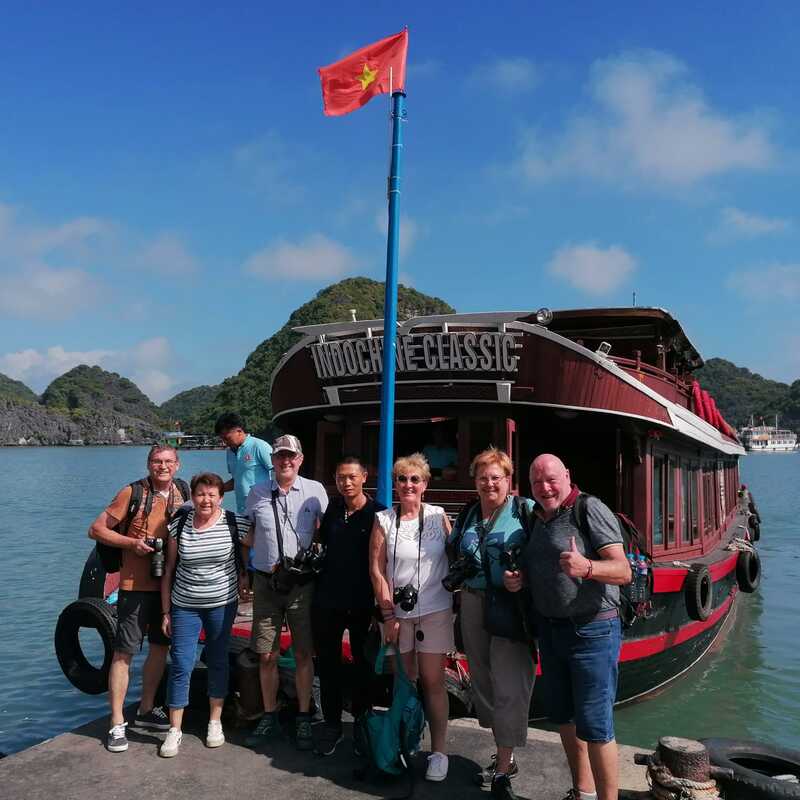
A cruise in Halong Bay or Lan Ha Bay takes you among limestone islands rising from emerald water. You can choose a day cruise, but an overnight trip gives the bay more time to breathe, especially after many day boats have returned to port.
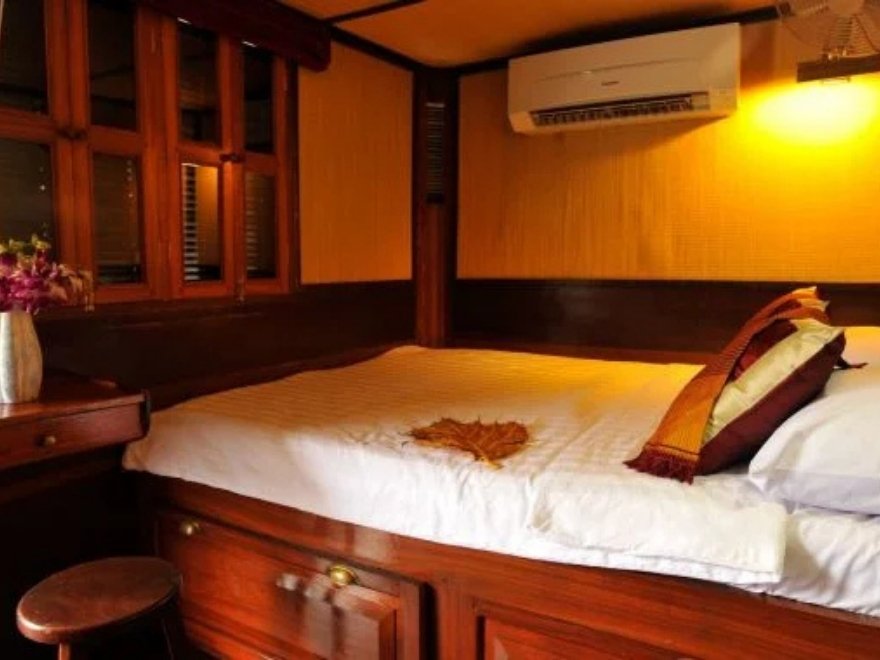
Depending on the cruise, you may kayak, visit caves such as the Dark and Bright Cave, swim in calm water, join a Vietnamese cooking demonstration or sit on the sundeck at sunset. Overnight boats usually have air-conditioned cabins and restaurants on board; higher-end vessels may also offer pools or jacuzzis.
Junk cruise to Halong Bay with our travelers
In the evening, the mood changes: sunset on deck, a quiet dinner, perhaps squid fishing, and a much calmer view of the bay.
In the Mekong Delta
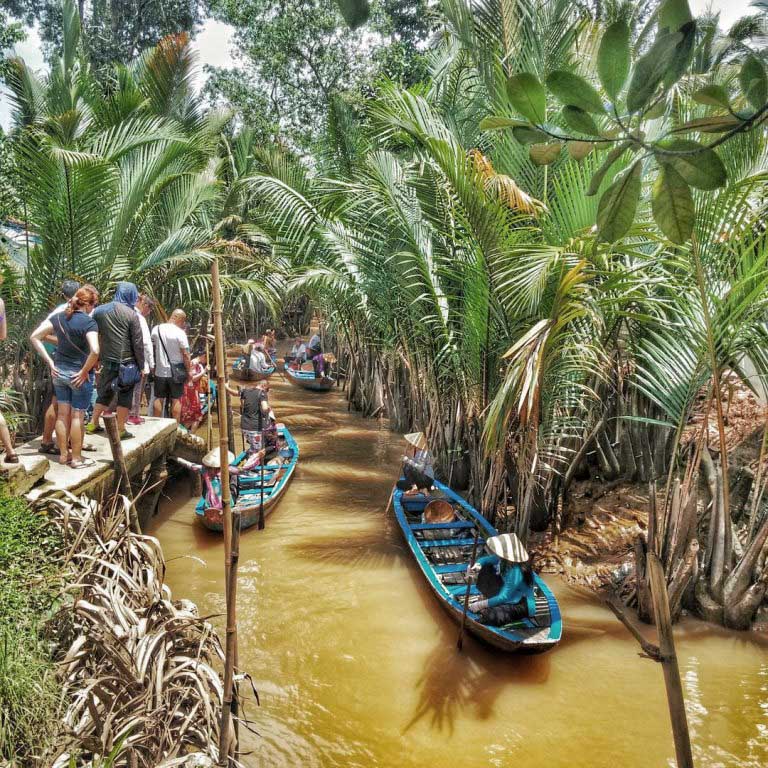
In the Mekong Delta, boats are not a tourist decoration; they are part of daily life. From places such as My Tho, Ben Tre and Can Tho, travelers can move by wooden boat or small rowing sampan through canals lined with water palms, orchards and riverside homes.
A boat trip in the Mekong Delta
A Mekong boat trip may include floating markets, fruit orchards, coconut workshops, traditional music, honey tea, local houses or lunch by the river. The smaller rowing boats are often the most charming part, as they can enter narrow canals where larger vessels cannot pass.
RV La Marguerite, an iconic cruise along the Mekong River
By boat from Vietnam to Cambodia
You can travel from Vietnam to Cambodia by boat, most commonly on the Chau Doc – Phnom Penh route. The speedboat journey takes around 5 to 6 hours and gives you a scenic transition along the Mekong River.
This route feels more local than flying, but it needs planning. You may need to spend one night in Chau Doc before departure, and from roughly March to July, low water can reduce or affect some departures.
In Ninh Binh
In Ninh Binh, the boat ride is quiet and almost theatrical: limestone karsts, rice fields, caves and long stretches of water. At Trang An and Tam Coc, local rowers often use their feet to steer the oars, a skillful technique that has become part of the region’s identity.
7. Getting around by metro
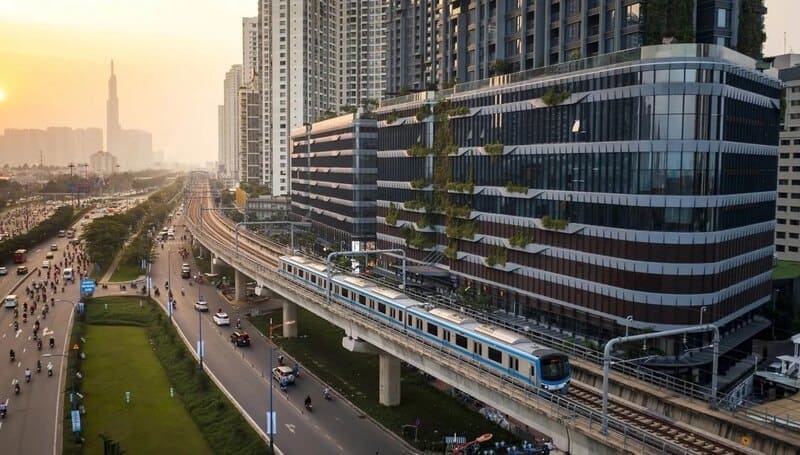
Metro travel is still new in Vietnam, so do not expect a Bangkok- or Singapore-style network yet. Still, in the right area, it can be clean, cheap and surprisingly convenient. Most travelers will use it together with walking, taxis, ride-hailing apps or buses.
Ho Chi Minh City metro
Ho Chi Minh City’s Metro Line 1 connects Ben Thanh in the city center with the eastern side of the city toward Suoi Tien. It is useful if your hotel, meeting point or attraction is close to a station.
Fares are affordable, generally around 6,000 to 20,000 VND depending on distance and payment method. A day pass can make sense if you plan to use the metro several times in one day.
Hanoi metro
In Hanoi, the Cat Linh – Ha Dong line is operating, and the Nhon – Cau Giay elevated section of Line 3 has improved access to some western districts. These lines are useful for selected routes, but they do not yet cover the full tourist map of the capital.
Good to know: combining metro, bus and ride-hailing apps
For visitors, the metro works best as part of a mixed journey: metro for the convenient section, then Grab, Be, Xanh SM, taxi or a short walk for the final part. If you carry heavy luggage, arrive late at night or travel with children, door-to-door transport is still easier.
For a first trip, the easiest mix is domestic flights for long distances, private cars or limousine vans for regional transfers, and Grab, Be or Xanh SM for city rides. Add trains, boats, bicycles or cyclos when the journey brings scenery or cultural value.
Is $100 enough for a week of transport in Vietnam?
It can be enough for local transport, city rides and a few short regional transfers if you travel independently and avoid domestic flights. It will not cover a comfortable multi-region itinerary with flights, private cars or guided transfers.
How do I avoid taxi scams at the airport?
Use official taxi counters, hotel transfers, private airport transfers or ride-hailing apps such as Grab and Xanh SM. Avoid drivers who approach you aggressively inside the terminal, and always check the license plate before getting in.
Which is better: the sleeper bus or the overnight train?
Sleeper buses are cheaper and more flexible. Overnight trains are usually more spacious and give a more classic travel experience. For taller travelers or families, a train soft sleeper or high-quality cabin bus is often more comfortable than a standard sleeper bus.
Can I legally ride a motorbike with just my home license?
No. To ride legally, you need the correct license and a valid International Driving Permit under the 1968 Vienna Convention. Without it, your travel insurance may not cover you in case of an accident.
Is there a metro in Vietnam?
Yes. Ho Chi Minh City has Metro Line 1 between Ben Thanh and Suoi Tien, while Hanoi has operating urban rail lines including Cat Linh – Ha Dong. The networks are still developing, so metro is useful for selected routes but not yet a full replacement for taxis or ride-hailing apps.
Are city buses easy for tourists in Vietnam?
They are cheap and increasingly useful, but not always easy for first-time visitors. Routes and stops may not be obvious in English, so apps such as MultiGo are helpful, especially in Ho Chi Minh City.
Is it better to use Grab or taxis in Vietnam?
For most travelers, Grab, Be or Xanh SM are easier because the price appears before booking and the route is tracked in the app. Traditional taxis can still be fine if you use reputable companies or official taxi stands.
Is it easy to get from the airport to the city center?
Yes, but travel time depends on traffic. In Hanoi and Ho Chi Minh City, the transfer often takes around 45 minutes to one hour. Ride-hailing apps, hotel transfers or private drivers are the easiest choices after a long flight.
Can I travel from Vietnam to Cambodia by boat?
Yes. The most common route is the speedboat from Chau Doc in Vietnam to Phnom Penh in Cambodia. It usually takes around 5 to 6 hours and may require one night in Chau Doc before departure.
Final words
There is no single best way to get around Vietnam. The right choice depends on your route, budget, comfort level and pace. Fly the long distances, take the train when the journey itself matters, use buses or limousine vans for regional transfers, and rely on taxis, ride-hailing apps, metro or buses inside the cities.
If your time is limited, or if you are traveling with family, seniors or a lot of luggage, a tailor-made trip with a local English-speaking travel agency can make the journey much smoother. A private vehicle with a professional driver helps you avoid complicated transfers, while a local guide can adjust the itinerary to your pace and interests.
For more advice on how to get around Vietnam, feel free to contact us. Share your travel dates, arrival and departure cities, preferred pace and comfort level. Our team can help you choose the right mix of flights, trains, buses, private transfers and local experiences for your itinerary.







 Our team
 Our team
 Our team
 Our team



.jpg)
.jpg)
.jpg)


 Other
Other Add us as a preferred source