Hidden on one of the busiest streets of Hanoi’s Old Quarter, Ma May Ancient House is a small but meaningful stop for travelers who want to understand how local merchant families once lived and worked in the city. The house is not a large museum. Its charm lies in something quieter: a narrow tube-house layout, wooden interiors, a central courtyard, family worship space, and everyday objects that show how trade, domestic life, and tradition once shared the same roof.
If your Hanoi itinerary includes a walk through the Old Quarter, Ma May Ancient House adds a deeper layer to what you see on the street outside.
Written by Oliver PHUNG (Tour Guide)
Updated on Jun 10, 2026
0 comment
Oliver Phung is a Northern Vietnam-based tour guide and blogger. His favorite topics to write about include cuisine, culture, travel, and under-the-radar experiences. Oliver possesses a deep, detailed understanding of the region, from the indigenous culture of the Hmong in the Northwest to the highland lifestyle of the Tay in the Northeast. Whether he is exploring ancient architecture or geological landscapes, he is always eager to share his insights with his readers.
Beyond his work at Kampá Tour, he produces specialized travel content on platforms such as Reddit, Instagram, LinkedIn, and various other publications.
Old Quarter heritage, tube-house architecture, short cultural visit
Suggested visit duration
30 to 45 minutes
Best time to visit
Morning, early afternoon, or weekend evening if you want to experience the Old Quarter after dark
Nearby stops
Bach Ma Temple, Ta Hien Street, Dong Xuan Market, Hoan Kiem Lake
Entrance fee
20,000 VND per visitor per site
Opening hours
Daily from 8:00 AM to 12:00 PM and from 1:30 PM to 5:30 PM. Extra evening hours on Friday, Saturday and Sunday from 7:00 PM to 9:30 PM
📌 Good to know:
Treat Ma May Ancient House as a short cultural stop within an Old Quarter walking route, not as a full museum visit.
Is Ma May Ancient House Worth Visiting?
Yes, especially if you are already exploring Hanoi’s Old Quarter and want a quick but meaningful look at old urban life. The house helps you understand something that is easy to miss when walking through Hanoi: behind the narrow shopfronts were family spaces, kitchens, altars, courtyards, and generations of daily routines.
The house is easy to include in a short walking route through Hanoi Old Quarter.
It is worth visiting if you enjoy:
Traditional architecture
Local history
Old Quarter walking routes
Quiet heritage spaces
Photography of wooden interiors and courtyards
Stories about Hanoi’s merchant families
You may skip it if you are looking for a large museum with many galleries or a long guided exhibition. Ma May is small, intimate, and best appreciated slowly.
Where Is Ma May Ancient House?
Ma May Ancient House is located at 87 Ma May Street, in the heart of Hanoi’s Old Quarter. This area is a dense network of old trading streets, small shops, cafés, guesthouses, temples, and market alleys.
From the northern side of Hoan Kiem Lake, it usually takes around 8 to 12 minutes on foot, depending on your pace and the crowd. You can walk through Hang Buom or nearby Old Quarter streets before turning into Ma May.
If you use a taxi or ride-hailing app, ask to be dropped near 87 Ma May Street or near the edge of Hoan Kiem Lake, then walk in. Some Old Quarter streets are narrow and busy, so walking is often easier than trying to stop right in front of the house.
Simple walking idea: Hoan Kiem Lake → Hang Buom → Ma May Ancient House → Bach Ma Temple → Ta Hien Street or Dong Xuan Market.
Tickets, Opening Hours and Best Time to Visit
According to the Hoan Kiem Lake and Hanoi Old Quarter Management Board, the entrance fee is 20,000 VND per visitor per site. This rate is applied consistently across the managed heritage sites in the Old Quarter area.
Ma May Ancient House is open every day of the week. Regular visiting hours are from 8:00 AM to 12:00 PM in the morning and from 1:30 PM to 5:30 PM in the afternoon. On Friday, Saturday and Sunday evenings, the house also opens from 7:00 PM to 9:30 PM, giving visitors more flexibility to experience the Old Quarter after dark.
For most travelers, the best time to visit is in the morning or early afternoon. The light is softer, the house feels calmer, and you have more flexibility to continue your Old Quarter walk afterward. The weekend evening hours can also be a good option if you want to combine the visit with a night walk through the Old Quarter.
Plan around 30 to 45 minutes for the visit. If you only want a quick look and a few photos, 20 to 30 minutes may be enough. If you like reading panels, observing architectural details, or waiting for a quiet moment to photograph the courtyard, allow closer to one hour.
📌 Good to know:
Bring small cash for the ticket. If you visit on Friday, Saturday or Sunday evening, combine the house with a relaxed night walk through the Old Quarter.
A Short History of 87 Ma May Ancient House
Ma May Ancient House was built in the late 19th century, when Hanoi’s Old Quarter was still shaped by guild streets, small trades, and families living close to their businesses. The house is one of the old homes in Hanoi that still preserves many features of traditional urban architecture.
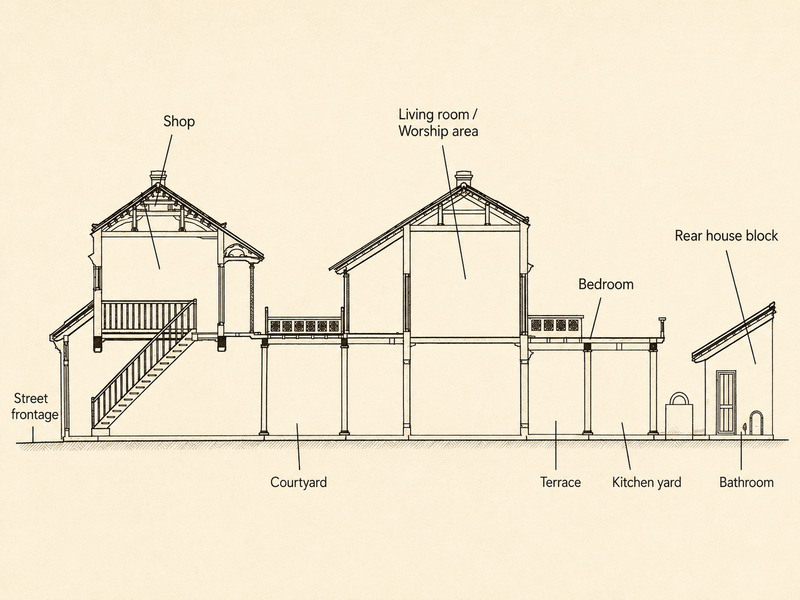
The property covers about 157.6 square meters. Its plot is around 28 meters long, about 5 meters wide at the front and 6 meters wide at the back, which makes the tube-house layout especially clear when you walk through the rooms.
The design plan of the Ma May ancient house.
Like many Old Quarter houses, 87 Ma May was not just a private residence. It was also connected to trade. The front part of the house faced the street and worked as a commercial space, while the deeper sections were used for family life, cooking, storage, and worship.
From 1954 to 1999, five families lived in the house, reflecting the way old urban homes in Hanoi adapted to new social conditions during the 20th century. The house was restored between 1998 and 1999 through cooperation between Hanoi and Toulouse in France, then recognized as a national heritage site in 2004. 87 Ma May is valuable not only because it is old, but because it preserves several layers of Hanoi’s urban life: commerce, family living, worship, adaptation, and heritage conservation.
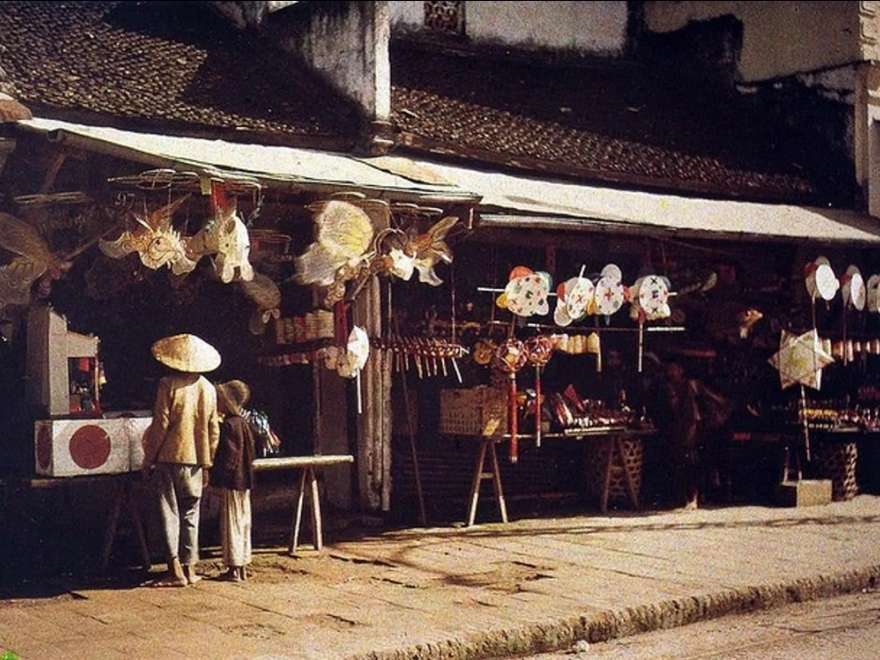
The old Ma May street in the past.
Why Does Ma May Ancient House Have a Tube-House Design?
The tube-house form was a practical response to life in Hanoi’s Old Quarter. Street frontage was valuable because business happened at the front of the house. Families therefore built narrow facades facing the street, then extended their homes deep into the plot to create enough space for trade, living, cooking, storage, and worship.
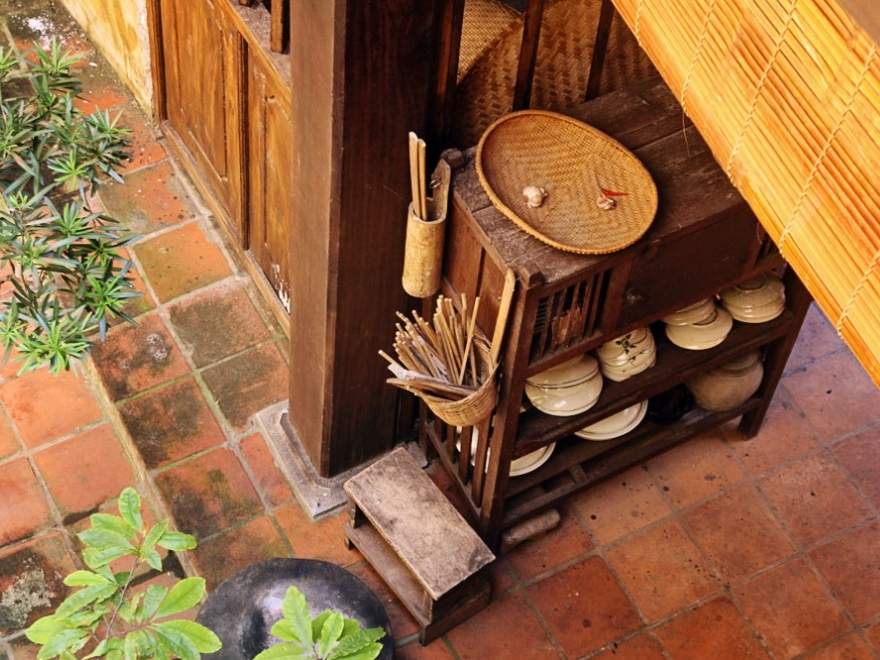
The kitchen area of the Ma May ancient house.
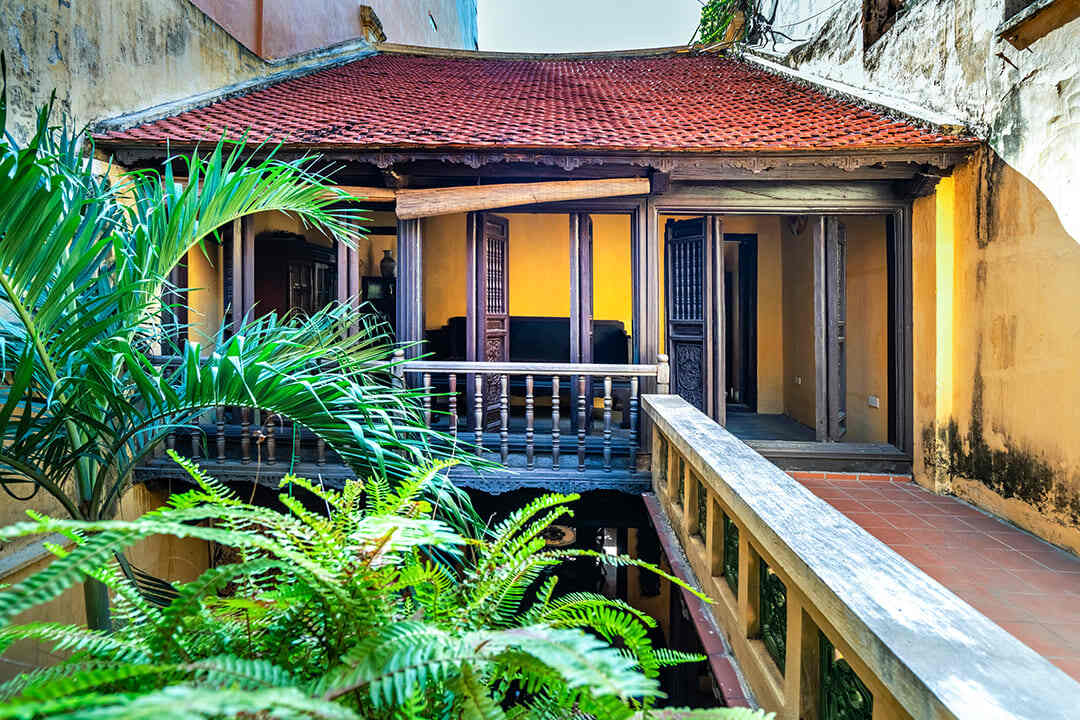
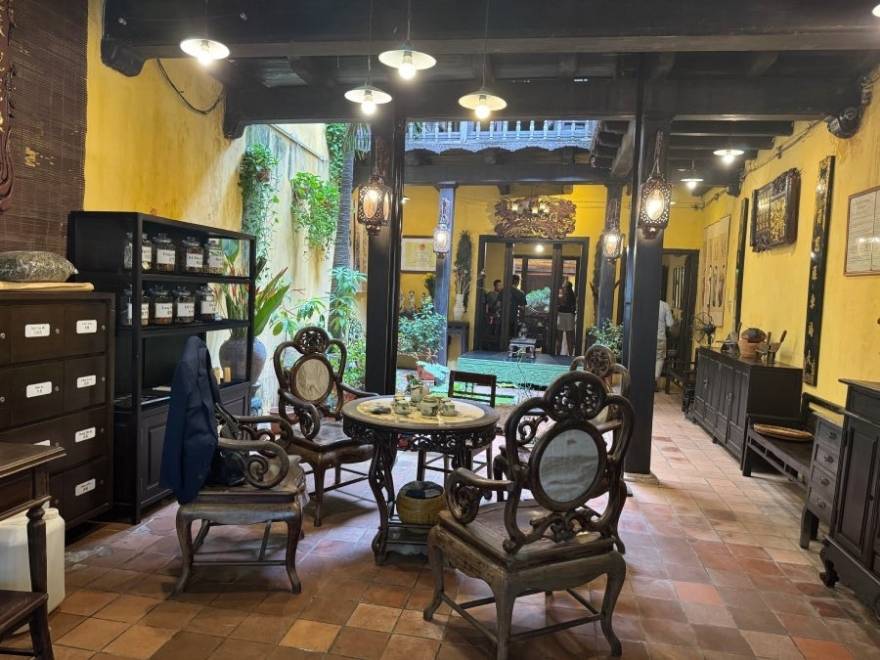
Inside Ma May Ancient House, this logic is easy to see. The front space connects directly with the street and once served commercial purposes. Further inside, the rooms become more private. A small courtyard brings daylight and air into the long interior, while the rear areas are linked with family life and ancestor worship.
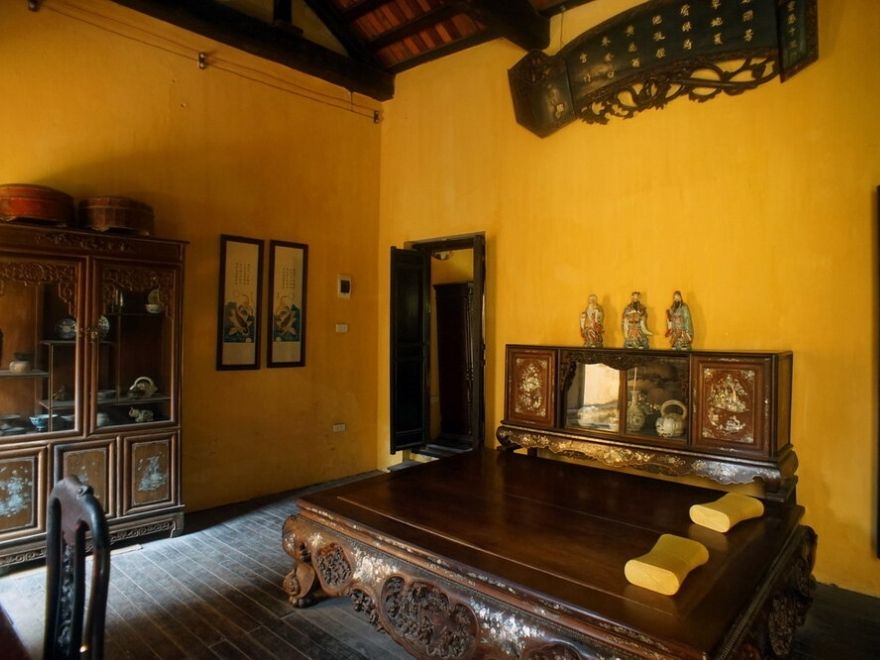
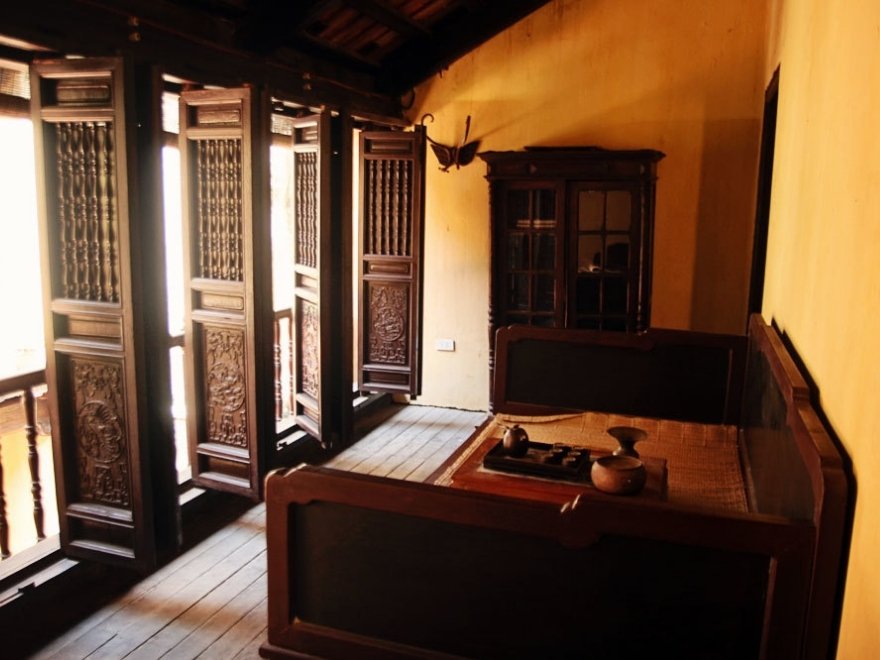
Bedroom of the ancient house.
The house also shows how architecture solved daily problems. In a long and narrow home, ventilation and light were essential. The courtyard was not decorative only. It helped the house breathe.
So remember that Ma May was not designed for display. It was designed for daily life.
The narrow layout reflects the traditional tube-house style of old Hanoi merchant homes.
Discover more local things to do in Hanoi!!!
What to See Inside Ma May Ancient House
The visit is short, but there are several details worth slowing down for.
The Shopfront Layout
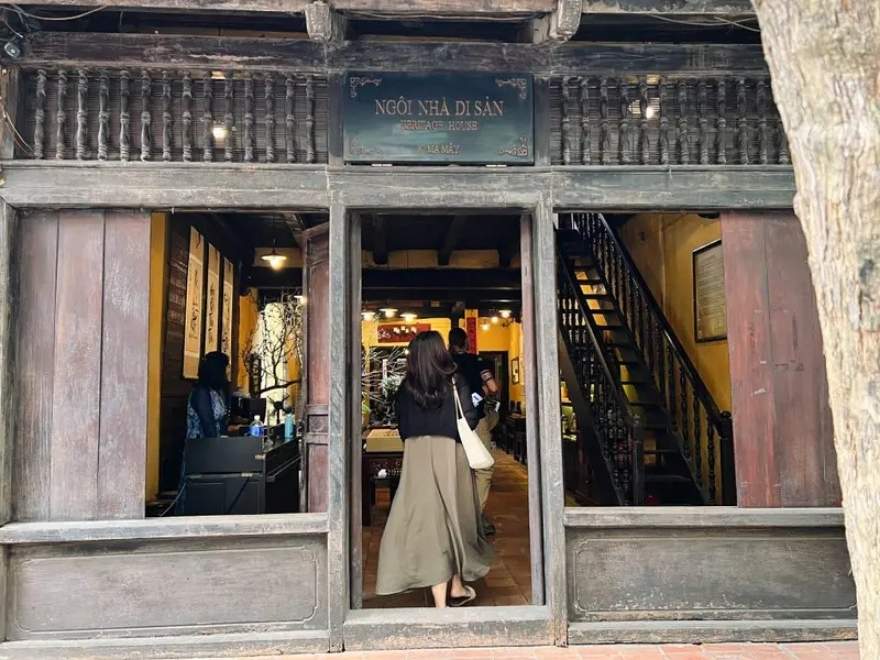
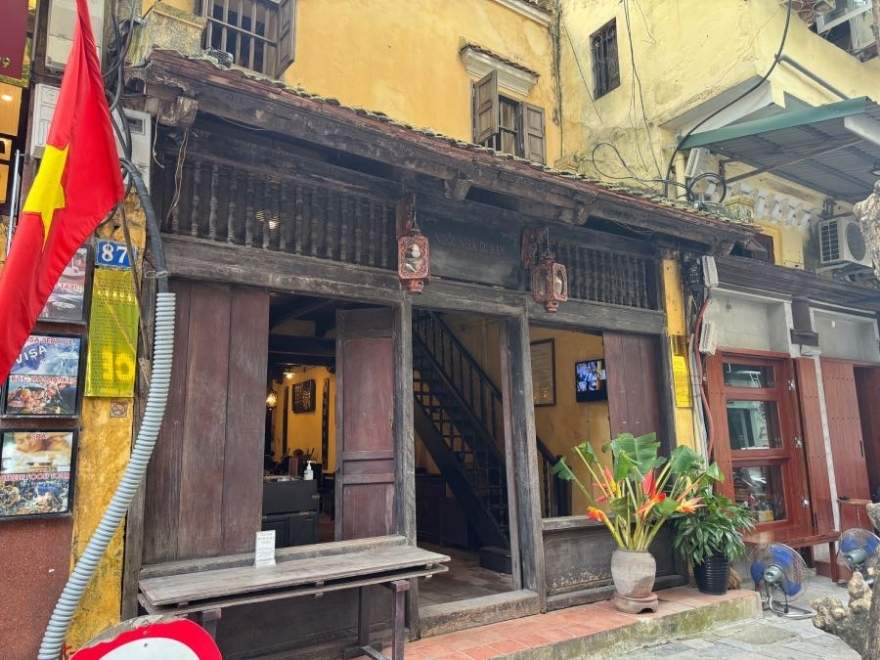
The front area shows how business once opened directly onto the street. This was where the family could welcome customers, display goods, and stay connected to the rhythm of the Old Quarter.
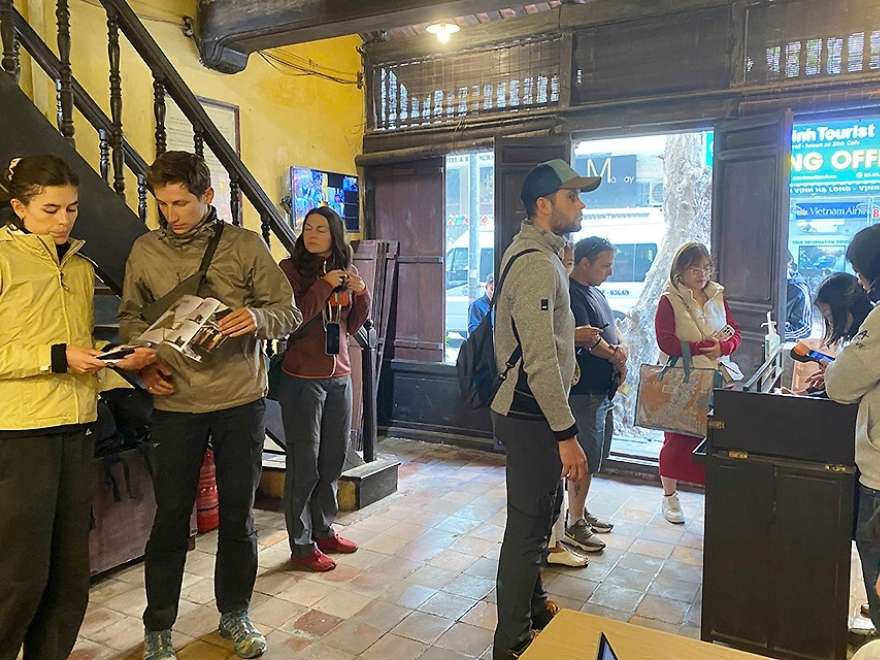
The main entrance of the ancient house
The Wooden Structure
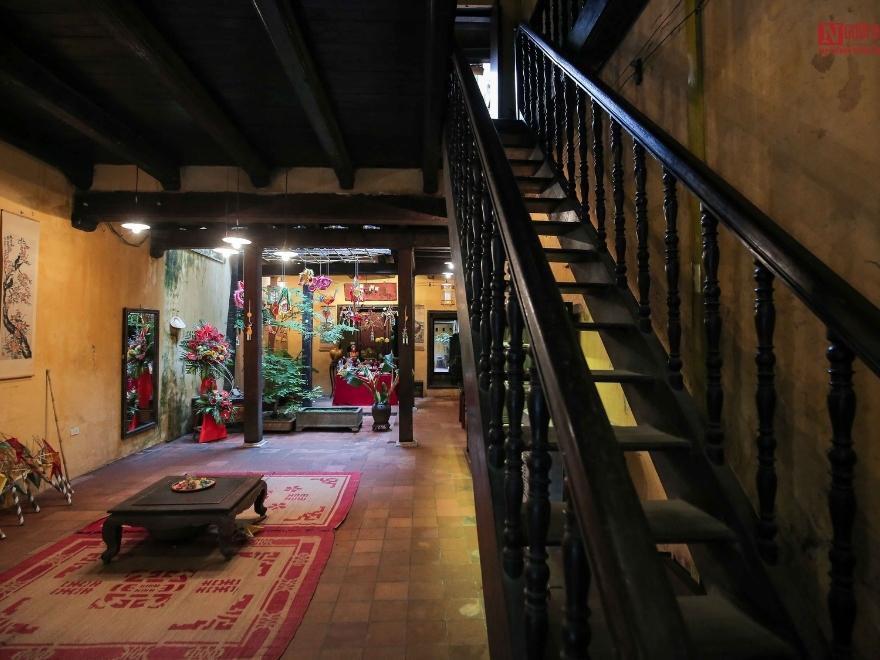
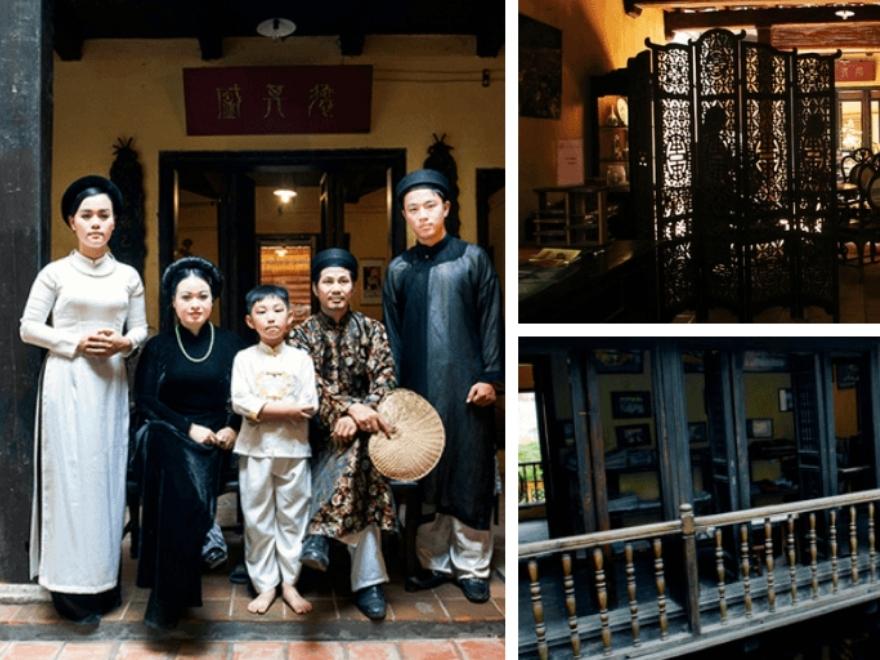
Look for wooden beams, carved panels, columns, staircases, and partitions. These details show the craftsmanship of old Hanoi homes and the importance of wood in traditional northern Vietnamese architecture.
The Central Courtyard
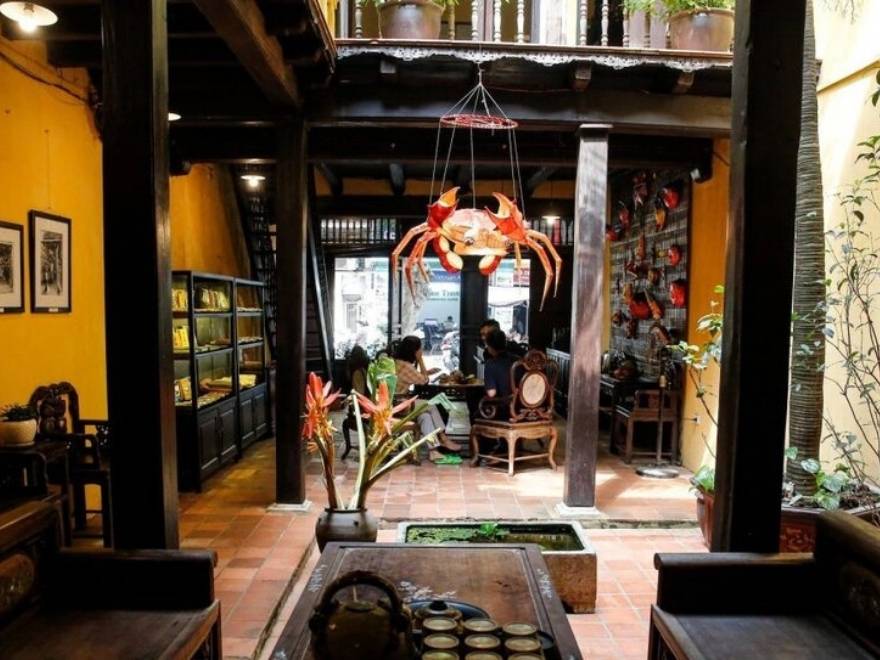
The courtyard is one of the most important parts of the house. It brings in light, improves air circulation, and creates a calm pause between the more public front rooms and the more private family spaces.
The Ancestor Altar
The worship space reflects the importance of ancestor worship in Vietnamese family culture. It reminds visitors that the house was not only a place for trade and daily routines, but also a space of memory, respect, and family continuity.
The Kitchen and Household Objects
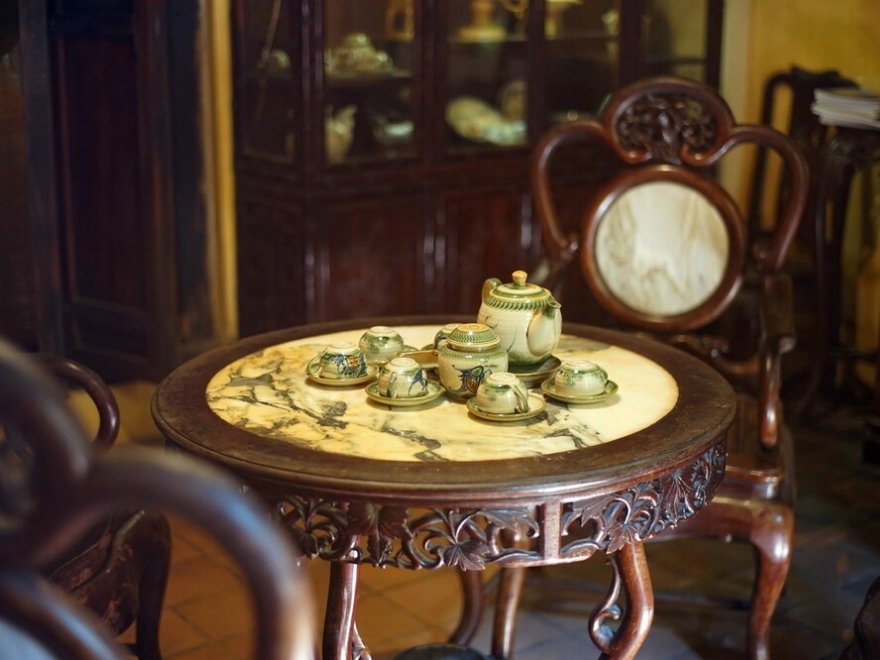
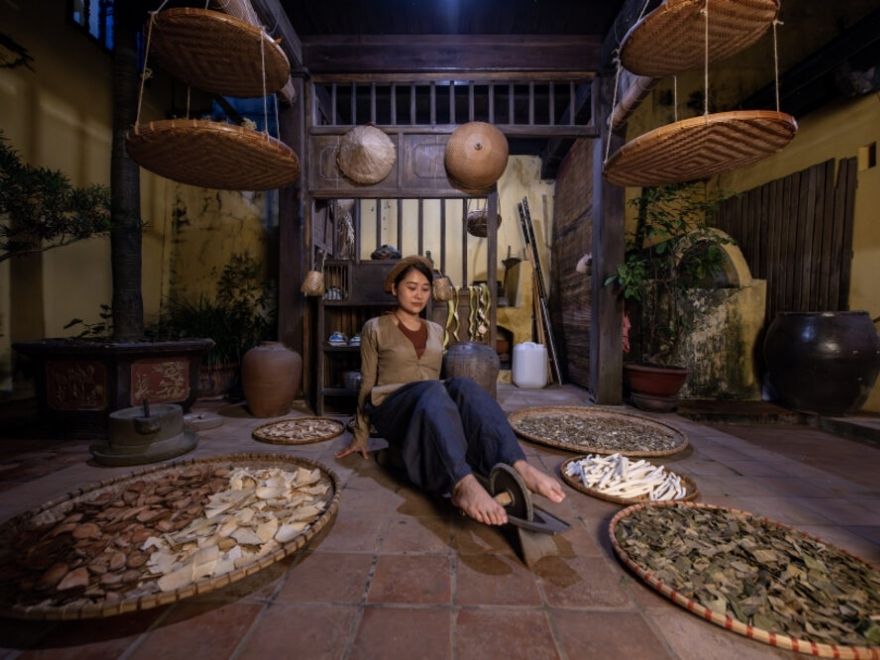
Traditional utensils, storage items, lacquerware, and domestic objects help visitors imagine how family life once unfolded here. These objects are simple, but they make the house feel lived-in rather than abstract.
Kitchen
The Roof and Room Sequence
The tiled roof, narrow passageways, and layered rooms show how a compact home could support many functions. From the street to the courtyard and deeper family areas, the layout moves gradually from public life to private life.
Vietnamese and French Details Inside the House
Ma May Ancient House is rooted mainly in Vietnamese urban house design. Its wooden frame, tiled roof, central courtyard, altar space, and room sequence all reflect traditional domestic architecture in Hanoi.
At the same time, like many buildings that passed through the late 19th and early 20th centuries, the house also carries subtle traces of changing materials and urban conditions. Some details, such as floor tiles, plaster, finishes, or decorative elements, may reflect the wider architectural layering of the period.
Bedroom
The result is not a grand colonial building, but a layered Hanoi house. Its value lies in how it preserves a Vietnamese spatial logic while showing small signs of historical change.
In short: Do not read the house as one fixed style. Read it as a living urban structure shaped by time.
Cultural Events and Ca Tru Performances
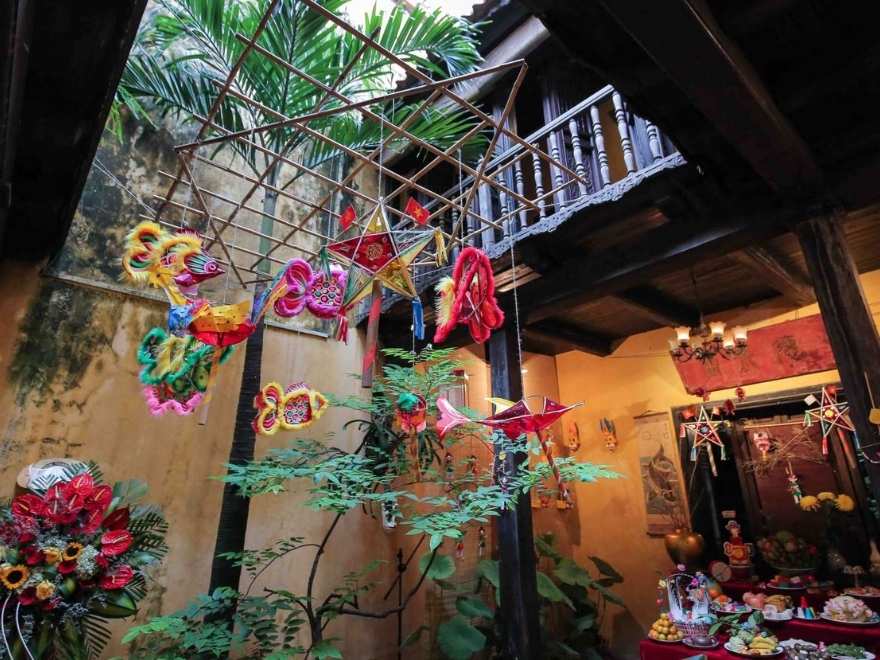
Ma May Ancient House is also used as a small cultural venue. At certain times of the year, especially around traditional festivals such as the Mid-Autumn Festival or Lunar New Year, the house may host exhibitions, folk games, craft displays, or performances.
The Old Quarter heritage sites, including Ma May Ancient House, also open in the evening on Friday, Saturday and Sunday from 7:00 PM to 9:30 PM. This gives visitors more time to experience the atmosphere of the Old Quarter after dark.
Ca tru performances are held at Ma May Ancient House on Saturday and Sunday evenings every week. Each performance lasts around one hour. Ca tru is a traditional Vietnamese musical art form closely linked with northern Vietnam, and it can add a deeper cultural layer to an evening visit.
Even if there is no special exhibition on the day of your visit, the house still offers a quiet cultural experience through its architecture, layout, and domestic objects.
📌 Good to know:
If you want to attend ca tru, plan your visit for Saturday or Sunday evening and allow extra time before or after the performance to explore the house.
Suggested Old Quarter Walking Route
Ma May Ancient House works best as part of a walking route. It is small, central, and surrounded by some of the most interesting streets in Hanoi’s Old Quarter.
A simple route could look like this:
Start at Hoan Kiem Lake. Walk north into the Old Quarter and enjoy the shift from open lake space to narrow trading streets.
Continue to Ma May Ancient House. Spend 30 to 45 minutes inside the house, focusing on the courtyard, wooden structure, altar, and old domestic objects.
Walk to Bach Ma Temple. This is one of the oldest spiritual sites in the Old Quarter and pairs well with Ma May because it adds a religious and communal layer to the route.
Stop at Ta Hien Street or Dong Xuan Market. Ta Hien gives you a lively street atmosphere, while Dong Xuan Market offers a stronger market-life experience.
This route can take around 2 to 3 hours, depending on how slowly you walk and whether you stop for coffee or street food.
Best for: first-time visitors who want to understand the Old Quarter beyond shopping and cafés.
Explore Hanoi's Old Quarter.
Self-Guided or Guided Visit?
A self-guided visit is enough if you mainly want to see the layout, take photos, and get a quick sense of old Hanoi domestic architecture. The house is compact, so you can understand the basic structure without spending too much time.
A guided visit is better if you want deeper context. A guide can explain why the house is narrow, how the rooms were used, what the altar means, and how merchant families balanced business and private life in the same space.
If you are already taking an Old Quarter walking tour, ask whether Ma May Ancient House can be included. It fits naturally into a route focused on architecture, local life, craft streets, and traditional culture.
For travelers who prefer a smooth half-day route without arranging each stop separately, Kampá Tour can design a paced Old Quarter walk that includes Ma May Ancient House with nearby heritage stops. The idea is not to rush through the site, but to place it within the wider story of Hanoi’s old streets.
Accessibility, Photos and Visitor Rules
Ma May Ancient House is a historic tube house, so visitors should expect narrow spaces, thresholds, stairs, and uneven circulation. It was not built for modern accessibility. If wheelchair access is essential, check directly before visiting.
Photography is generally part of the visitor experience, but flash, tripod use, or commercial photography may be restricted. Always follow staff instructions, especially around wooden surfaces, altars, and displayed objects.
A few simple rules will make the visit smoother:
Walk gently and avoid touching old objects.
Keep your voice low inside the house.
Be respectful near the worship area.
Avoid blocking narrow passageways.
Bring small cash for the entrance fee.
Keep the official visiting hours in mind, especially if you plan to visit during the weekend evening opening.
In short: It is a small heritage home, not a large public museum. Move slowly and respectfully.
Who Should Visit Ma May Ancient House?
Ma May Ancient House is a good stop for:
First-time visitors to Hanoi
Travelers exploring the Old Quarter on foot
Architecture lovers
People interested in Vietnamese family culture
Photographers looking for wooden interiors and courtyard light
Visitors who prefer short, meaningful cultural stops
It may be less suitable for travelers who only want major landmarks, large museums, or highly interactive exhibits.
Best way to enjoy it: Visit with the right expectation. It is small, but it explains a lot about how old Hanoi once worked.
Ma May Ancient House vs Other Heritage Stops in Hanoi
Criteria
Ma May Ancient House
Larger Museums or Heritage Sites
Visit length
Short, around 30 to 45 minutes
Usually 1 to 2 hours or more
Best feature
Tube-house layout and domestic life
Wider historical or cultural collections
Location
Central Old Quarter
May require a separate transfer
Experience
Intimate and architectural
More formal and museum-like
Best for
Walking routes and quick cultural depth
Deeper themed visits
If you only have a few hours in the Old Quarter, Ma May is an efficient stop. If you want broader historical context, combine it with larger museums or guided walks.
Nearby Attractions to Combine With Ma May Ancient House
Bach Ma Temple
A short walk from Ma May, Bach Ma Temple adds a spiritual layer to your Old Quarter visit. It is a good pairing because Ma May shows domestic life, while Bach Ma reflects community worship and local belief.
Ta Hien is lively, busy, and very different from the quiet interior of Ma May. Visiting both helps you feel the contrast between old domestic architecture and today’s social street life.
Dong Xuan Market is one of the most famous markets in Hanoi. It works well after Ma May if you want to continue exploring local commerce, food, and everyday movement in the Old Quarter.
The lake is the easiest starting or ending point. From here, you can take in local life, walk into the Old Quarter, then return for coffee, photos, or a short rest.
FAQ About Ma May Ancient House Hanoi
Where is Ma May Ancient House located?
Ma May Ancient House is located at 87 Ma May Street, in Hanoi’s Old Quarter, Hoan Kiem District.
How long does it take to visit Ma May Ancient House?
Most visitors spend around 30 to 45 minutes inside. A quick visit may take 20 to 30 minutes, while a slower visit with photos and reading time can take closer to one hour.
How much is the ticket?
The entrance fee is 20,000 VND per visitor per site, according to the Hoan Kiem Lake and Hanoi Old Quarter Management Board.
What are the opening hours?
Ma May Ancient House is open daily from 8:00 AM to 12:00 PM and from 1:30 PM to 5:30 PM. On Friday, Saturday and Sunday, it also opens in the evening from 7:00 PM to 9:30 PM.
Is Ma May Ancient House worth visiting?
Yes, if you are already in the Old Quarter and want a short cultural stop. It is especially worthwhile for travelers interested in architecture, old Hanoi life, and traditional family spaces.
Can I take photos inside?
Photography is usually possible in heritage spaces like this, but flash or tripod use may be restricted. Follow on-site instructions and avoid disturbing other visitors.
Are there cultural performances?
Yes. Ca tru performances are held at Ma May Ancient House on Saturday and Sunday evenings every week, and each performance lasts around one hour. The house may also host other exhibitions or cultural activities during traditional festivals.
What should I combine with Ma May Ancient House?
Good nearby stops include Bach Ma Temple, Ta Hien Street, Dong Xuan Market, and Hoan Kiem Lake.
Practical Closing Notes
Ma May Ancient House gives visitors a clear and memorable look at old Hanoi’s urban life. Its narrow layout, wooden rooms, courtyard, worship space, and domestic objects show how business, family life, and tradition once existed together inside a single Old Quarter home.
The best way to visit is not to rush in and out, but to look at the house as a sequence: street, shopfront, courtyard, family rooms, kitchen, and worship space. In that sequence, the house quietly explains how Hanoi’s old merchant families lived between public commerce and private tradition.
Plan around 30 to 45 minutes, visit during the official opening hours, and combine Ma May Ancient House with nearby Old Quarter stops for a richer half-day walk. If you are interested in ca tru, consider visiting on a Saturday or Sunday evening.
Planning your trip?
Save time and get expert advice for FREE!
✅ 15 years of local experience
✅ Save up to 40 hours of planning
✅ Travel stress-free from start to finish
Book your free consultation today!






 Our team
 Our team
 Our team
 Our team

.jpg)

.jpg)
.jpg)



 Other
Other Add us as a preferred source