Vietnam in August: Weather and Best Places to Visit for 2026
Planning a family trip to Vietnam in August 2026? You’re probably wondering about the weather and that’s exactly where I start with every client.
As a local trip planner, I work with August conditions every year and know how much they vary across the country. It’s not a “bad” month, just a strategic one. While the North can be rainy and lush, Central Vietnam often delivers some of the best beach weather of the year.
In this guide, I’ll show you where to find the sunshine and how to make August a smooth, rewarding time to visit Vietnam.
Written by Jade NGUYEN, (local expert)
Updated on Aug 11, 2026
0 comment
Jade NGUYEN, also known as "Jade", has worked as a tourist guide and local expert for several years in Vietnam and the former Indochina countries (Thailand, Cambodia, Laos). It is in high demand and appreciated by our travelers, accompanying hundreds of them each year. With her experience in the field, particularly in the north and its mountains, she likes to share her knowledge with you through her articles on this blog. If you have any questions, don't hesitate to ask them in the comments below, she will be happy to answer you directly.
Places to be careful with in AugustTL;DR: The Honest Summary
Yes, go in August → just base yourself mostly in Central Vietnam like Hoi An and Nha Trang for good beach weather.
Worth it for unique experiences → rice season in the north, turtle hatching in Con Dao, last chance for caves in Phong Nha-Ke Bang National Park.
Avoid / adjust plans → skip Phu Quoc (rough sea), go easy in Sa Pa (muddy trekking).
Pack smart → light, waterproof, and practical footwear.
Weather → hot everywhere; north = rainy, central = dry, south = short daily showers
How is Vietnam's weather in August?
In August, while the North and South are in their wet season, the Center is enjoying its dry peak.
Rather than fearing the word "Monsoon", we encourage you to view it as a bringer of life. The rains in August are what turn the rice terraces into emerald waves and fill the Mekong Delta with abundant fruit.
Vietnam is divided into three distinct regions: the North, the Centre and the South
Here is the honest breakdown of what to expect in Vietnam in August.
Weather in Vietnam in August by Region
Region
Avg. Temperature
Rainfall Pattern
Northern Vietnam
(Hanoi, Halong, Sapa)
27°C - 35°C
Frequent but brief downpours (250-400mm)
Central Vietnam
(Hue, Hoi An, Nha Trang)
28°C - 33°C
Mostly dry & Sunny (100-350mm*)
Southern Vietnam
(HCMC, Mekong Delta)
27°C - 30°C
Daily short showers (150-260mm)
Northern Vietnam
August is one of the hottest and wettest months in Northern Vietnam. In Hanoi and the lowland areas, expect high humidity, temperatures often around 28°C to 35°C, and sudden heavy showers, especially in the afternoon or evening. The rain does not usually last all day, but it can interrupt outdoor plans, so it is better not to pack the schedule too tightly.
Mu Cang Chai in august
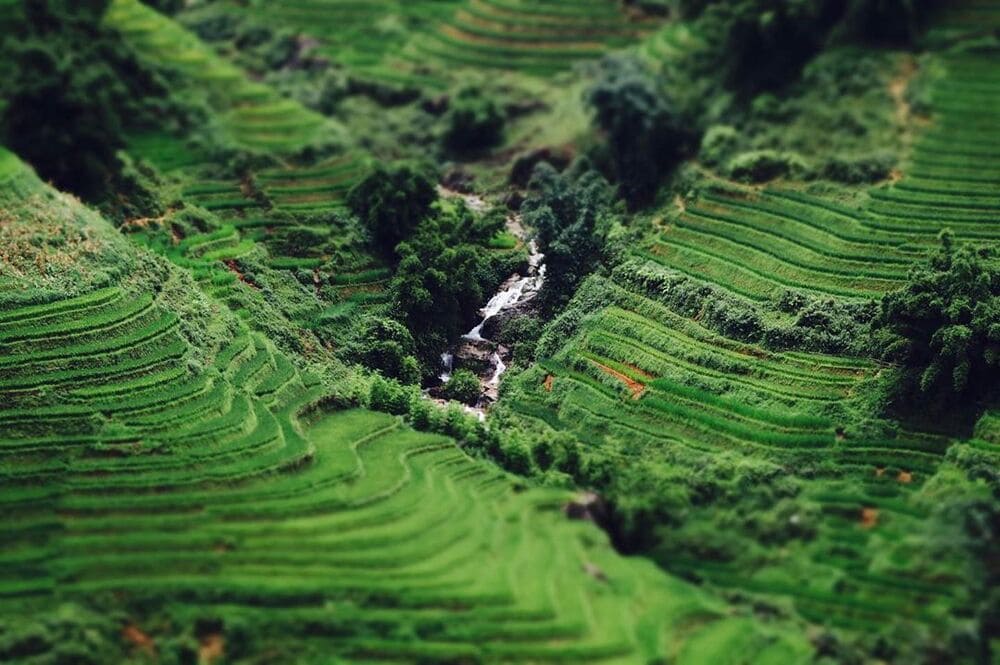
In the northern mountains, the scenery can be beautiful, with green valleys, rice terraces and misty peaks. However, rain can make trails and mountain roads muddy or slippery, especially after several wet days. Long treks and remote routes need more caution at this time of year.
Bay cruises in Ha Long Bay or Lan Ha Bay are also more weather-sensitive in August. Tropical storms or rough sea conditions may occasionally affect cruise schedules, so avoid placing a bay cruise on the final day before your international flight.
Central Vietnam is usually the strongest weather region for an August trip. Places such as Quang Binh, Hue, Da Nang and Hoi An are often hot, sunny and relatively drier than the North and South at this time of year.
Hoi An in august
Temperatures are typically around 28°C to 33°C, so expect heat and strong sun, especially around midday. Even so, the region works well for a mix of beaches, heritage towns, caves, food and light outdoor activities.
August is not completely dry everywhere. Hue may see more showers than Da Nang or Hoi An, and rain can become more frequent toward the end of the month as Central Vietnam moves closer to its wetter season. The best rhythm is simple: go out early, slow down in the afternoon and do not plan the whole day around perfect sunshine.
Southern Vietnam
Southern Vietnam is in the rainy season in August, but it is still possible to travel well. In Ho Chi Minh City and the Mekong Delta, temperatures usually range from 24°C to 32°C, with short but heavy showers more likely later in the day.
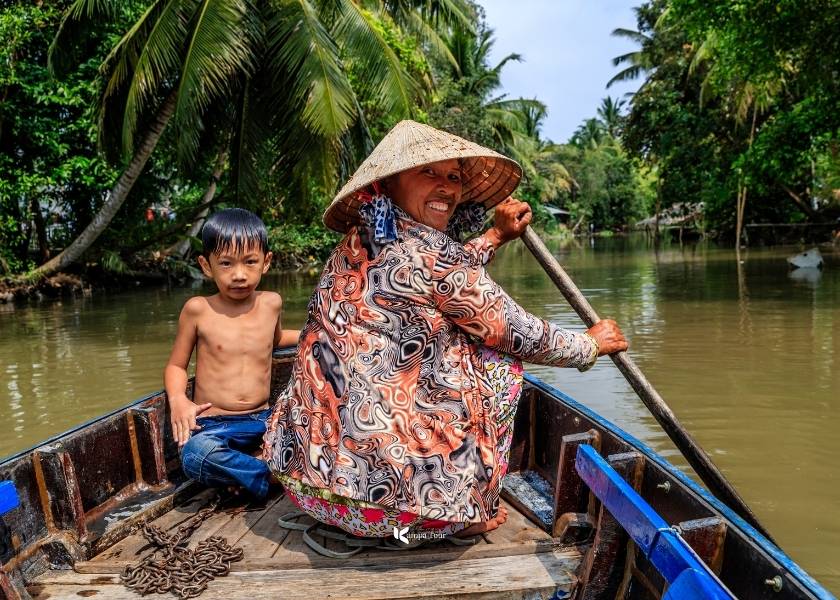
The rain often comes in bursts rather than lasting all day, so mornings are usually the best time for sightseeing, food tours, boat trips and local experiences. The Mekong Delta can be especially rewarding during this period because higher water levels make the canals feel more alive, and orchards are full of seasonal tropical fruits.
Mekong Delta in august
Beach plans in the South need more caution, especially on islands affected by the southwest monsoon. If reliable beach weather is a priority, Central Vietnam usually gives you safer options in August.
The main weather lesson is simple: build your August trip around Central Vietnam, then add the North or South with flexibility.
Central Vietnam: Quang Binh, Hue, Da Nang and Hoi An
Once you choose Central Vietnam as the core of your August trip, the route from Quang Binh to Hue, Da Nang and Hoi An gives you one of the most complete travel experiences in the country. It combines caves, imperial history, beaches, heritage towns and regional food without relying too heavily on one weather-sensitive activity.
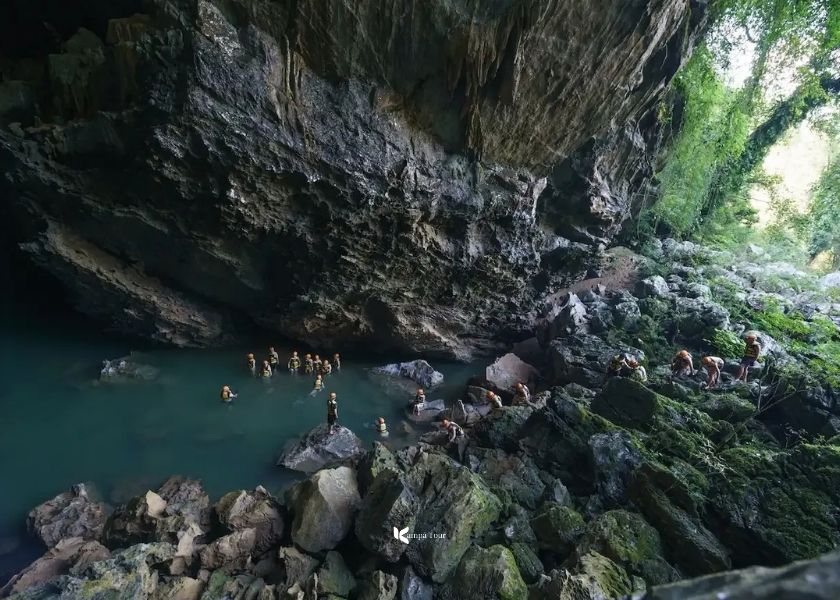
Start in Quang Binh, home to Phong Nha-Ke Bang National Park. August is still a good window for cave exploration before heavier rains become more likely later in the season. Paradise Cave and Phong Nha Cave are realistic options for most travelers, while major expeditions such as Son Doong require more planning and are not for everyone.
Phong Nha Ke Bang National Park
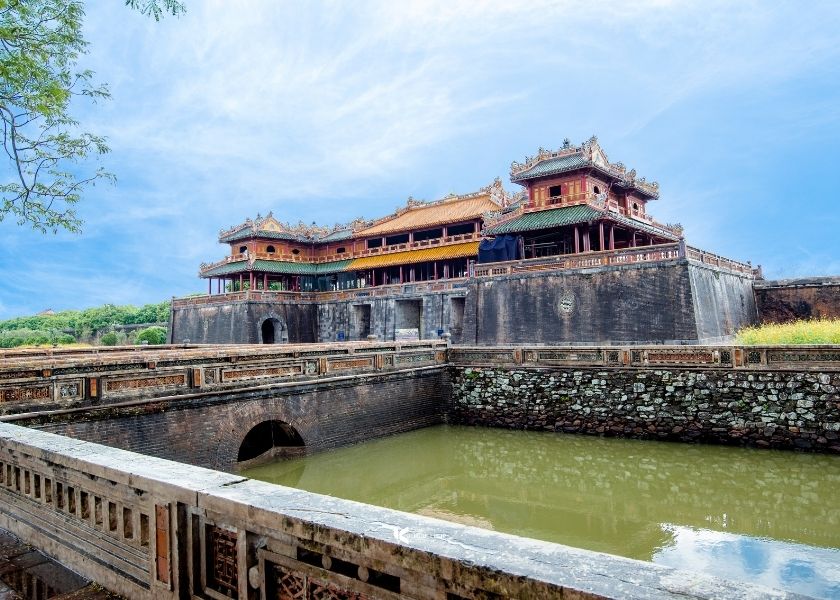
From Quang Binh, continue south to Hue, one of the most rewarding cultural stops in Central Vietnam. Hue is not a beach-first destination, and that is exactly its charm. It is slower, quieter and more historical, with the Imperial City, royal tombs, pagodas and some of the best regional food in Vietnam.
Hue Imperial City
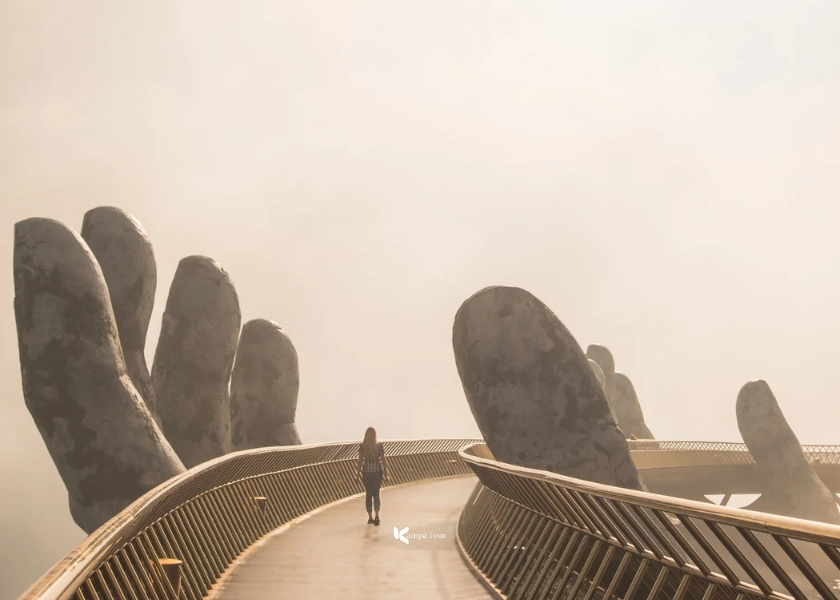
Da Nang brings the practical side of the route: beaches, resorts, an international airport and easy access to Ba Na Hills or the Golden Bridge. It is a good place to slow down after several days of moving, but it works best as part of a balanced Central Vietnam route rather than only as a long beach base.
Golden Bridge at dawn
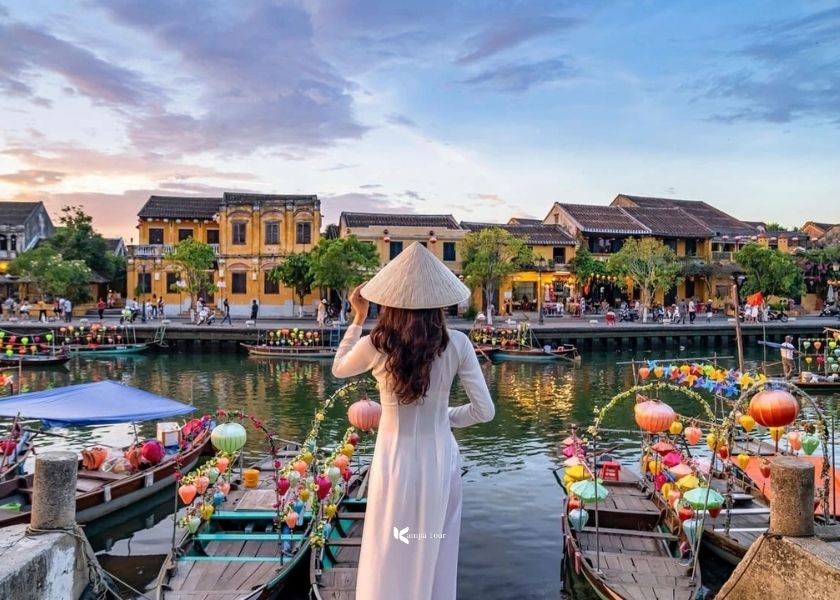
End the route in Hoi An, where you can combine the Ancient Town, An Bang Beach, countryside cycling, cooking classes and lantern-lit evenings. Hoi An can be busy, especially in the Old Town at night, but the experience changes once you move toward the rice fields, Tra Que vegetable village, Cam Thanh or the beach areas.
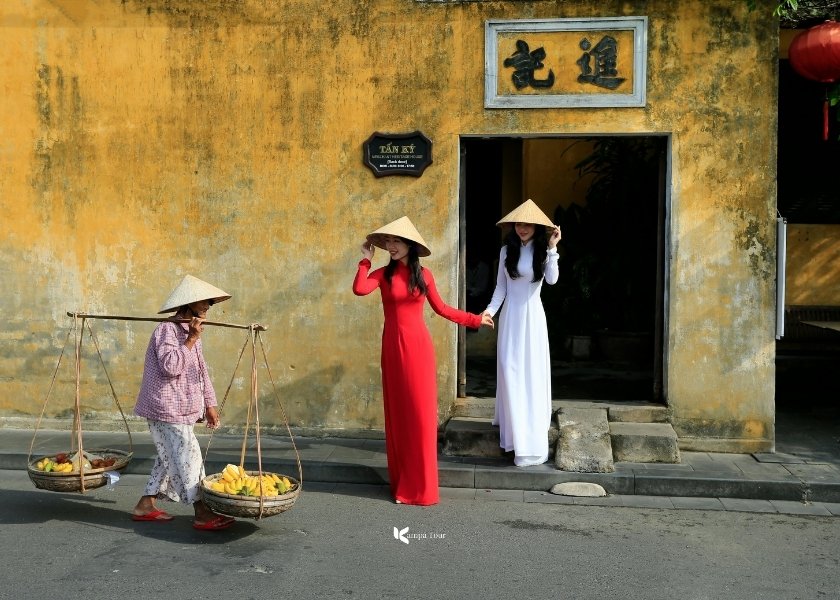
Hoi An, the most romantic city in Asia
For August trips, we often use Central Vietnam as the most practical core of the itinerary. It is not about chasing perfect weather every day, but about choosing a route where rain is less likely to disrupt the whole journey.
Thẻ tour 5573, 5585, 4822
Hanoi
Hanoi is worth keeping in an August itinerary, but not because of the weather. The city can be hot, humid and tiring in the middle of the day, so it is better treated as a cultural and food base than as a place for long outdoor sightseeing.
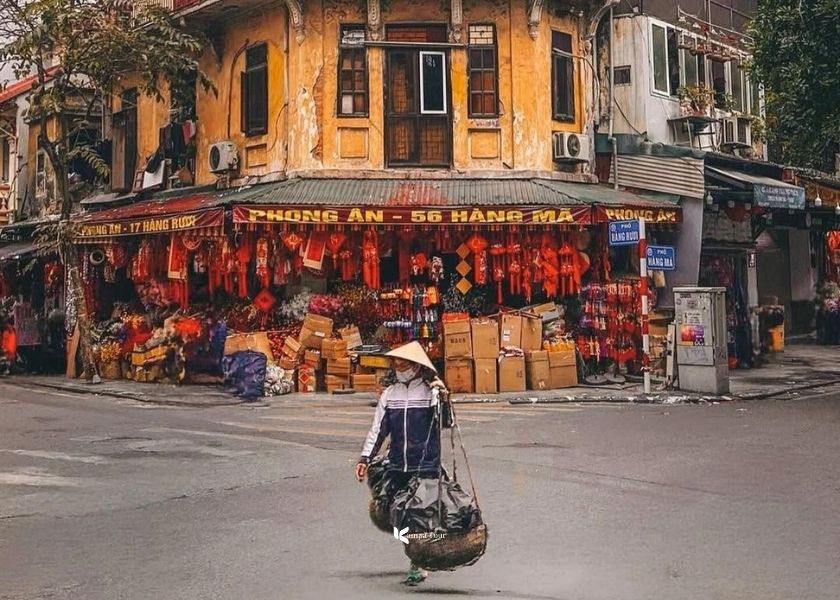
Hanoi Old Quarter
Start early with a walk around Hoan Kiem Lake or the Old Quarter. Save the hottest hours for museums, shaded cultural visits, cooking classes or one of Hanoi’s many coffee shops. In the evening, the city becomes easier to enjoy again, with street food, beer corners, night markets and lakeside walks.
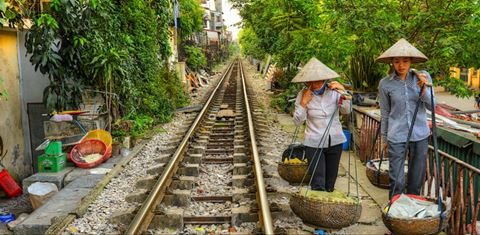
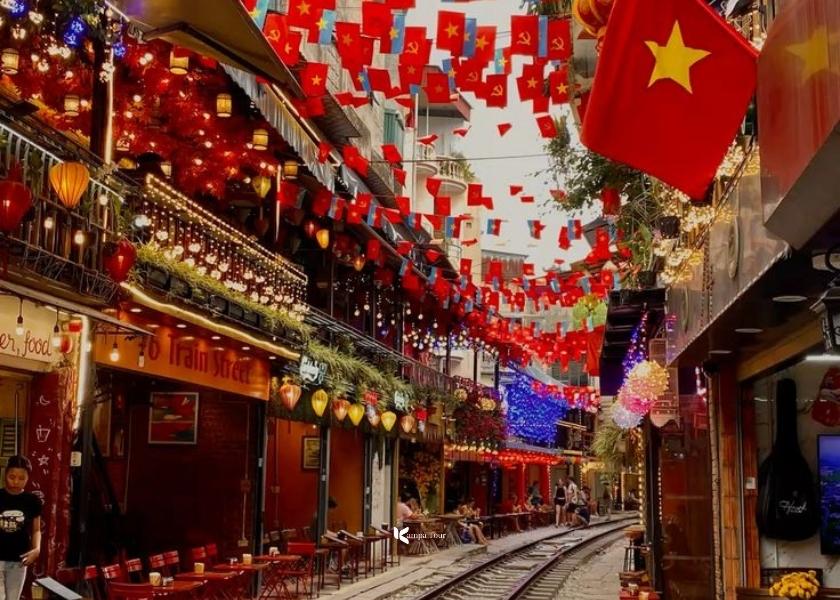
Hanoi Train Street
Food and coffee are the real reasons Hanoi remains a highlight in August. Try classics such as pho, bun cha and egg coffee, but do not turn the day into a checklist of too many cafés and restaurants. In this weather, a slower rhythm usually creates a better experience than rushing from one “must-try” stop to another.
If you visit in late August, Hanoi may also begin to show a festive mood ahead of Vietnam’s National Day on September 2.
Hanoi is worth keeping in August, but treat it as a cultural and food base, not a sunshine destination.
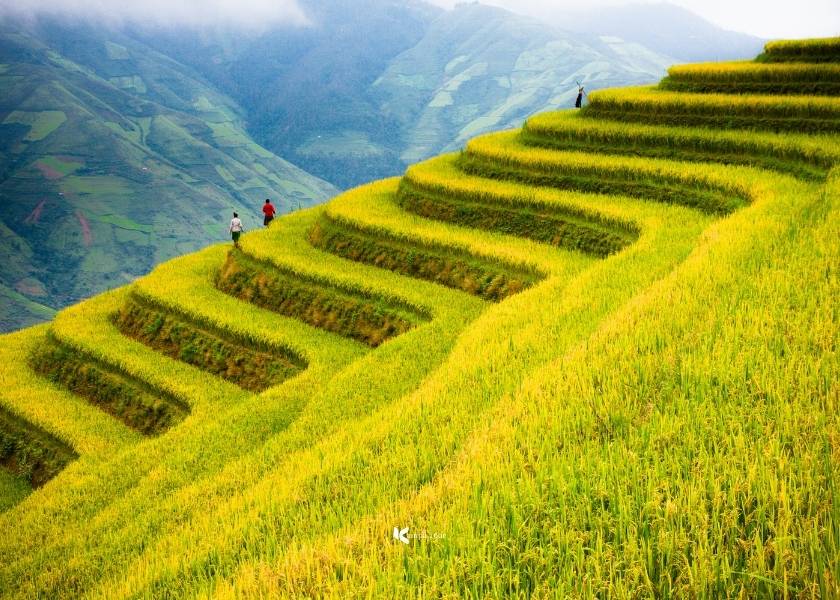
Mu Cang Chai is one of the best places in Northern Vietnam for rice terrace scenery in late August. This is when the fields often begin shifting from deep green to yellow-green, with the first golden tones appearing in some valleys before the main harvest season. The exact colors vary from year to year, but late August is usually rewarding for landscape photography.
Compared with Sapa, Mu Cang Chai feels more remote and less affected by mass tourism. It suits travelers looking for quiet villages, mountain views and a slower rural atmosphere.
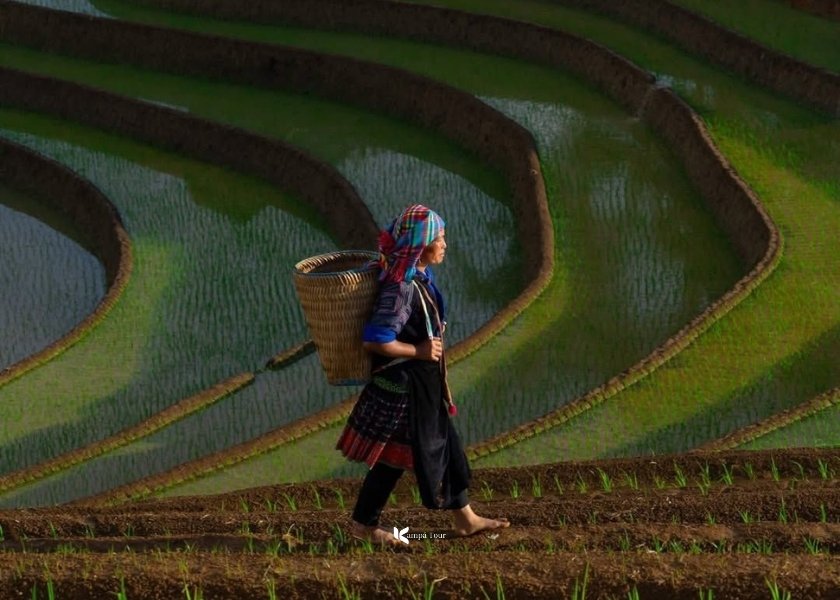
Mu Cang Chai during the rice harvest season
Because August weather in the mountains can still be unpredictable, Mu Cang Chai is better enjoyed through scenic drives, viewpoints and short walks rather than hard trekking. A private car or guided scenic drive is often the most comfortable way to enjoy the landscape, especially around Khau Pha Pass and the terraced valleys.
If your trip falls close to September 2, Mu Cang Chai can also connect naturally with the Independence Day atmosphere of local Hmong communities in the northern mountains.
Mu Cang Chai is beautiful in late August, but the safest way to enjoy it is by scenic drives and short walks, not heavy trekking.
Lan Ha Bay or Ha Long Bay
Ha Long Bay and Lan Ha Bay are still worth considering in August, but they should not be the most rigid part of the itinerary. The limestone scenery is just as dramatic in summer, and on a good weather day, a cruise can be one of the highlights of a Vietnam trip.
Lan Ha Bay is often a good alternative to Ha Long Bay if you prefer a quieter atmosphere. It shares the same limestone landscape, with karst islands, sheltered lagoons and kayaking routes, but it is usually less busy than the most popular parts of Ha Long Bay.
Lan Ha Bay is deserted in August
The main thing to understand is that bay cruises depend heavily on daily sea conditions. In August, tropical storms, heavy rain or rough seas may occasionally delay, change or cancel cruises for safety reasons.
A smart August itinerary keeps one backup option ready. If the bay cannot operate as planned, you can spend an extra day in Hanoi or switch to Ninh Binh for limestone scenery and river landscapes without depending on sea conditions.
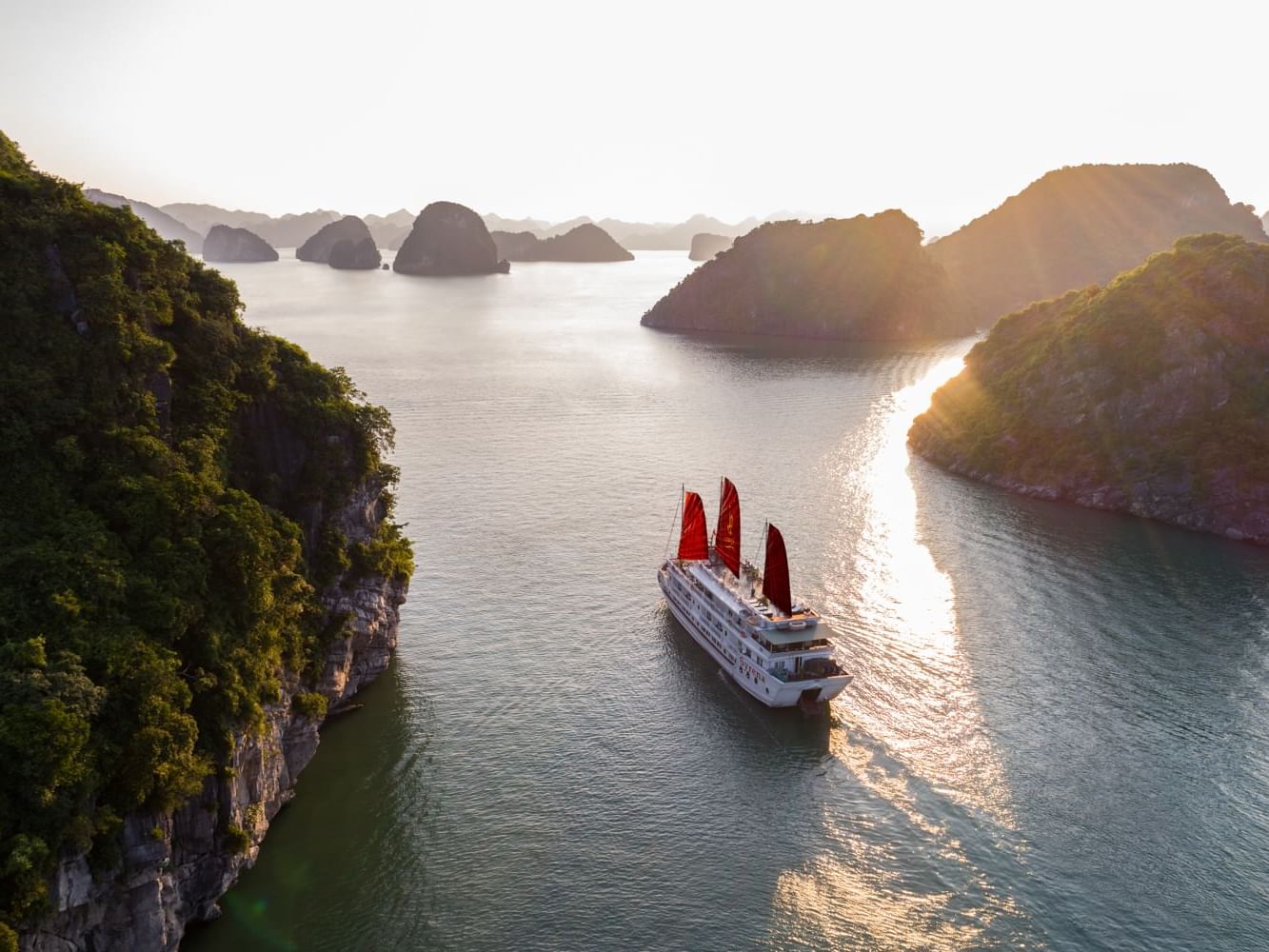
Lan Ha Bay at sunset
Plan the bay, but do not make it the most rigid part of your August itinerary.
Nha Trang and Ninh Van Bay
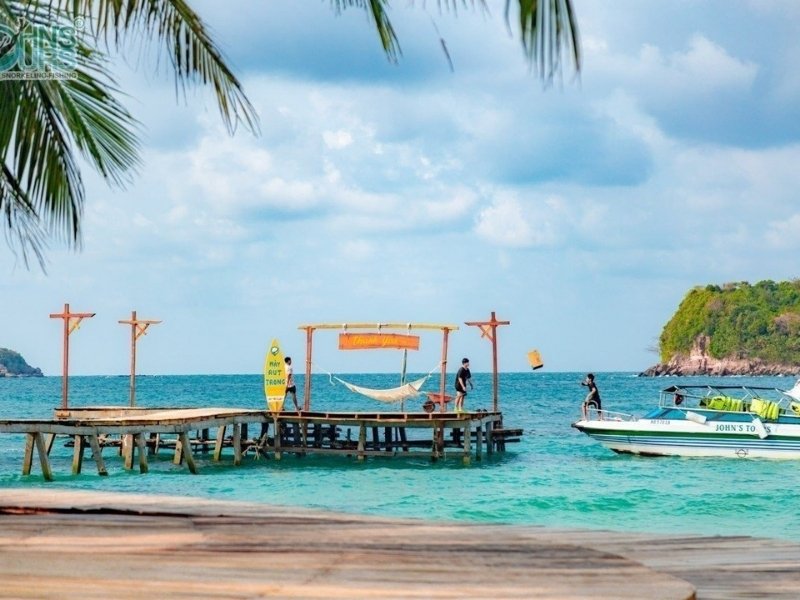
If beach time is a priority in August, Nha Trang is usually a safer bet than Phu Quoc. While Phu Quoc is more affected by the southwest monsoon at this time of year, Nha Trang often has more favorable conditions for a beach break.
Nha Trang also depends on where you stay. Tran Phu Beach is convenient, with easy access to restaurants, cafés and city services, but it can feel busy and developed if you are imagining a quiet island-style escape.
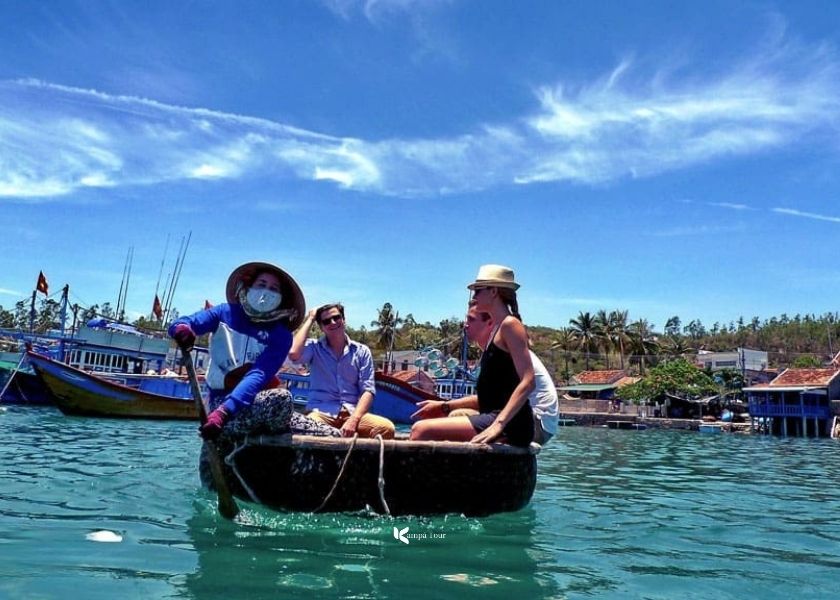
Take a basket boat ride in Nha Trang
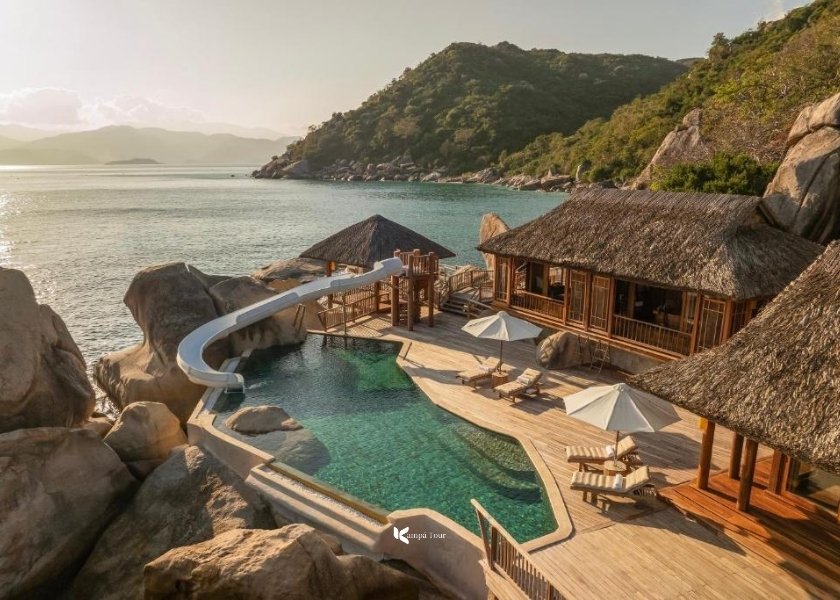
If your priority is calm, privacy and a more refined beach experience, consider Ninh Van Bay instead. Resorts here feel more secluded, with a stronger focus on rest, sea views and slow days by the water. It is a good choice for couples, families or travelers who want a beach extension without relying on Phu Quoc in August.
Snorkeling, diving and boat trips may be possible, but sea conditions can vary from day to day. Check locally before booking water activities and keep at least one relaxed resort day in the plan.
A private resort at Six Senses Ninh Van Bay
For travelers looking for beach time in August, Nha Trang and Ninh Van Bay are safer choices than Phu Quoc.
Mekong Delta
The Mekong Delta is not a place you visit in August for perfect sunshine. You come for higher water levels, tropical fruit, river life and a slower look at Southern Vietnam beyond Ho Chi Minh City.
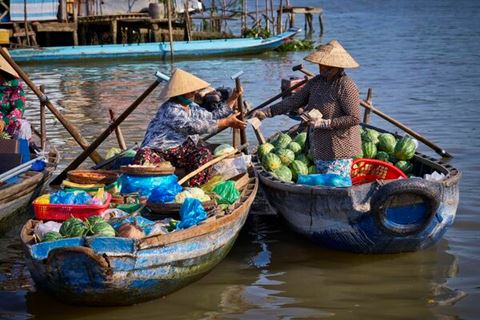
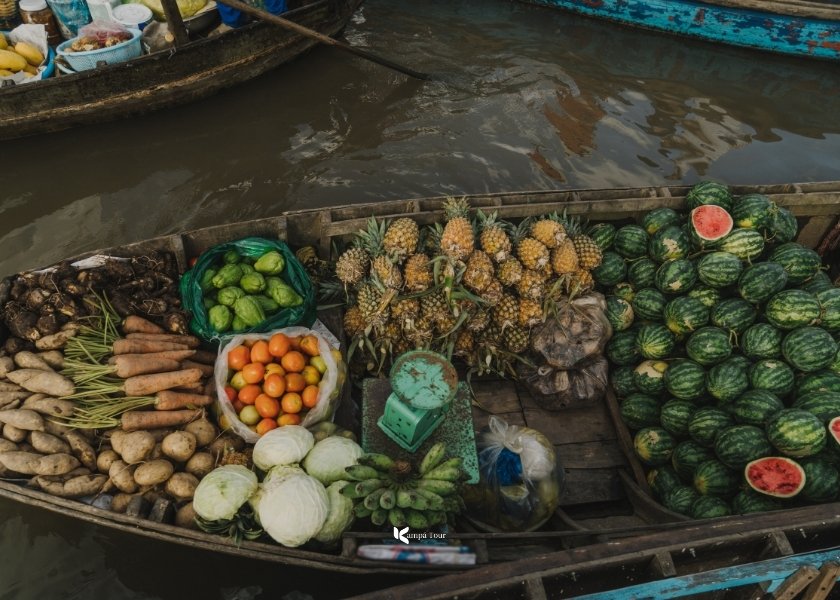
The Delta rewards early starts. Floating markets, riverside villages and small canals are much livelier in the morning, before the heat builds and before afternoon rain becomes more likely. If you visit Can Tho, wake up early for Cai Rang Floating Market. If you prefer a softer countryside experience, Ben Tre works well for boat rides, coconut workshops, fruit gardens and quiet village paths.
Mekong Floating Market
If time allows, stay at least one night rather than rushing through on a day trip from Ho Chi Minh City. The Delta is best experienced slowly, especially in August when the rhythm of the day matters.
The Mekong Delta is not about perfect weather in August; it is about higher water levels, fruit season and local life.
Places to be careful with in August
August is not a month when every famous destination in Vietnam works equally well. Some places are still possible to visit, but they require more realistic expectations, flexible planning or a different travel style. This section is not about places you must avoid. It is about knowing what not to overplan.
Phu Quoc
If beach weather is your priority, we would not usually recommend Phu Quoc as the first choice in August. This period falls within the rainy season on the island, so travelers may experience stronger winds, rougher seas and more frequent rain than in the dry months. Boat trips, snorkeling and beach days can be affected by daily sea conditions.
Phu Quoc does not need to be ruled out completely. It may still suit travelers who mainly want a quiet resort stay, spa time and slow days without expecting perfect sunshine. However, if your main reason for going is calm water, clear skies and reliable beach weather, it is better to look elsewhere.
For an August beach break, we would usually recommend Nha Trang, Ninh Van Bay, Da Nang or Hoi An before Phu Quoc.
Save Phu Quoc for another season if your main goal is calm, sunny beach days.
Hard trekking in Sapa and Ha Giang
Sapa and Ha Giang can be beautiful in August, with green valleys, rice terraces and misty mountain views. However, this is not the best month to plan a demanding trek. Rain can make trails muddy, slippery and harder to manage, especially after several wet days.
You do not need to remove the northern mountains altogether. A softer approach works better: stay in a comfortable ecolodge, take scenic drives, visit viewpoints, enjoy short village walks and adjust the route based on the weather.
Families, senior travelers and anyone not used to mountain trekking should be especially careful. In some areas, local guides may adjust or cancel walking routes if the rain makes paths unsafe.
In August, the northern mountains are better for views than for demanding treks.
Special experiences in late August and early September
Some experiences in Vietnam are tied to the lunar calendar, harvest rhythm or local community traditions. They are worth planning around, but only after checking the exact dates for your travel year.
Hmong Independence Day on September 2
If your trip continues into early September, the northern mountains may offer a special cultural experience around Vietnam’s National Day on September 2. In some highland areas, Hmong communities celebrate this period as Tet Doc Lap, or Independence Day Festival.
Moc Chau in Son La Province is one of the most notable places to witness this atmosphere. Around the holiday, people from nearby mountain communities gather in town wearing traditional clothing, meeting friends and relatives, playing folk games, enjoying music and joining local celebrations.
Mu Cang Chai can also be a meaningful stop if you are already traveling for the late-August rice terraces. This should not be treated as a staged show, but as a local community celebration that travelers may respectfully observe if timing and routing allow.
Travel with a local guide, ask before taking close-up photos and expect roads or town centers to be busier than usual around the holiday.
For travelers staying into early September, Hmong Independence Day can turn a northern mountain visit into a deeper cultural experience.
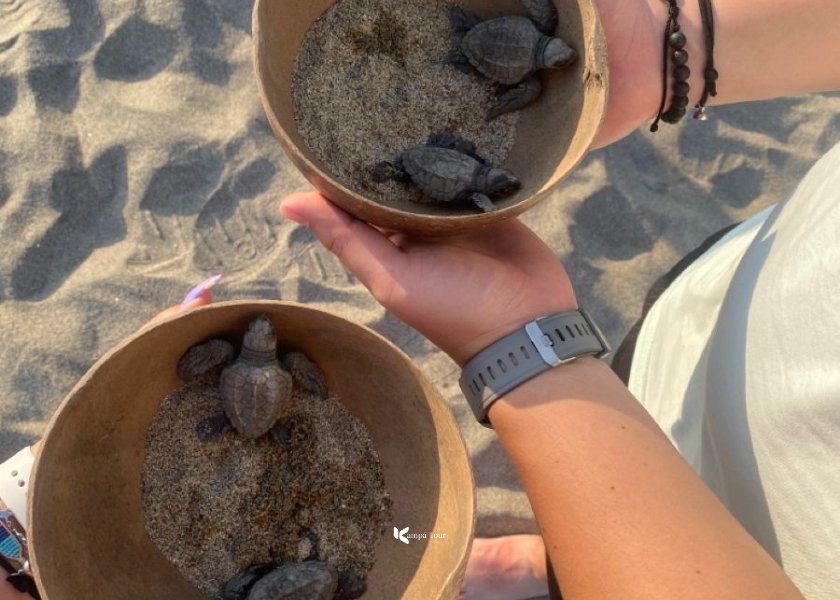
Sea turtle hatching in Con Dao
Con Dao is not a typical beach stop to add casually to every Vietnam itinerary. It is quieter, more remote and best suited to travelers interested in nature, conservation and wild island landscapes.
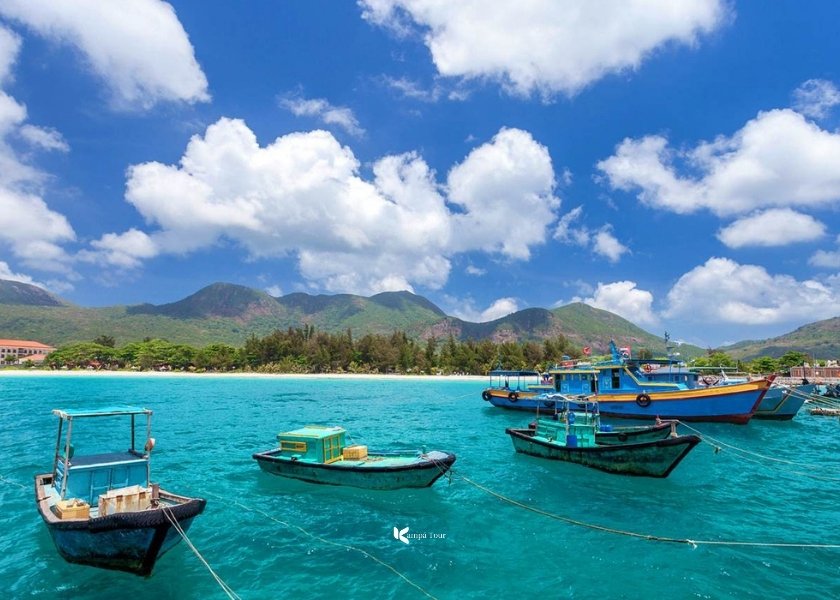
August is one of the notable months for sea turtle season in Con Dao. From around April to November, sea turtles come ashore on protected beaches within Con Dao National Park to nest, with Bay Canh Island being one of the most important nesting sites. Visitors may have the chance to learn about turtle conservation, observe nesting activity at night or join a baby turtle release, depending on timing and local conditions.
This is a wildlife experience, so nothing should be treated as guaranteed. Turtle activity depends on the weather, tides, nesting patterns and the regulations of Con Dao National Park. Travelers should only join authorized programs and follow the guidance of park rangers or local conservation staff.
Con Dao is not for every August itinerary, but for nature lovers it can be one of the most memorable seasonal experiences in Vietnam.
Releasing turtles back into the sea in Con Dao
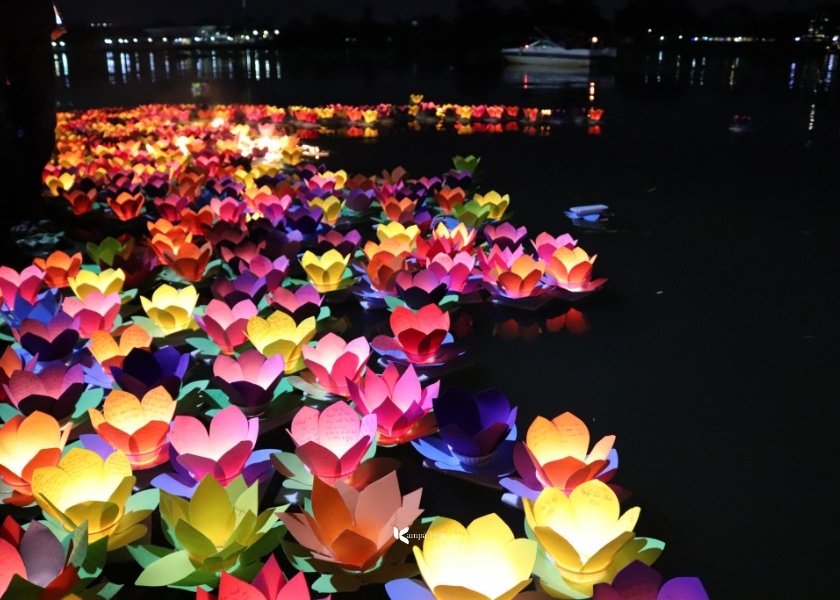
The Vu Lan Festival
Vu Lan Festival takes place on the 15th day of the seventh lunar month, so its date changes every year in the solar calendar. In some years, it falls in August; in others, it may be closer to early September.
At its heart, Vu Lan is a season of gratitude, remembrance and filial piety. Vietnamese families use this time to honor parents and ancestors, visit pagodas, make offerings and reflect on family bonds. For travelers, it adds a quiet and meaningful spiritual layer to the trip rather than a loud festival atmosphere.
Hue, Hoi An, Hanoi and Ho Chi Minh City can all be good places to experience Vu Lan, depending on the year’s calendar and local temple activities. Check the lunar date and ask locally which pagodas have meaningful ceremonies.
Vu Lan adds a quiet spiritual layer to an August trip, especially for travelers interested in temples and local family traditions.
Suggested Itineraries for Vietnam in August
Vietnam's Heritage from North to South in 10 Days
Day 1: Hanoi – Arrival.
Day 2: Hanoi – City Tour (Visit the Temple of Literature).
Day 3: Hanoi – Halong Bay (Overnight Cruise).
Day 4: Halong Bay – Return to Hanoi.
Day 5: Hanoi – Ninh Binh ("Halong on Land") – Night Train to Dong Hoi.
Day 6: Dong Hoi – Phong Nha (Explore Paradise Cave/Dark Cave – August is the best time for cool underground rivers).
Day 7: Hue – City Tour (Imperial Citadel & Royal Tombs).
Day 8: Hue – My Son Sanctuary – Hoi An.
Day 9: Hoi An – Walking Tour & Countryside (Basket Boat ride).
Day 10: Hoi An – Free time at An Bang Beach – Departure from Da Nang Airport.
Vietnam Cultural Heritages: A 2-Week Itinerary for Seniors
Day 1: Arrival in Hanoi
Day 2: Hanoi - City Tour
Day 3: Hanoi - Ninh Binh
Day 4: Ninh Binh - Halong Bay
Day 5: Halong Bay - Hanoi - Night Train to Phong Nha
Day 6: Phong Nha - Hue
Day 7: Hue - City Tour
Day 8: Hue - Hoi An
Day 9: Hoi An and My Son
Day 10: Hoi An - Free Day
Day 11: Hoi An - Ho Chi Minh City
Day 12: Ho Chi Minh City - Mekong Delta
Day 13: Mekong Delta - Ho Chi Minh City
Day 14: Ho Chi Minh City - Departure
Smart Travel & Guardrails (Expert advice)
Vietnam is incredibly safe, but August has its own set of rules. Here is the honest advice we tell our own friends and family when they visit during this month.
The "August Packing List"
Don't pack for a "cold" rainy season; pack for a "hot" one.
Lightweight Rain Poncho: Leave the heavy trench coats at home. You need a thin, plastic poncho that covers your backpack and breathes. August rain is warm, and a heavy coat will just make you sweat.
Waterproof Sandals: This is non-negotiable. Sudden showers can leave puddles. Avoid canvas sneakers that take days to dry. Bring sturdy sandals (like Tevas or Crocs) that can get wet and dry instantly.
Quick-Dry Clothing: Opt for linen or loose cotton. Humidity is high, so you want fabrics that don't cling to your skin.
Family Guardrails (Safety First)
If you are traveling with toddlers, these small adjustments make a huge difference:
Gear Advice (Carrier > Stroller): We strongly recommend bringing a baby carrier instead of (or in addition to) a stroller. Vietnamese pavements can be uneven and crowded. A carrier gives you much more mobility to explore temples and markets.
Health Watch: Since it is the wet season in the North and South, mosquitoes are more active. Don't panic, but be prepared. Bring high-quality insect repellent containing DEET or Picaridin and apply it during dawn and dusk.
Food Safety: Vietnamese street food is delicious, but for young children, stick to the "Cooked & Boiling" rule. Dishes like Pho (noodle soup) or Banh Mi (bread) are generally safe. Avoid raw herbs or drinks with ice in remote areas to keep little tummies happy.
What to AVOID (The "Don't" List)
To ensure your trip remains a highlight reel, we advise skipping these two things in August:
Phu Quoc Island: We love Phu Quoc, but not in August. The West Coast (where most resorts are) faces rough seas and strong winds this month. Stick to Nha Trang or Hoi An for calm waters.
Hard Trekking in Sapa: While the scenery is green, the dirt trails can turn into mudslides after a rainstorm. Unless you are an experienced hiker with proper boots, opt for "soft trekking" on paved village paths or enjoy the views from a comfortable ecolodge.
No, it rarely rains all day. In the North (Hanoi) and South (Saigon, Mekong Delta), the weather typically follows a predictable "1-Hour Rule." You might experience a heavy downpour in the late afternoon, but it usually lasts only about an hour, clearing the humidity and leaving the rest of the evening cool and fresh.
Is Halong Bay safe to visit during Typhoon Season?
Yes, cruises run daily, but you need to be aware that August is peak typhoon season in the Gulf of Tonkin. While dangerous storms are rare, the Port Authority prioritizes safety and may cancel overnight cruises with 12 to 24 hours' notice if the weather turns bad.
Why do you advise AGAINST Phu Quoc in August?
We love Phu Quoc, but August is simply not the right time to visit. During this month, the island experiences its peak monsoon season. The West Coast, where the majority of resorts and beaches are located, faces strong winds and rough seas, making swimming dangerous or impossible.
Is Sapa trekking dangerous in August?
It is not dangerous, but it can be messy. August is visually one of the best times to visit because the rice terraces start turning golden yellow, offering spectacular photography. However, the rain can turn the traditional dirt trekking trails into slippery mudslides.
Is Dengue Fever a major concern for families?
Since August is the wet season in the North and South, mosquitoes are naturally more active, and Dengue Fever is a reality in tropical countries. However, it is a manageable risk. You don't need to be overly alarmed, but you do need to be prepared.
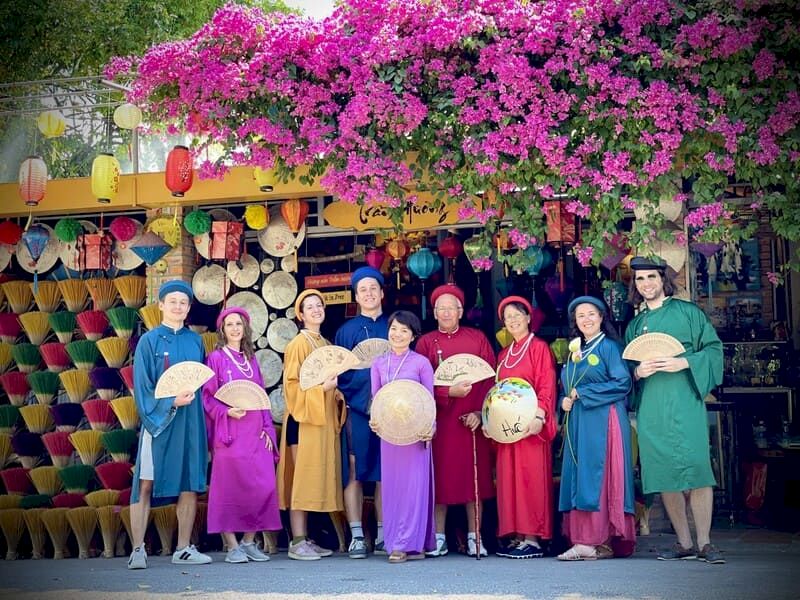
Our travellers visit Hue in central Vietnam in August
Conclusion
Vietnam is a great choice for a trip in August. With all this practical information on the weather and the top 7 places to visit during this period, we hope you have everything you need to shape your dream trip to Vietnam! If you have any questions, feel free to contact us!
Planning your trip?
Save time and get expert advice for FREE!
✅ 15 years of local experience
✅ Save up to 40 hours of planning
✅ Travel stress-free from start to finish
Book your free consultation today!




 Our team
 Our team
 Our team
 Our team

.jpg)

![[col-img15]](/pic/blog/images/f2968e34-7881-49b1-9a0b-722655aa0a6d.svg)
![[col-img15]](/pic/blog/images/e882b3cf-1bf6-436e-bdae-4c92bd79fb95.svg)
.jpg)


 Other
Other Add us as a preferred source