Vietnam Rainy Season: When It Rains, Where to Go & What to Avoid
Planning a trip to Vietnam but worried about the rainy season? You’re not alone. Many travelers imagine endless downpours, cancelled plans and ruined holidays, but Vietnam’s rainy season is more nuanced than that.
Vietnam’s rainy season depends on the region. Northern Vietnam is usually rainiest from May to September or October, Central Vietnam sees its heaviest rain from September to November, while Southern Vietnam has short tropical showers from May to November. Rain does not always ruin a trip, but October and November require extra flexibility. So, with the right route, a flexible schedule and a few simple precautions, it can also reveal a quieter, greener and more atmospheric side of Vietnam.
In this guide, you’ll find when the rainy season happens by region, which months need extra care, where to go, what to avoid and how to plan a smoother trip during Vietnam’s wet months.
Written by Trang Nguyen (Local Expert)
Updated on Jun 29, 2026
0 comment
Trang Nguyen has lived in Vietnam for nearly three decades and spent much of her life exploring Asia. She has joined numerous field trips, stayed with ethnic communities in the northern mountains, and gained deep insights into local cultures and landscapes. Her writing reflects an honest passion for authentic travel and meaningful connections. If you have any questions about her journeys, feel free to reach out and leave a comment!
Northern Vietnam
(Hanoi, Sapa, Ha Long Bay, Ninh Binh, Ha Giang)
May to October, sometimes extending into November Peak: July to August
Central Vietnam
(Da Nang, Hoi An, Hue, Nha Trang, Da Lat)
Coastal areas: September to December Central Highlands: May to October
Southern Vietnam
(Ho Chi Minh City, Mekong Delta, Phu Quoc)
May to November Peak: June to August
Northern Vietnam (Hanoi, Sapa, Ha Long Bay, Ninh Binh, Ha Giang)
Northern Vietnam has four distinct seasons, so its rainy season is not the same as the simple wet and dry pattern you may find in the south. From late May, rising temperatures and short showers often signal the start of the wet months. The rain is usually more frequent from July to August, when humidity is high and afternoon showers or thunderstorms are common.
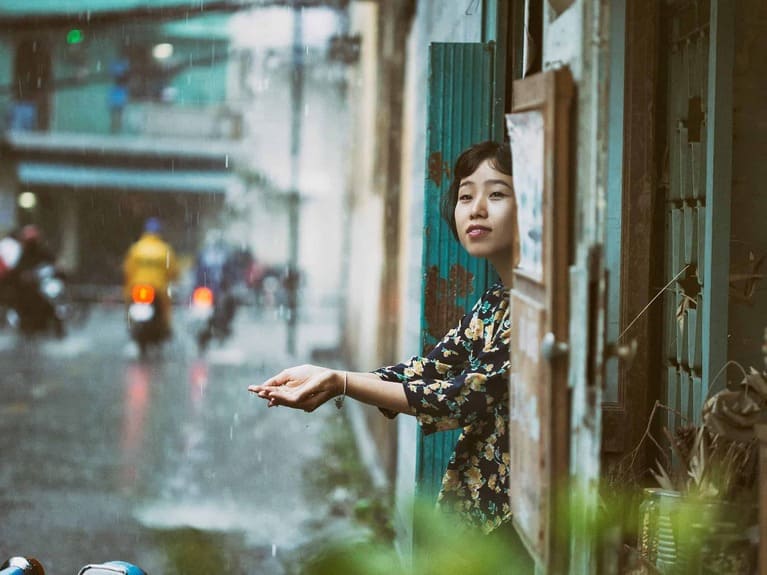
For travelers, this does not mean the whole region becomes difficult to visit. Hanoi, Ninh Binh and many cultural sites remain easy to explore, especially if you plan outdoor visits in the morning and keep cafés, museums or temples as backup options for rainy afternoons.
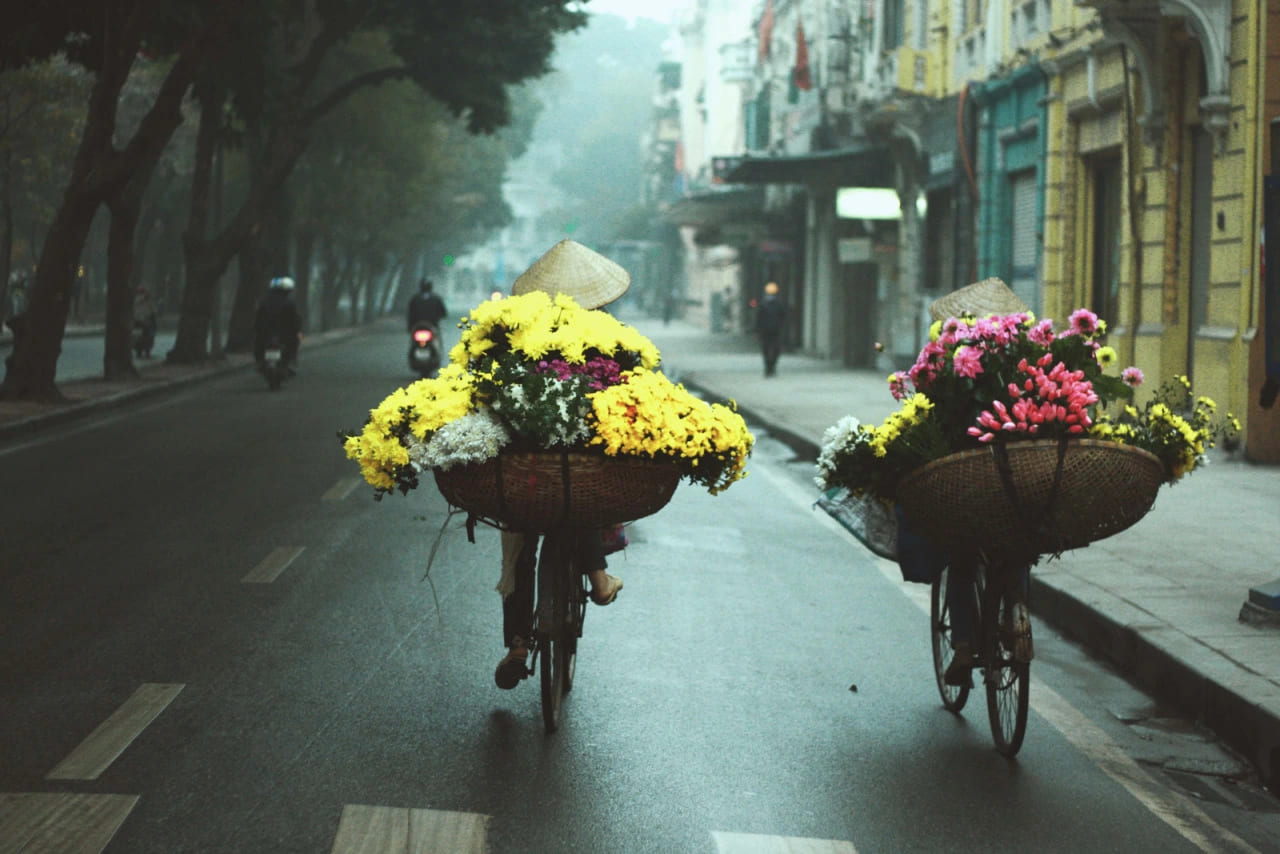
Hanoi's street after the rain
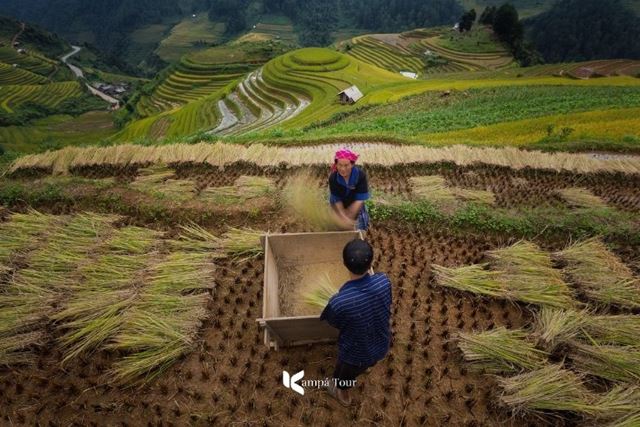
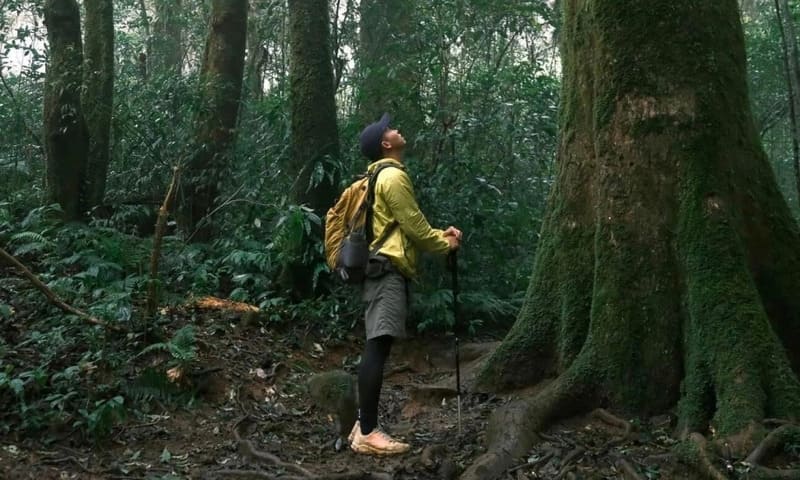
In the mountains, places like Sapa and Ha Giang become beautifully green during the rainy season. Rice terraces, valleys and waterfalls are often at their most photogenic. However, rain can also make trekking trails slippery and mountain roads more sensitive to fog, erosion or landslides after heavy downpours. August can still be wet, but it is also one of the most scenic times for rice terraces. Trekking conditions depend on recent rainfall, so choose easier routes if the trails are muddy.
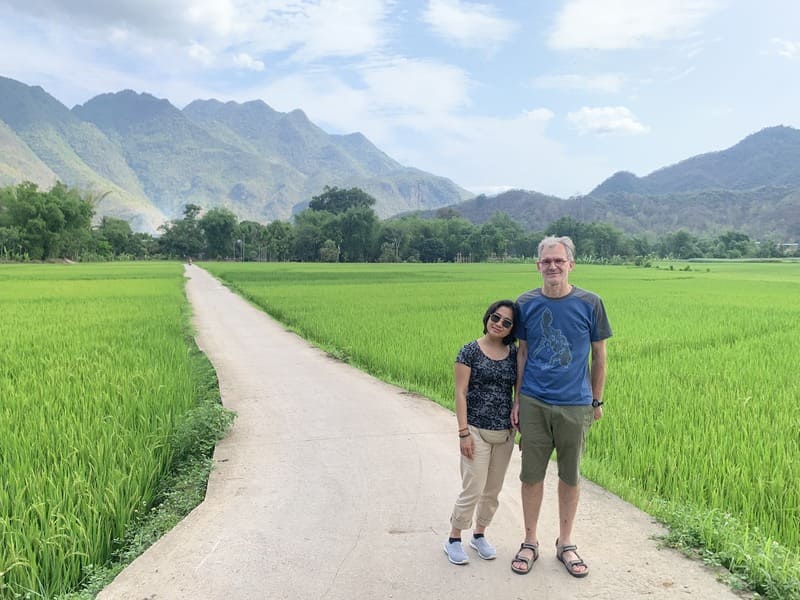
Green meadows after the summer rains (our travelers)
Halong Bay can still be magical in light rain, with misty limestone karsts and a quieter atmosphere. However, strong winds, tropical storms or safety alerts may lead to cruise schedule changes or cancellations. If Halong Bay is an important part of your trip, it is wise to keep one flexible night in Hanoi before or after the cruise.
Central Vietnam (Da Nang, Hoi An, Hue, Nha Trang, Da Lat)
Central Vietnam is the region where rainy season planning matters most, because the weather pattern is not the same everywhere. The coastal cities, the south-central coast and the Central Highlands each have their own rhythm.
Central coast: Hue, Da Nang and Hoi An
Along the central coast, especially in Hue, Da Nang and Hoi An, the rainy season usually becomes more noticeable from September to November or December. October and November are often the months that require the most flexibility, with heavier rain, possible storms and a higher risk of flooding in low-lying areas.
Hoi An can look especially atmospheric in light rain, with wet lantern-lit streets and a slower pace. However, because the old town sits close to the river, flooding can happen during periods of heavy rain or storms. Hue can also feel very poetic in the rain, but outdoor visits to royal tombs, pagodas or the Imperial City may need to be adjusted depending on the weather.
Da Nang is most ideal to visit in April and May
If your itinerary includes Hue, Da Nang or Hoi An in October or November, avoid a schedule that is too tight. These months can still be atmospheric and beautiful, but they are also the months when backup plans matter most.
South-central coast: Nha Trang
Nha Trang should not be treated exactly the same as Hue, Da Nang and Hoi An. Its rainy period is often shorter and can feel different from the central coast further north. Rain is more likely from around September to December, with October and November needing extra care if your trip is focused on beach time, island hopping or boat excursions.
If Nha Trang is part of your rainy-season itinerary, keep your beach days flexible and check sea conditions before planning boat trips.
Central Highlands: Da Lat and nearby areas
In Da Lat and the Central Highlands, the rainy season usually starts earlier, around May, and can last until October. The rain here is different from coastal storms. It often comes as showers, with cooler air, misty hills and green landscapes.
By July and August, showers may become more frequent, but Da Lat can still be enjoyable for travelers who like cafés, pine forests, waterfalls, gardens and a slower pace. Just be careful with slippery paths around waterfalls and countryside roads after heavy rain.
By January and February, much of Central Vietnam usually feels drier and brighter, with cooler air in the highlands and better conditions for old towns, beaches and outdoor sightseeing.
Southern Vietnam (Ho Chi Minh City, Mekong Delta, Phu Quoc)
Southern Vietnam is easier to understand when it comes to weather. There are mainly two seasons here: dry and rainy. From May to November, rain becomes part of daily life, especially from June to September.
But in Ho Chi Minh City, this does not usually mean grey skies all day. The rain often comes suddenly in the afternoon, pours heavily for 15 to 60 minutes, then clears up. Locals simply wait it out in a café, under a shop awning or with a light raincoat, then continue with their day. For travelers, it is still easy to visit markets, museums, restaurants and most city sights if you keep your plan a little flexible.
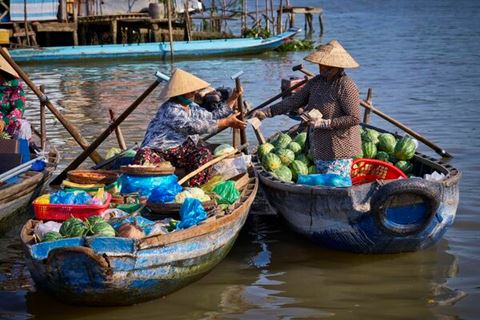
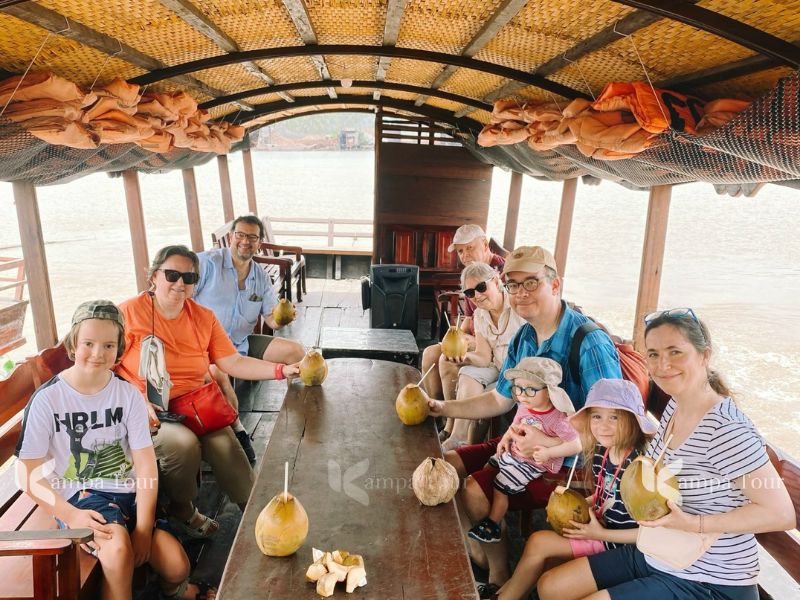
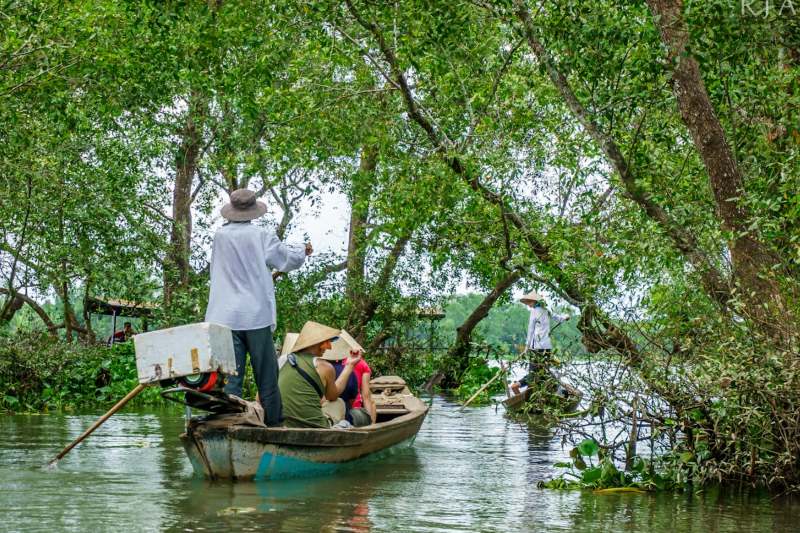
The Mekong Delta also remains very much alive during the rainy season. The canals look fuller, the orchards turn greener, and river life feels even more vivid. Boat trips and floating markets are still possible, although the timing may change a little if there is a heavy shower. In many ways, this is one of the most atmospheric times to see the water-based life of the region.
Our tourists on boat trip in the Mekong Delta
Phu Quoc is the main exception in the south. While Ho Chi Minh City and the Mekong Delta are still easy to enjoy with short showers, Phu Quoc can be less ideal from July to September if you are dreaming of sunny beach days, island hopping or smooth ferry transfers. Rain, wind and rougher seas may affect boat trips and beach activities during this period.
So if your trip focuses on city life and the Mekong Delta, Southern Vietnam is still very manageable in the rainy season. If Phu Quoc is your main beach stop, it is better to check the timing carefully or keep a backup plan.
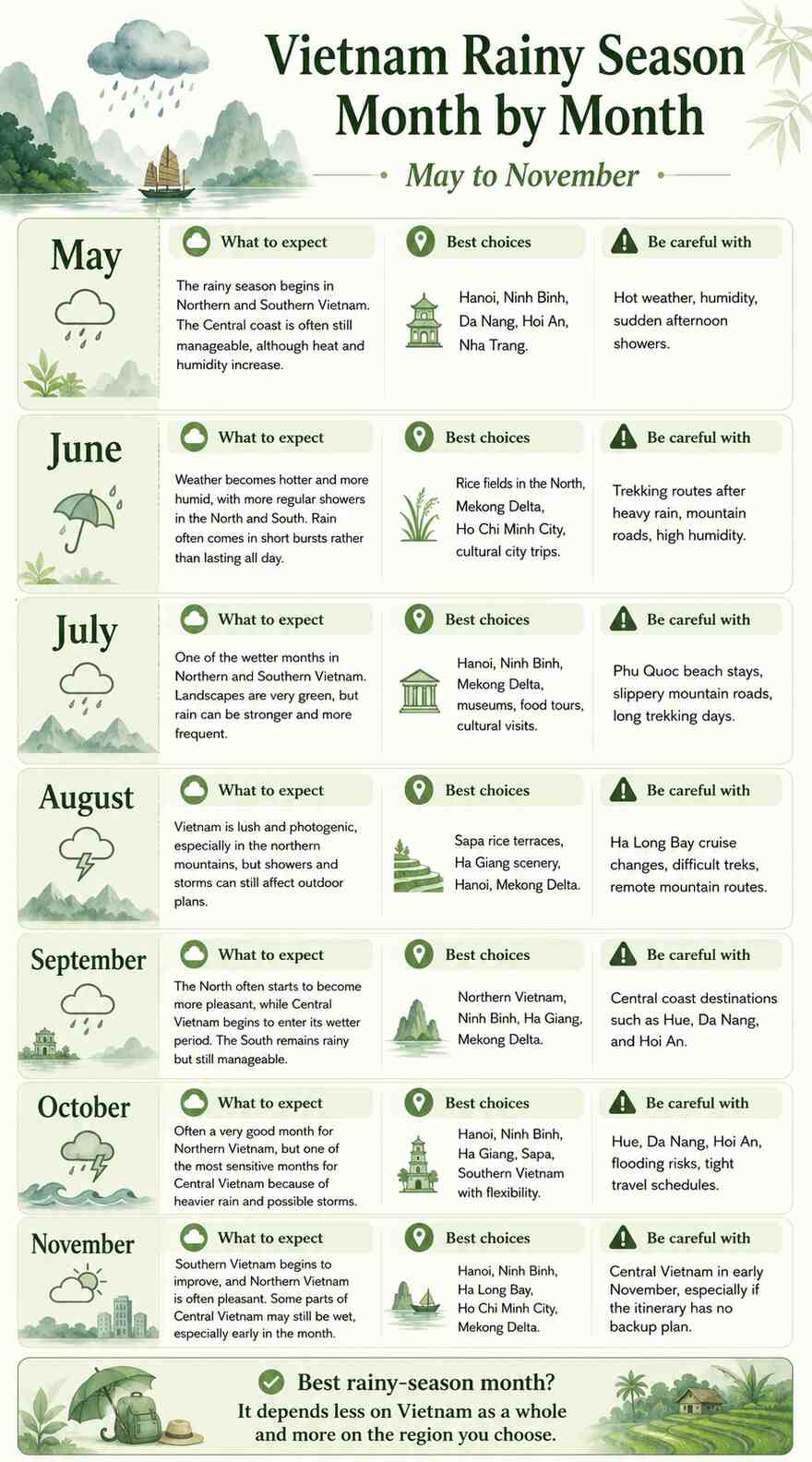
Vietnam rainy season month by month: May to November
The rainy season in Vietnam does not affect every region in the same way. A month that feels wet and risky in one part of the country can still be a good travel window in another. Here is a simple month-by-month overview to help you choose the right route.
Worst months to visit Vietnam during the rainy season
There is no single “bad month” for the whole of Vietnam. The real question is not simply when you travel, but which region you plan to visit.
For example, October can be a pleasant month in the North, with cooler air and clearer skies after the summer rains. At the same time, it can be one of the most sensitive periods for the Central region, where heavier rain, storms or flooding may affect travel plans.
Here are the periods that need the most attention:
October to November: Be extra careful with Central Vietnam. These months can still feel atmospheric, but they are also more exposed to heavy rain, storms and flooding risks.
July to August: Keep your plans flexible if you are heading to the northern mountains, planning long treks, taking remote mountain roads or joining a bay cruise. Rain, fog or storms can affect outdoor activities.
July to September: Some island and beach destinations in the South can be less ideal if your main goal is sunny beach time, swimming, island hopping or smooth ferry transfers. Rain and rougher seas can affect the experience.
So instead of asking “What month should I avoid in Vietnam?”, it is better to ask: which region should I avoid during my travel month? With the right route, Vietnam’s rainy season does not have to feel dull or difficult. It simply requires smarter planning.
How bad is the rainy season in Vietnam? Is It worth traveling?
How bad is it?
Rainy season in Vietnam isn’t something to worry too much about. In the North, it rains more from July to August, especially along the coast, but most showers are short and the fresh greenery makes the scenery even more beautiful.
The Central region sees more rain between September and December, especially in Hoi An and Hue where rivers can rise, but it also brings cooler air and fewer crowds.
In the South, most places often get quick afternoon showers from May to November, with the heaviest rainfall occurring in June, July, and August. The locals will just pause at a café or carry on with an umbrella. And to be honest, it even adds to the charm.
The rain also brings cooler air and fewer crowds
Is it worth traveling?
Yes, on second thought, the rainy season in Vietnam can actually be a great time to visit!
Cheaper prices: Hotels, flights, and tours often cost less (You can even stay at quality hotels or resorts for as little as $30 per night during this season in Vietnam.)
Fewer tourists: Attractions are quieter, service feels more personal, and you can enjoy popular spots without the crowds (such as Hoi An and Hue, Danang)
Cooler temperatures: Rain cools things down, especially in the north and central highlands. It rarely lasts long, and places like Hue feel calm and poetic during this season.
Beautiful scenery: The landscapes are especially lush and photogenic during this time, from misty mountains in Sapa to the green waterways of the Mekong Delta.
There is a big difference in flight prices to Vietnam between November & December
Most of the rain comes as short afternoon showers. You can just pause for a drink or explore indoors, then continue your trip once it clears up. If you like a slower pace and don't mind a bit of rain, this season might suit you better than the busy summer months.
“Hi, Vietnamese here. Get your convenience raincoat that sells in any store and enjoy the scenery. Suppose it starts to rain when you get there.
It is part of the experience when you travel at this time of the year. But it is excellent if you know how to enjoy it” -said Cuong
Cuong, our local guide
“You will be fine. The weather in HCMC is really unpredictable so we have no idea when it will rain hard, but compare to the middle/ north part of VN the rain here isn't as bad and only last for a few hours.” - said Lisa
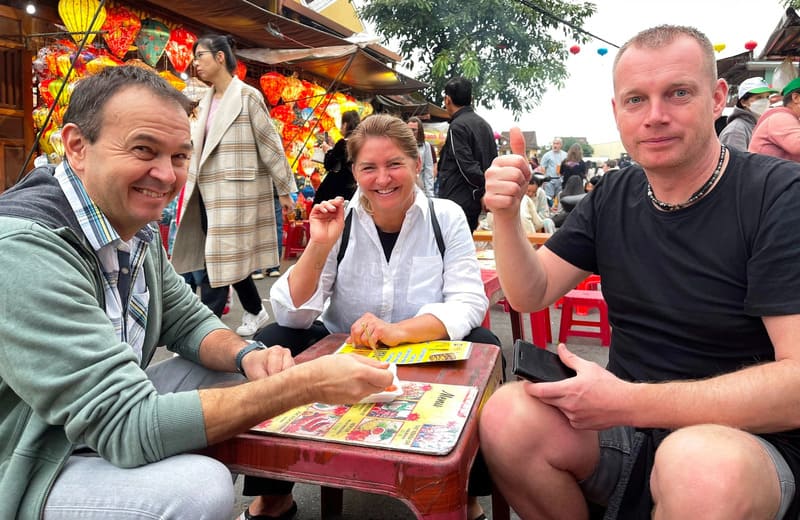
Lisa and her friends enjoying their time in Vietnam
A few things to keep in mind before the trip:
Leave some space in your itinerary. It's nice to have time to relax if the rain changes your plans.
If you're looking to see more of the region, Cambodia is an easy and interesting add-on to your trip. For more information, learn more about: Vietnam - Cambodia tours
Make sure your travel insurance covers delays or cancellations, just in case.
Rain-friendly travel styles for Vietnam’s rainy season
After six years of guiding tours, I’ve learned that not every traveler wants to chase waterfalls or trek through the mud when it rains, and that’s perfectly okay. Vietnam’s rainy season can still be the perfect excuse to stay in, slow down, and indulge.
Here’s what you can look forward to:
Elegant boutique hotels with full-service spas
Wellness retreats in the mountains (Pu Luong, Da Lat, Ha Giang…)
Afternoon tea, reading corners, and indoor lounges
Private herbal steam baths or spa rituals during rainy afternoons
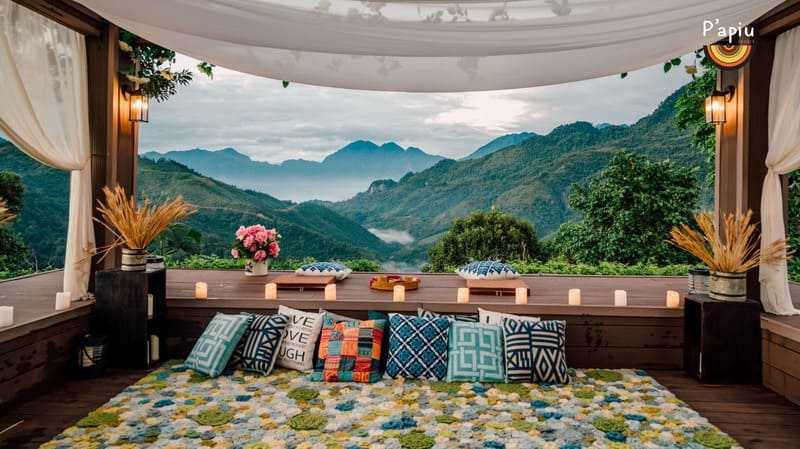
Cozy wooden ecolodges with mountain views and fireplaces
P'apiu Resort in Ha Giang
If that sounds like your kind of rainy-day dream, we’ve curated a few inspiring places across Vietnam:
Where to visit & things to do in Vietnam when it rains
Northern Vietnam (Hanoi, Sapa, Ha Long Bay, Ninh Binh, Mai Chau, Pu Luong, Ha Giang)
Hanoi
Rainy days in Hanoi are perfect for relaxing and exploring culture at the Vietnam Museum of Ethnology, Hoa Lo Prison, Hanoi Old Quarter, Ho Chi Minh Mausoleum, Temple of Literature, or Duong Lam village.
When you need a break, grab a cup of ca phe sua da (iced coffee with condensed milk) at a cozy café like Cong Caphe, or warm up with a steaming bowl of pho, bun cha or cha ca la vong.
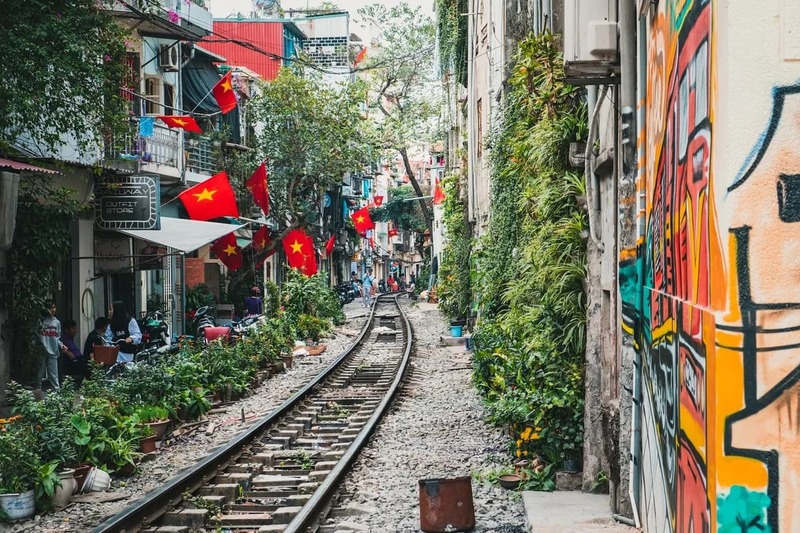
Even during the rainy season, people still choose Hanoi Train Street as their destination.
Sapa (June - August)
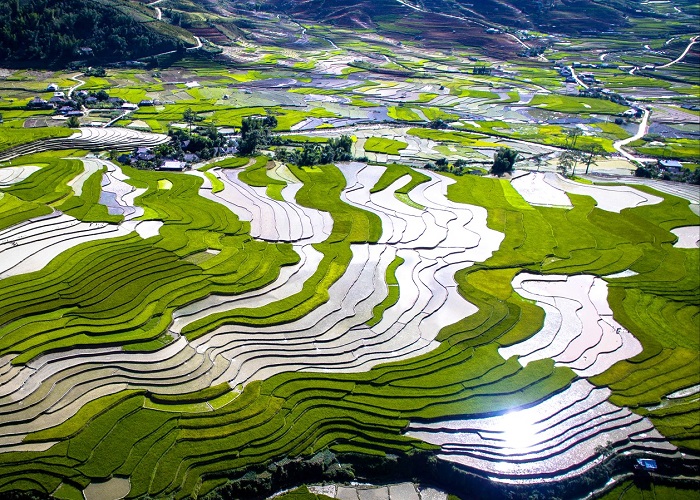
If you're in Sapa during the rainy season, it’s better to skip trekking as trails can get slippery. But the rice terraces are stunning when they’re full of water, reflecting the sky like mirrors. Alternatively, you can check out the local markets, meet the Hmong and Dao people, or sit by a fire and enjoy some hot local food.
The rice terraces are stunning, reflecting the sky like mirrors in Sapa
Ha Long Bay (June - August)
We all know on clear days, Ha Long Bay is magical, but when it rains, the mist over the karsts adds a mystical feel. If the weather’s not great for a cruise, head to nearby Ninh Binh.
Ninh Binh (July - August)
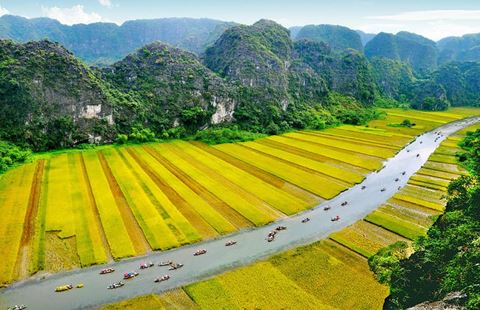
Even on rainy days, Ninh Binh is still stunning. You can take boat rides in Tam Coc or visit temples like Bich Dong, where you can also learn more about the local culture.
The rainy season is still a great time to visit Tam Coc
Some great spots to visit are Hoa Lu, Bai Dinh Pagoda, and Dong Chuong Lake. Be sure to try stone snails (only available in the rainy season)!
Mai Chau & Pu Luong (May - September)
Mai Chau and Pu Luong have a unique vibe in rainy season. These locations are more serene than others, and the rain only heightens their allure. You can explore the Pu Luong Nature Reserve or visit the villages of Mai Chau, where the rice terraces become even more colorful and lush when it rains.
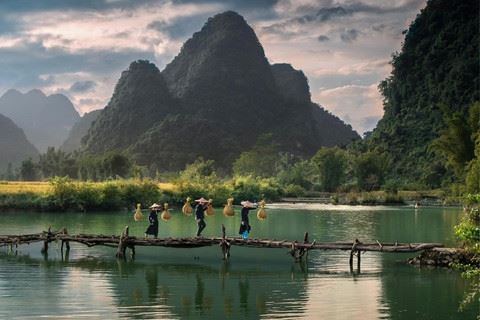
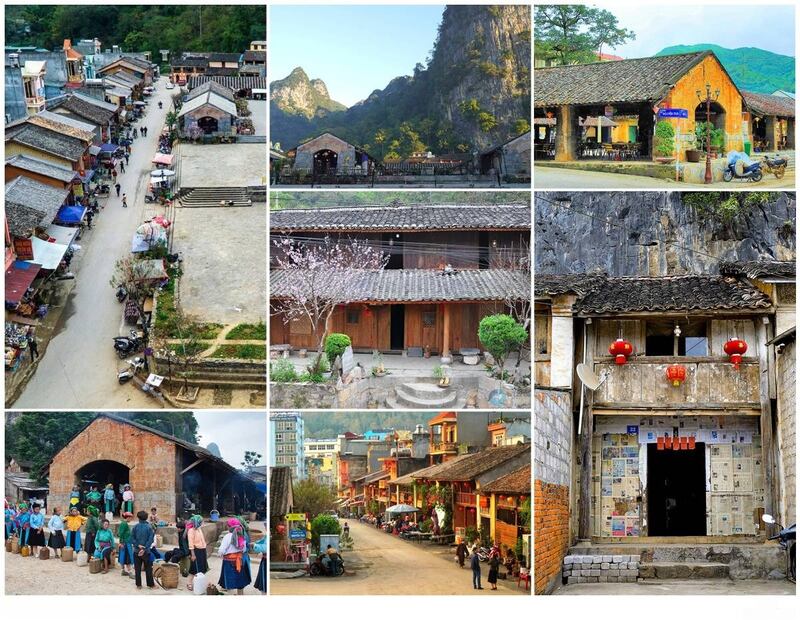
Although rain season might not be the best for completing the full Ha Giang Loop, you can still explore parts of it like Dong Van or Meo Vac. Ha Giang has a mix of diverse cultures and ethnic groups, so it will become a peaceful time to enjoy the scenery and meet the locals.
Ha Giang has a mix of diverse cultures and ethnic groups
Aside from the local markets, don’t miss the famous Dinh Vua Meo in Dong Van!
Central Vietnam (Hue, Hoi An, Da Nang, Nha Trang)
Hue (September – December)
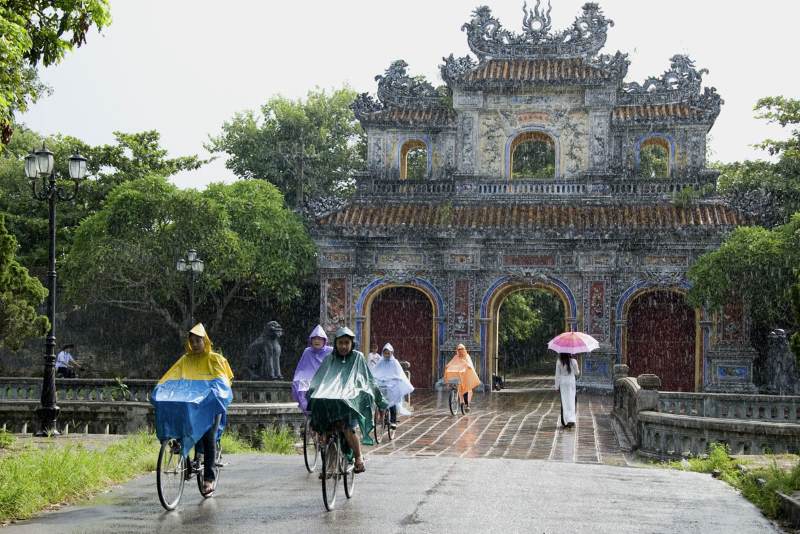
The rain in Hue gives you a whole new perspective. You can check out the Imperial City and the Royal Antiquities Museum without getting wet. Thien Mu Pagoda is also amazing and quiet in the rain. Afterward, warm up with a bowl of bun bo Hue or chill by the Perfume River.
Hue in the rain: A calm and almost melancholic atmosphere
Hoi An (September – December)
Hoi An in the rain is even more magical. The streets are wet, the buildings look all nostalgic, and it’s the perfect time to grab a lantern or souvenir, or even take the time to experience the Hoi An's 24-hour tailoring service at the Central Market. Head to Faifo Coffee for ca phe trung (egg coffee) and enjoy the cozy vibes. After the rain stops, take a walk around or grab a bowl of cao lau from a street stall.
The Museum of Cham Sculpture is a cool spot to learn about Vietnam’s history, and Vincom Plaza is great for shopping or arcade games with the family in the rain. There are also a bunch of local galleries to enjoy.
When it rains in Nha Trang, it’s the perfect time to relax. You can treat yourself to a spa day or visit the Po Nagar Cham Towers. Once the rain clears, the fresh air is perfect for a stroll along the coast.
Southern Vietnam (Ho Chi Minh City, Mekong Delta, Phu Quoc)
Ho Chi Minh City (September – December)
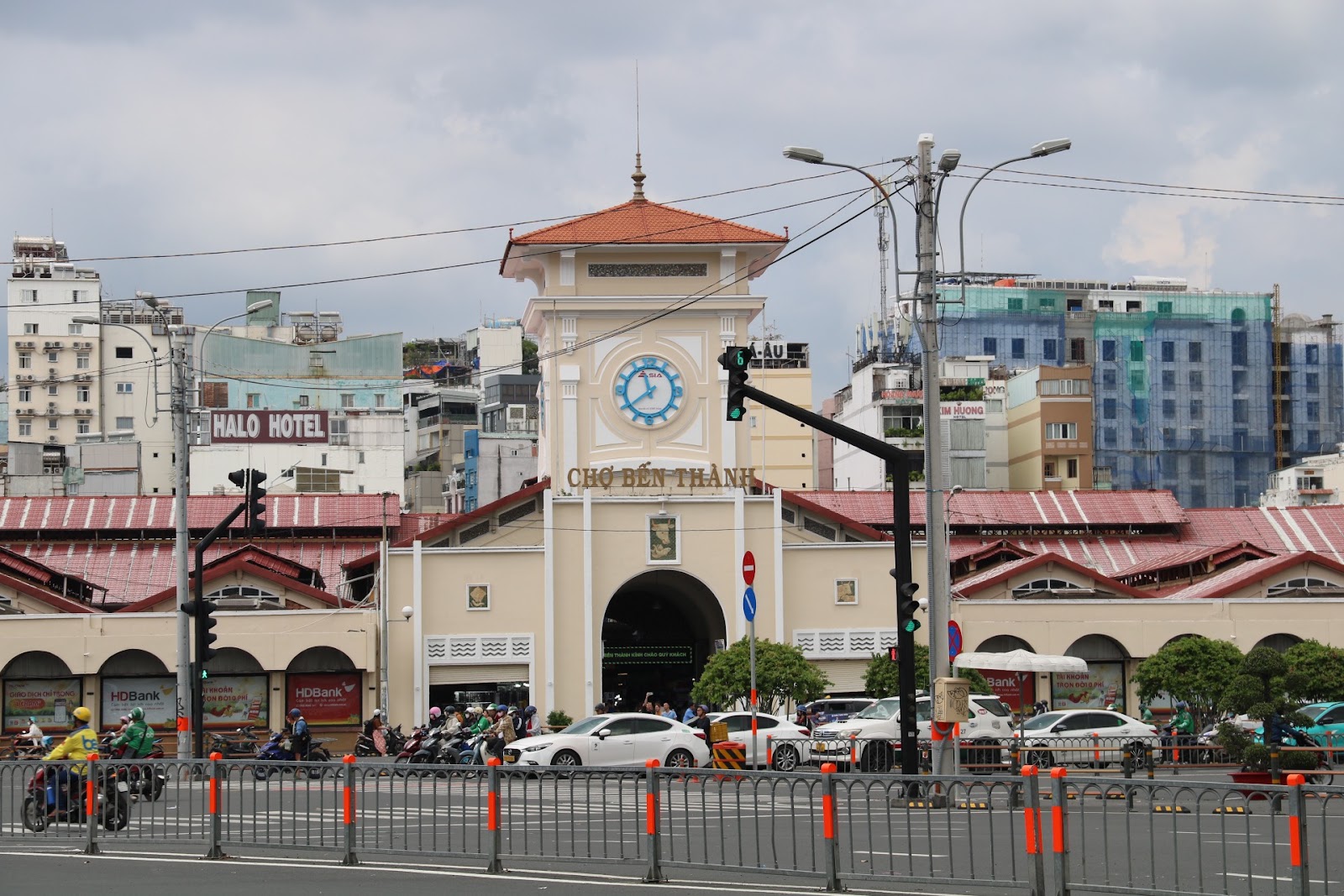
When it rains in Ho Chi Minh City, there are still plenty of places to explore. You can check out the War Remnants Museum or the Cu Chi Tunnels to learn about Vietnam's history. For shopping, visit Ben Thanh Market or Vincom Center.
Ben Thanh market today: Memories of Saigon urban area
You can still enjoy covered boat tours of the floating markets in Can Tho, Chau Doc - parts of the Mekong Delta. The wet season makes the rice fields and orchards even more vibrant, and it’s a good time to see the local culture up close through activities like fishing and visiting villages.
Symphony of vibrant greens in the Mekong Delta during the rainy season
Phu Quoc (April – October)
In the rainy season, Phu Quoc is quieter, with fewer tourists around. The beaches, like Bai Sao and Bai Khem, are more peaceful. It’s also the season for tràm mushrooms, a local delicacy worth trying.
🌍 Bonus tip: If you’re already in southern Vietnam during the rainy season, hopping over to Cambodia is easy and enriching. Angkor Wat in the rain is hauntingly beautiful, and the crowds are much lighter than in dry season.
Our tips for the rainy season in Vietnam
What to Bring
Lightweight raincoat or poncho
Quick-dry clothing
Waterproof footwear and backpack
Mosquito repellent
Extra notes
Check weather forecasts
Avoid risky activities: Skip mountain treks in Sapa or island visits in Phu Quoc during storms
Plan a backup: Have indoor options ready in case of heavy rain or flooding
Stay safe: Avoid driving in heavy rain or at night, and watch out for flooding in places like Ho Chi Minh City
Our last words
When we think of the rainy season, we often imagine days of heavy rainfall and unpleasant weather. In Vietnam, the reality is often different: most regions experience short showers rather than prolonged downpours.
Traveling to Vietnam during the rainy season is usually hassle-free, but it does require extra planning and precautions. These insider tips aim to help you make the most of your stay by exploring beautiful places and opting for exciting experiences that won't be spoiled by the rain.
Planning your trip?
Save time and get expert advice for FREE!
✅ 15 years of local experience
✅ Save up to 40 hours of planning
✅ Travel stress-free from start to finish
Book your free consultation today!






 Our team
 Our team
 Our team
 Our team


.jpg)
.jpg)
.jpg)
.png)
.jpg)
.jpeg)
.jpg)


.jpg)




 Other
Other Add us as a preferred source