Vietnam Visa Exemption 2026: Who Can Enter Visa-Free?
Planning a trip to Vietnam and wondering whether you need a visa? In 2026, Vietnam offers a 45-day visa exemption for citizens of several countries, while travelers from other nationalities, or those planning a longer stay, can apply for a Vietnam e-visa valid for up to 90 days.
So, who can enter Vietnam without a visa, how long can you stay, and when should you apply for an e-visa instead? This guide gives you a clear, updated overview of Vietnam visa exemption rules, eligible countries, Phu Quoc’s special 30-day policy, and the most common questions travelers ask before departure.
Written by Nhu PHAM (local expert)
Updated on Jun 18, 2026
0 comment
Nhu PHAM is a Saigon native with a passion for travel, adventure, the French and English language, and making discoveries as a digital nomad. She has already explored many Southeast Asian countries, including Cambodia, Laos, and Thailand. Originally from the South, she has a particular expertise in the South and the Mekong Delta. Currently based in Hanoi, she works for Kampá Tour and is the author of many highly appreciated articles on this blog. If you have any questions or comments, please feel free to share them at the bottom of her articles so that she can answer you directly.
Vietnam currently has several visa-free or simplified entry options. For most tourists, these are the most important ones:
Traveler situation
Best option
Maximum stay
You are from a visa-exempt country and stay 45 days or less
Visa exemption
45 days
You are not visa-exempt, or you want to stay longer
Vietnam e-visa
Up to 90 days
You only visit Phu Quoc Island under specific conditions
Phu Quoc visa exemption
30 days
You are of Vietnamese origin or an eligible family member
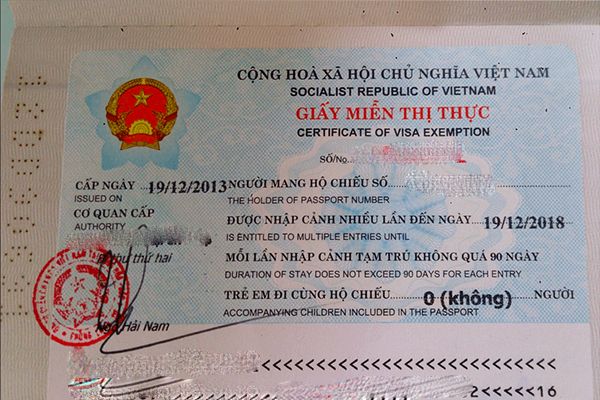
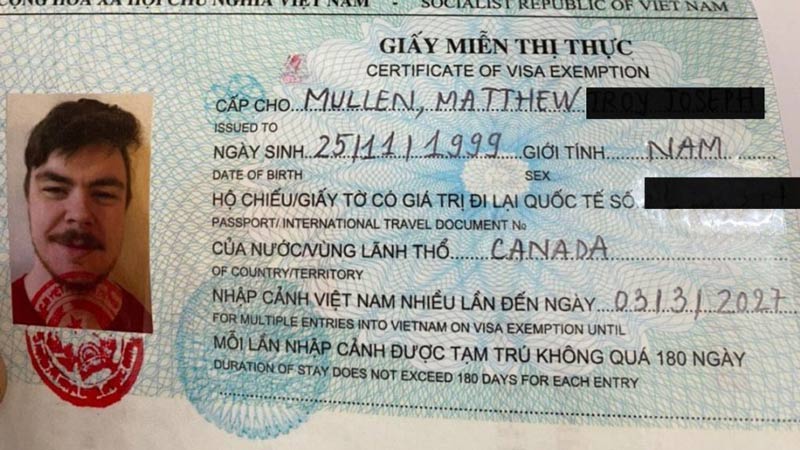
5-year visa exemption certificate
Usually up to 180 days per entry
In short: for a short holiday, visa exemption may be enough. For a longer trip, or a multi-country itinerary, the e-visa is often safer.
2. Which Countries Are Exempt from Vietnam Visa in 2026?
Vietnam grants a 45-day visa exemption to citizens of several countries. This means you can enter Vietnam without applying for a visa in advance, as long as your stay does not exceed the allowed period and you meet Vietnam’s entry conditions.
2.1 Countries eligible for 45-day visa exemption until March 14, 2028
Citizens of the following countries can stay in Vietnam visa-free for up to 45 days from the date of entry:
Countries
Maximum stay
Policy validity
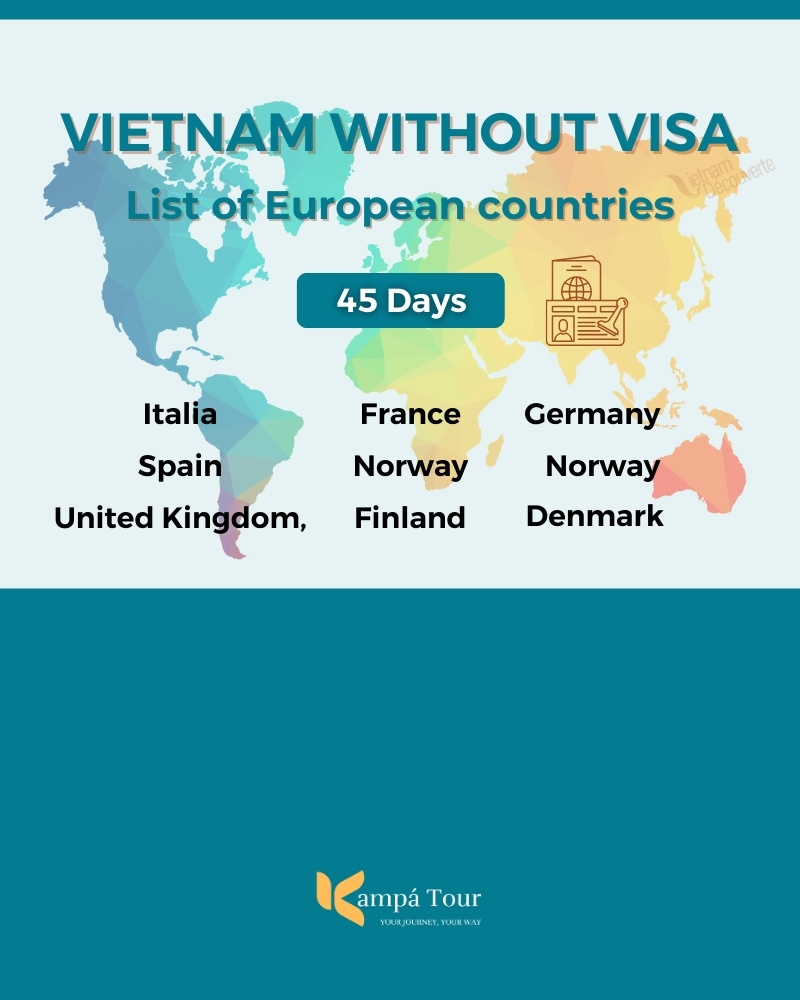
Germany, France, Italy, Spain, the United Kingdom, Russia, Japan, South Korea, Denmark, Sweden, Norway and Finland
45 days
From March 15, 2025 to March 14, 2028
2.2 Additional countries eligible for 45-day visa exemption until August 14, 2028
Vietnam has also added another group of countries under its tourism stimulus policy. Citizens of the following countries can enter Vietnam visa-free for up to 45 days for tourism purposes:
Countries
Maximum stay
Policy validity
Belgium, Bulgaria, Croatia, the Czech Republic, Hungary, Luxembourg, the Netherlands, Poland, Romania, Slovakia, Slovenia and Switzerland
45 days
From August 15, 2025 to August 14, 2028
Good to know: Poland, the Czech Republic and Switzerland were previously covered by a temporary 2025 tourism policy. Since August 15, 2025, they have been included in the newer 45-day visa exemption policy valid until August 14, 2028.
Vietnam visa exemption countries for ordinary tourist travelers, updated for 2026
3. What If Your Country Is Not Visa-Exempt?
If your country is not on the visa exemption list, or if you want to stay in Vietnam for more than 45 days, you should apply for a Vietnam e-visa.
Vietnam’s e-visa is available to citizens of all countries and territories. It can be valid for up to 90 days and may be issued for single entry or multiple entries.
```html id="evisa-table"
E-visa type
Best for
Important note
Single-entry e-visa
One continuous stay in Vietnam
It becomes invalid once you leave Vietnam
Multiple-entry e-visa
Vietnam, Cambodia, Laos or Thailand multi-country trips
Recommended if you plan to leave and re-enter Vietnam
```
Travel tip: If your itinerary includes Vietnam, then Cambodia or Laos, then Vietnam again, choose a multiple-entry e-visa unless you are sure you can re-enter under visa exemption.
4. How to Enter Vietnam Under Visa Exemption
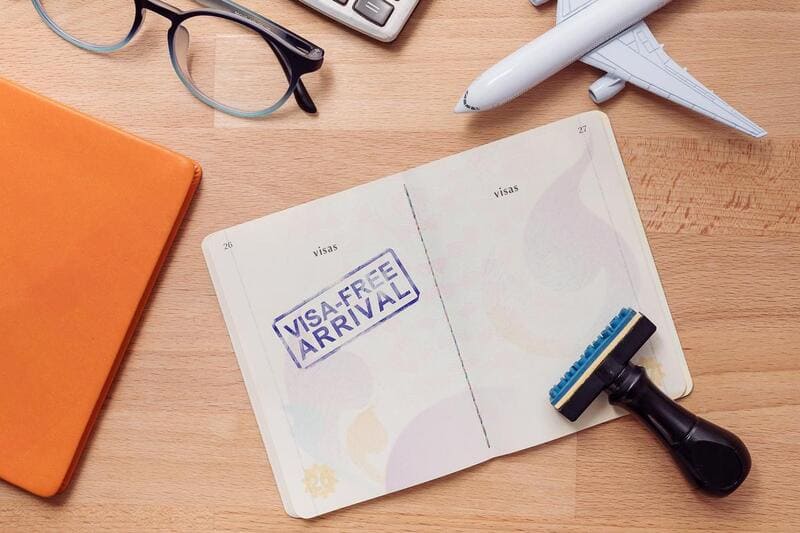
If you are eligible for Vietnam visa exemption, you do not need to fill in a visa waiver form before departure. You simply travel with your passport and receive an entry stamp upon arrival.
Before traveling, make sure that:
your passport is valid for at least 6 months from your date of entry into Vietnam;
your passport has enough blank pages for entry and exit stamps;
your stay does not exceed the permitted visa-free period;
you can show proof of onward or return travel if requested by the airline or immigration officers.
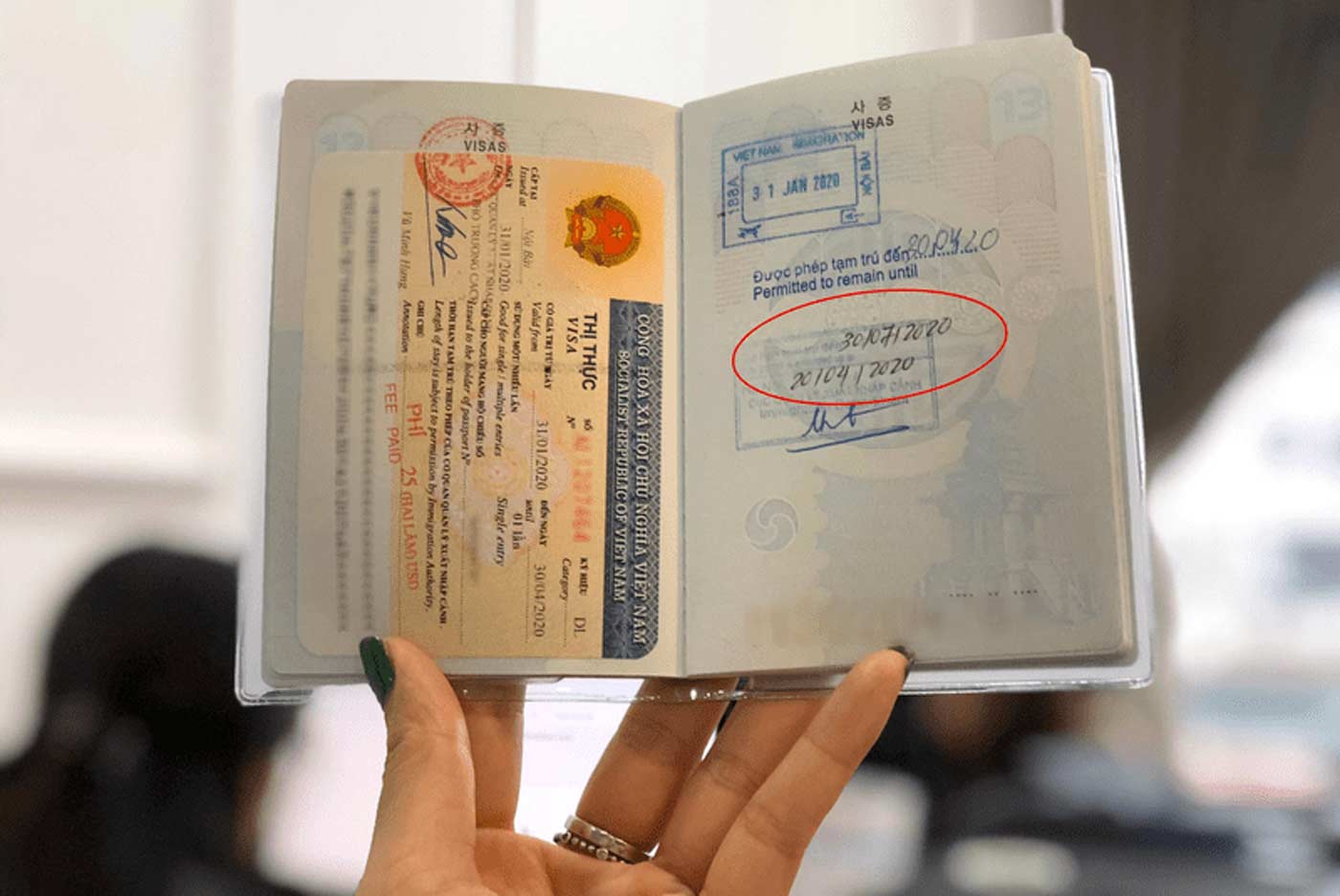
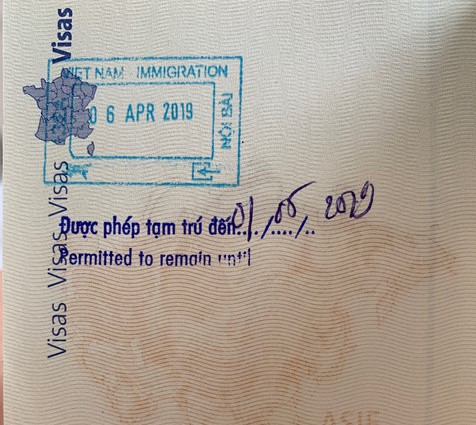
Your visa-free stay is counted from your date of entry. Both the arrival date and the departure date are included in the total number of days.
Example of a Vietnam visa exemption stamp
5. New Entry Updates for 2026
5.1 Pre-Arrival Information system
Vietnam has introduced a Pre-Arrival Information system to help foreign visitors complete part of their immigration information before arrival. Travelers can submit their information online before entering Vietnam and receive a QR code to present at immigration.
Important: As of 2026, the Pre-Arrival Information system is being introduced to make arrival procedures smoother. It helps reduce waiting time at immigration, but it should not be confused with a visa. Travelers who need a visa must still apply for the correct visa or e-visa before departure.
5.2 Health declaration from July 1, 2026
From July 1, 2026, travelers entering, leaving or transiting through Vietnam are subject to a health declaration requirement. The form is bilingual, in Vietnamese and English, and should be completed within the required time frame before travel.
Before departure: Check the latest entry requirements, especially if you travel after July 1, 2026. Visa exemption, Pre-Arrival Information and health declaration are different procedures. Being visa-free does not necessarily exempt you from other immigration or health declarations.
6. Can You Extend a Vietnam Visa Exemption?
For ordinary tourist stays, Vietnam visa exemption is generally not extendable inside the country. If you want to stay longer than your visa-free period, the safest solution is to apply for a Vietnam e-visa before your trip.
Another option is to leave Vietnam and re-enter with a new valid entry document. Since the previous 30-day waiting period between visa-exempt entries no longer applies, many eligible travelers can re-enter Vietnam again, as long as they meet the entry requirements each time.
However, overstaying your permitted stay can lead to fines and administrative complications. Always check the date written on your entry stamp and plan your departure carefully.
7. Phu Quoc Visa Exemption for Stays Under 30 Days
Phu Quoc Island, located in the Gulf of Thailand, has a special visa exemption policy for foreign visitors. Under this policy, travelers can stay on Phu Quoc without a Vietnam visa for up to 30 days, provided they meet specific conditions.
To benefit from the Phu Quoc visa exemption, you should generally meet the following conditions:
your passport is valid for at least 6 months from your arrival date;
your final destination in Vietnam is Phu Quoc;
your stay on Phu Quoc does not exceed 30 days;
you arrive by air or by sea from outside Vietnam, or transit through an international border gate in Vietnam before continuing to Phu Quoc;
you can show proof that you will leave Phu Quoc for another country after your stay.
Example: If you fly from Bangkok to Phu Quoc, stay only on the island, and then fly from Phu Quoc to Singapore within 30 days, you may be eligible for the Phu Quoc visa exemption. But if you continue from Phu Quoc to Ho Chi Minh City, Hanoi or another destination in mainland Vietnam, you need a valid Vietnam visa or e-visa.
If you plan to visit other parts of Vietnam after Phu Quoc, or if you wish to stay longer than 30 days, you should apply for a Vietnam visa or e-visa before traveling.
8. Vietnam 5-Year Visa Exemption Certificate
The 5-year visa exemption certificate is a special document for people who have a close connection with Vietnam. It is mainly intended for:
Vietnamese people living overseas;
foreign nationals of Vietnamese origin;
foreign spouses or children of Vietnamese citizens;
foreign spouses or children of Vietnamese people living overseas or foreign nationals of Vietnamese origin.
This document is not the same as a standard tourist visa. It is useful for eligible travelers who visit Vietnam regularly for family or personal reasons.
Documents generally required
Requirements may vary slightly depending on where you apply, but applicants are usually asked to prepare:
an application form for a visa exemption certificate;
a valid foreign passport or equivalent travel document;
passport-sized photos;
documents proving Vietnamese origin, Vietnamese nationality or family relationship with a Vietnamese citizen or person of Vietnamese origin.
For Vietnamese nationals living abroad or foreign nationals of Vietnamese origin, supporting documents may include:
birth certificate;
certificate of Vietnamese nationality;
old or current Vietnamese passport;
Vietnamese identity card;
decision on renunciation or loss of Vietnamese nationality;
other documents proving Vietnamese origin.
For spouses or children of Vietnamese citizens or people of Vietnamese origin, supporting documents may include:
marriage certificate;
birth certificate;
documents proving the family relationship;
Vietnamese passport, ID card or other documents of the Vietnamese spouse or parent.
Where to apply?
At a Vietnamese Embassy or Consulate abroad;
At the Vietnam Immigration Department if you are already in Vietnam and eligible to apply there.
Validity and length of stay
The visa exemption certificate can be valid for up to 5 years.
Its validity must end at least 6 months before the passport expires.
Holders can generally stay in Vietnam for up to 180 days per entry.
9. Work Visa and Work Permit Exemption in Vietnam
If you are traveling to Vietnam for tourism, this section does not normally apply to you. Work-related immigration rules are separate from tourist entry rules.
In most cases, a foreigner who wants to work legally in Vietnam needs both:
a suitable visa or temporary residence document;
a work permit arranged with the support of the employer in Vietnam.
Some foreign nationals may be exempt from a work permit depending on their role, length of stay or specific legal category. Examples may include certain company owners, board members, heads of representative offices, lawyers licensed in Vietnam, short-term specialists or spouses of Vietnamese citizens residing in Vietnam.
Because work-related procedures are more complex, travelers coming to Vietnam for employment, investment, volunteering or long-term residence should check directly with their employer, legal advisor or the competent Vietnamese authorities.
10. Common Traveler Scenarios
Visa rules are easier to understand when applied to real travel situations. Here are the most common cases travelers ask about before visiting Vietnam.
I visit Vietnam, then Cambodia, Laos or Thailand, then return to Vietnam. Do I need a visa?
It depends on your nationality and the length of each stay. If your passport is eligible for Vietnam’s 45-day visa exemption and each stay in Vietnam is under 45 days, you may be able to enter Vietnam visa-free each time.
If your nationality is not visa-exempt, or if one of your stays exceeds the visa-free period, you should apply for a Vietnam e-visa. For multi-country trips, a multiple-entry e-visa is usually the safer choice.
Example: If you travel from France to Hanoi, then visit Cambodia, Laos or China, then return to Vietnam for another stay of less than 45 days, you may enter Vietnam visa-free again, provided that your passport and travel plan meet the entry requirements.
I have a 90-day single-entry e-visa. Can I leave Vietnam and come back with the same visa?
No. A single-entry e-visa is valid for one entry only. Once you leave Vietnam, that visa becomes invalid, even if the 90-day validity period has not ended.
If you plan to leave Vietnam and return during the same trip, choose a multiple-entry e-visa from the beginning, or check whether you can re-enter under visa exemption if your nationality qualifies.
Can I change a single-entry e-visa into a multiple-entry e-visa?
In practice, once a single-entry e-visa has already been issued, it is not usually modified into a multiple-entry e-visa. If your travel plans change and you need to leave and re-enter Vietnam, you may need to apply for a new visa or use visa exemption if you are eligible.
If your application has not yet been finalized, choose the multiple-entry option if your itinerary includes Vietnam plus another country such as Cambodia, Laos, Thailand or China.
I entered Vietnam with visa exemption. Can I apply for an e-visa inside Vietnam to extend my stay?
For ordinary tourist stays, visa exemption is generally not extendable inside Vietnam. Applying for an e-visa while already in Vietnam does not automatically extend your current stay.
If you want to stay longer, you should leave Vietnam before the end of your visa-free period and re-enter with the right entry document, such as a new e-visa or a new visa exemption if you are eligible.
I need around 50 days in Vietnam. What is the best option?
If you need more than 45 days in Vietnam, the simplest option is usually to apply for a Vietnam e-visa valid for up to 90 days.
Another possibility is to leave Vietnam before the end of your 45-day visa-free stay and then re-enter. However, this requires careful planning, especially if your itinerary takes you far from an international border or airport.
Can I leave Vietnam before using all 45 visa-free days and re-enter for a new 45-day stay?
In practice, each visa-exempt entry is treated as a new stay. If you leave Vietnam before the end of your 45-day visa-free period and re-enter later, you may receive a new 45-day visa exemption, provided that you still meet Vietnam’s entry requirements.
You do not normally need to use all 45 days before leaving. What matters is that each stay remains within the permitted visa-free period.
Does the 45-day limit apply to one trip or to the whole year?
The 45-day limit applies to each eligible entry, not to the total number of days spent in Vietnam during the whole year. For example, several separate stays of less than 45 days may be possible, as long as you leave Vietnam before the end of each authorized stay and meet the entry requirements each time.
Do Swiss citizens need to book through a local tour operator to benefit from visa exemption?
No. Swiss citizens are currently eligible for Vietnam’s 45-day visa exemption under the tourism stimulus policy valid from August 15, 2025 to August 14, 2028. A local tour operator booking is no longer required for ordinary tourist entry, as long as the traveler meets Vietnam’s entry requirements.
I previously entered Vietnam with an e-visa. Can I return later with visa exemption?
Yes, this is possible in many cases. For example, you may enter Vietnam with a 90-day e-visa, leave Vietnam within the permitted period, then return later under the 45-day visa exemption if your nationality qualifies.
Previous visa use should not normally be a problem if you respected the allowed stay and did not overstay.
I am coming to Vietnam for an internship, work or volunteering. Can I use tourist visa exemption?
Tourist visa exemption is designed for short tourist stays. If you are coming to Vietnam for an internship, employment, volunteering, business assignment or long-term stay, you should check the correct visa type with your host organization, employer, school or the competent Vietnamese authorities.
Important: Visa exemption is convenient for tourism, but it is not a solution for all travel purposes. Work, internship and long-term residence cases may require specific documents or sponsorship.
Planning a Vietnam, Cambodia or Laos itinerary?
If your route includes several entries into Vietnam, it is worth checking the visa situation before booking flights. Our local travel consultants can help you choose the most suitable itinerary and entry option for your trip.
11. Vietnam Visa Exemption FAQs
How many times can I use Vietnam visa exemption?
There is no fixed limit on how many times you can enter Vietnam under visa exemption, as long as you meet the entry requirements each time. Each stay must remain within the permitted visa-free period.
Can I extend my visa exemption inside Vietnam?
For ordinary tourist stays, visa exemption is generally not extendable inside Vietnam. If you need more time, apply for a Vietnam e-visa before your trip or leave Vietnam and re-enter with the appropriate entry document.
Can I combine an e-visa and visa exemption?
Yes. Many travelers use both during a longer Southeast Asia trip. For example, you may enter Vietnam with a 90-day e-visa, leave for Cambodia or Laos, then return to Vietnam under the 45-day visa exemption if your nationality qualifies.
Do I need proof of departure after 45 days?
You may be asked to show proof of onward or return travel, especially by airlines before boarding or by immigration officers upon arrival. It is recommended to prepare a flight, bus, train or boat ticket showing that you will leave Vietnam within your permitted stay.
Is visa on arrival still recommended for tourists?
For most tourists, visa on arrival is no longer the most convenient option. It may require prior approval or sponsorship and can cause confusion. If you need a visa, the e-visa is usually simpler, clearer and easier to arrange online before departure.
Is the Phu Quoc visa exemption valid for all of Vietnam?
No. The Phu Quoc visa exemption is only for travelers staying on Phu Quoc Island under the required conditions. If you plan to visit other parts of Vietnam, you should apply for a Vietnam visa or e-visa.
Where should I apply for the official Vietnam e-visa?
You should apply through Vietnam’s official e-visa portal or a trusted travel advisor. Be careful with lookalike websites that may charge extra service fees or provide unclear information.
Should I choose a single-entry or multiple-entry e-visa?
Choose a single-entry e-visa if you will enter Vietnam once and stay there continuously. Choose a multiple-entry e-visa if you plan to leave Vietnam and return during the same trip, especially on a Vietnam, Cambodia, Laos or Thailand itinerary.
12. Final Checklist Before Traveling to Vietnam
Before your departure, check the following points:
Passport validity: at least 6 months from your date of entry.
Blank pages: enough space for entry and exit stamps.
Length of stay: 45 days or less if using visa exemption.
Entry type: single or multiple entry if applying for an e-visa.
Onward travel: prepare proof of departure if requested.
2026 updates: check whether you need to complete Pre-Arrival Information or a health declaration before travel.
Conclusion
Vietnam’s visa policy is now much more flexible than before. Many travelers can enter visa-free for up to 45 days, while those who need more time can apply for a Vietnam e-visa valid for up to 90 days.
For a short holiday, visa exemption may be enough. For a longer trip, a multi-country itinerary or a return to Vietnam after visiting Cambodia, Laos or Thailand, an e-visa, especially a multiple-entry one, is often the safer choice.
As entry rules can change, always check your passport, your travel dates and the latest official requirements before departure. A few minutes of preparation can save you a lot of stress at the airport.
Planning your trip?
Save time and get expert advice for FREE!
✅ 15 years of local experience
✅ Save up to 40 hours of planning
✅ Travel stress-free from start to finish
Book your free consultation today!






 Our team
 Our team
 Our team
 Our team




 Other
Other Add us as a preferred source