Vietnamese Lion Dance (Múa Lân): A Mesmerizing Festival Highlight
As a Vietnamese, I grew up with the thunderous heartbeat of the Múa Lân drum rattling my windowpanes every festival season. To an outside observer, the lion dance looks like a chaotic, colorful street party. But behind the paper mache masks lies a 1,000-year-old tradition of martial arts, spiritual warfare, and deep community bonding. Whether you are coming to Vietnam for Tết (Lunar New Year), a traditional wedding, or a business opening, this guide will decode the hidden symbols of the dance and give you practical etiquette tips so you don't accidentally commit a cultural taboo on our streets.
References:Wikipedia, Vietnam Cultural Heritage, Association of Asian Studies
Written by Oliver PHUNG (Tour Guide)
Updated on May 19, 2026
2 comments
Oliver Phung is a Northern Vietnam-based tour guide and blogger. His favorite topics to write about include cuisine, culture, travel, and under-the-radar experiences. Oliver possesses a deep, detailed understanding of the region, from the indigenous culture of the Hmong in the Northwest to the highland lifestyle of the Tay in the Northeast. Whether he is exploring ancient architecture or geological landscapes, he is always eager to share his insights with his readers.
Beyond his work at Kampá Tour, he produces specialized travel content on platforms such as Reddit, Instagram, LinkedIn, and various other publications.
Not a Real Lion: The Vietnamese beast is the Lân (Qilin), a mythical sacred animal symbolizing compassion, protection, and prosperity, not an aggressive predator.
Distinctly Vietnamese: Unlike the Chinese version, Múa Lân is always led by Ông Địa (The Earth God) and is deeply rooted in traditional Vietnamese martial arts (Võ Thuật).
Cultural Etiquette: Never touch the lion's head or horn, as it is a consecrated spiritual object. Giving a small red envelope (Lì Xì) to the lion is highly welcomed for good luck.
Best Times to Watch: The streets explode with performances during the Lunar New Year (Tết) in Jan/Feb and the Mid-Autumn Festival in September.
What is the Vietnamese Lion Dance (Múa Lân)?
To truly understand this spectacle, you must start with its native identity. In Vietnam, we do not call it a "lion dance" in English. We call it Múa Lân (phonetically pronounced as "moo-ah luhn"). "Múa" translates directly to dance, and "Lân" refers to the mythical beast itself.
Here is the most common point of confusion for international travelers: the "lion" in the Vietnamese dance is not an African lion. You will not find a furry, realistic safari predator here. Instead, the head and body represent the Lân (Kỳ Lân or Qilin), a legendary composite creature from East Asian mythology that features a singular soft horn, large blinking eyes, and a mirror on its forehead to repel evil spirits.
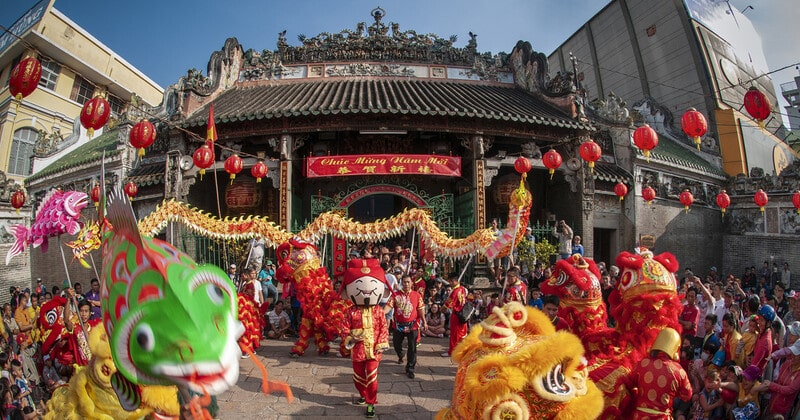
The lion dance is a symbol of luck and community unity in Vietnam
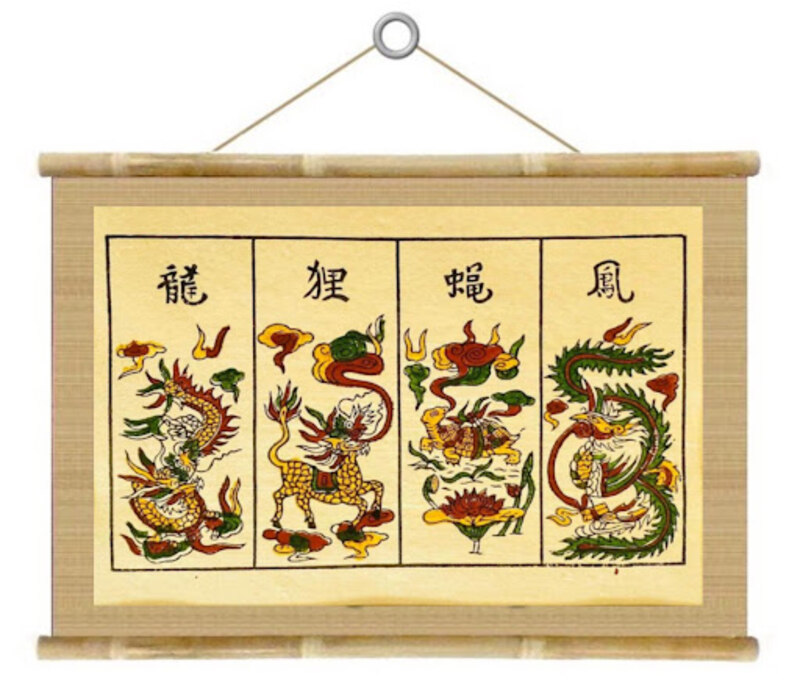
In local folk beliefs, the Lân is enshrined as one of the Tứ Linh (The Four Sacred Animals), alongside the Dragon (Long), Turtle (Quy), and Phoenix (Phụng). Unlike Western dragons or wild beasts that symbolize destruction, the Lân is a purely benevolent guardian spirit. It is believed to tread so softly that it never harms a single blade of grass.
The Tứ Linh layout from left to right: Dragon (Long), Lion/Unicorn (Lân), Turtle (Quy), and Phoenix (Phụng).
When Múa Lân teams perform at a festival, a wedding, or a business opening, they are not simply putting on an acrobatic show. They are actively unleashing an energy of cosmic protection, compassion, good fortune, and longevity into the community. The louder the drums pound, the faster bad luck is driven away, leaving room for prosperity to enter.
The History of Lion dance: From Chinese Roots to Vietnamese Folklore
The historical lineage of the lion dance naturally begins in ancient China, with records stretching back as early as the Han Dynasty (206 BCE–220 CE). Scholars from the Association of Asian Studies suggest that real lions were originally brought to the Chinese imperial court via the Silk Road from West Asia. Since the local population had never seen a live lion, dancers began mimicking the beast's movements using stylized masks. By the Tang Dynasty, it had evolved into a grand ceremonial art form. During the centuries of Chinese domination over Vietnam, this dance crossed the border. However, this is where the textbook history ends, and the distinctively Vietnamese localization begins.
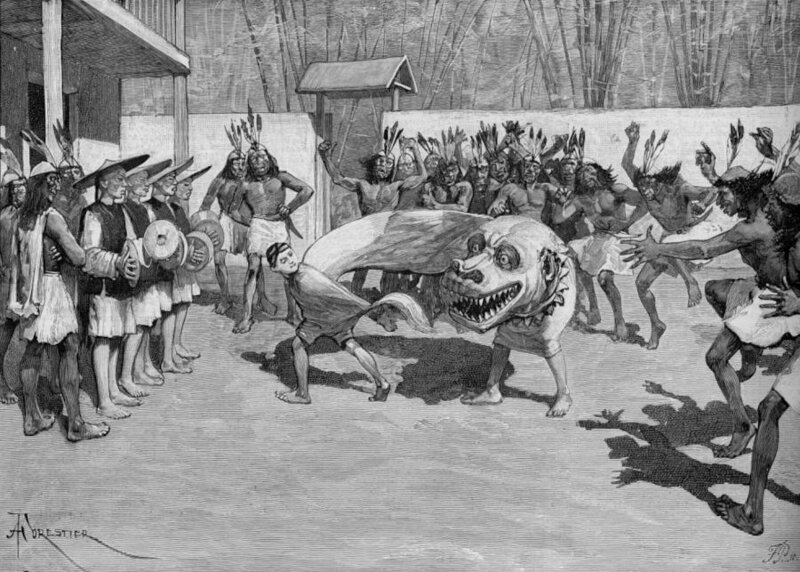
In an 1890 sketch from the Illustrated London News, Chinese immigrants and Taiwanese indigenous people are shown watching a traditional lion dance together.
Instead of copying the foreign court rituals, Vietnamese villagers infused the dance with their own spiritual creativity. They swapped the aggressive, war-like lion of the north for the gentle Lân. In Vietnamese folklore, the Lân does not symbolize raw military power; it represents longevity, extreme compassion, and the arrival of peace.
The Legend of Ông Địa: How the Beast Was Tamed
The most defining moment of "Vietnamese-ing" this art form lies in a beloved village legend involving Ông Địa (The Earth God). According to local myth, the Lân was originally a terrifying, chaotic monster that descended from the mountains to disrupt village life. Seeing the villagers' distress, Ông Địa descended to Earth. Rather than conquering the beast with weapons, the belly-laughing Earth God fed the monster magical herbs from the mountains, completely taming its wild nature.
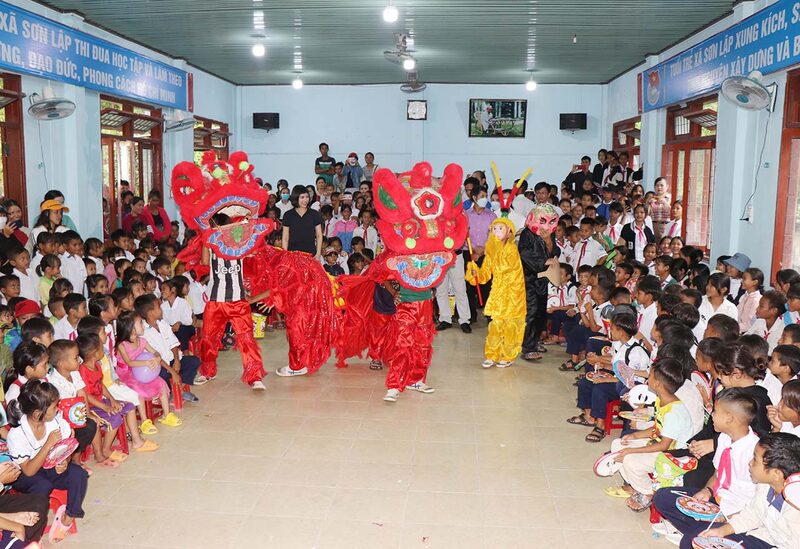
Vietnamese children love to watch lion dance
This mythological transformation explains why modern Vietnamese performances always feature Ông Địa leading the lion with a bamboo fan. Through centuries of cultural adaptation, Múa Lân evolved from a foreign imperial ceremony into a deeply grounded agrarian ritual, enriched with hyper-local drum patterns and a joyful human touch that you will not find anywhere else in the world.
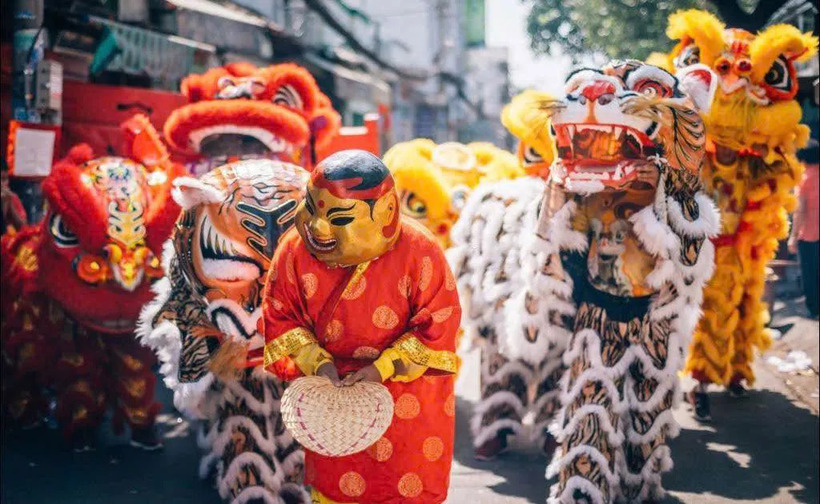
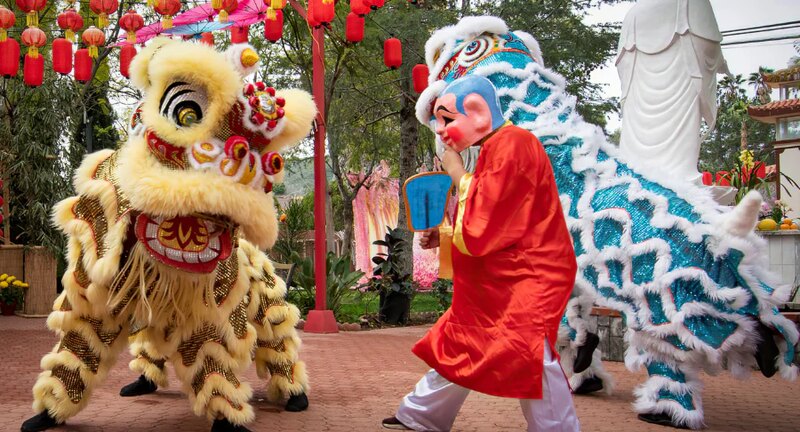
Ông Địa (the Earth God) remains an indispensable, comedic character unique to the Vietnamese lion dance.
Vietnamese vs. Chinese Lion Dance: Key Visual Differences
Many international travelers mistake the Vietnamese Lion Dance for its Chinese counterpart. While they share ancient roots, the Vietnamese version (Múa Lân) has evolved into a completely distinct cultural entity. Here is a quick breakdown to help you spot the differences instantly on the street:
Cultural Element
Vietnamese Lion Dance (Múa Lân)
Chinese Lion Dance (Wu Shi)
Key Companion
Led by Ông Địa (The belly-laughing, barefoot Earth God wielding a bamboo fan).
Led by the Big Head Buddha (Mặt Nạ Phật) or performed without a comedic character.
The Beast's Look
Features the Lân (Qilin), a composite beast with a soft horn, large blinking eyes, and a symbolic mirror on its forehead.
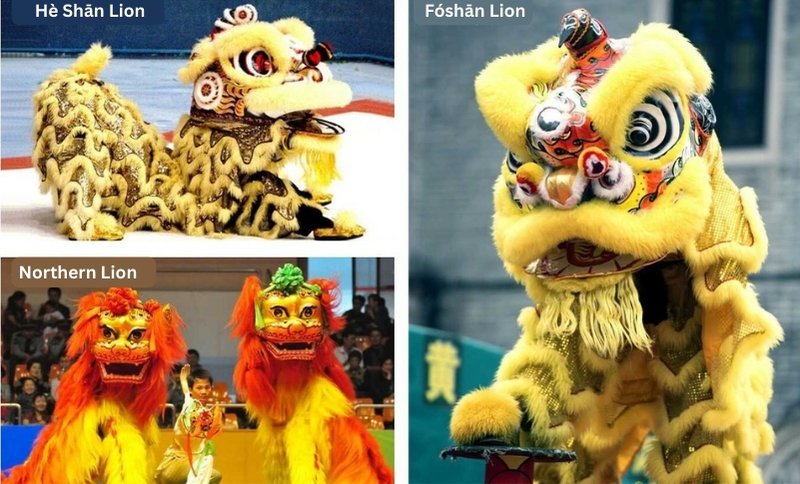
Divided strictly into Northern (resembling a shaggy dog) and Southern styles (sharp horn, aggressive face).
Performance Vibe
Deeply tied to traditional Vietnamese martial arts (Võ Thuật). Rhythms are organic, playful, and highly interactive with the audience.
Focuses heavily on high-flying, dangerous acrobatics and rigid Southern Chinese kung-fu stances.
The 4 Core Elements of a Living Lion Dance Performance
A lion dance in Vietnam is never just a random show. It is a highly structured blend of four essential elements that, when combined, turn the performance into a living celebration of sound, color, and tradition.
1. Costume & The Hidden Mirror on the Forehead
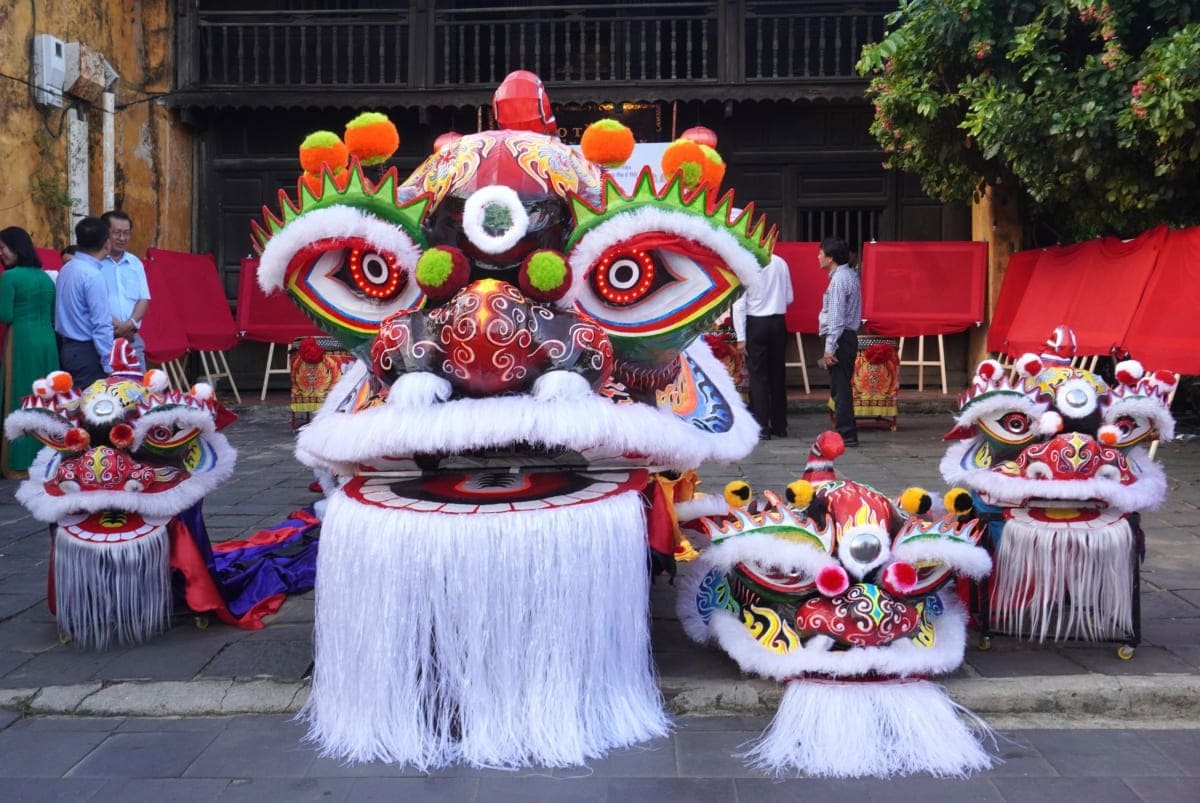
The head of a professional Vietnamese lion is a 5 to 7-kilogram piece of folk art, painstakingly handcrafted from split bamboo frames and layers of painted paper. If you look closely at the lion’s forehead, you will notice a small round mirror. In local spiritual beliefs, this mirror acts as a cosmic shield to reflect away negative energies and evil spirits as the lion blesses a shop or home. Before a new head is used, it must undergo a sacred eye-dotting ceremony (Khai Quang Điểm Nhãn) to "awaken" its protective spirit.
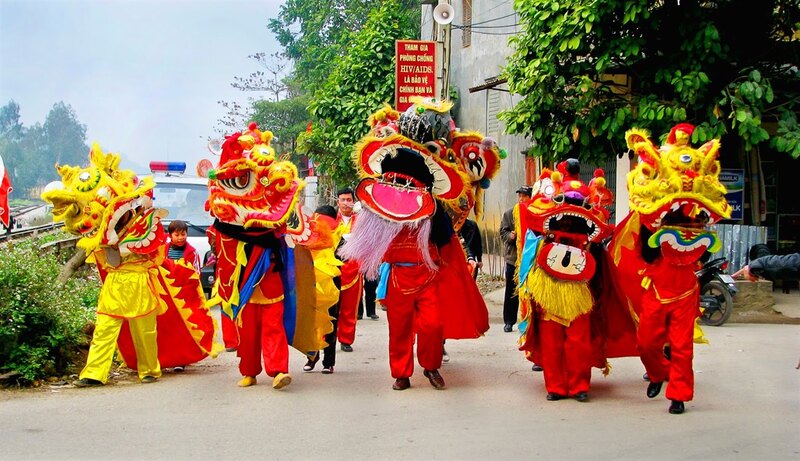
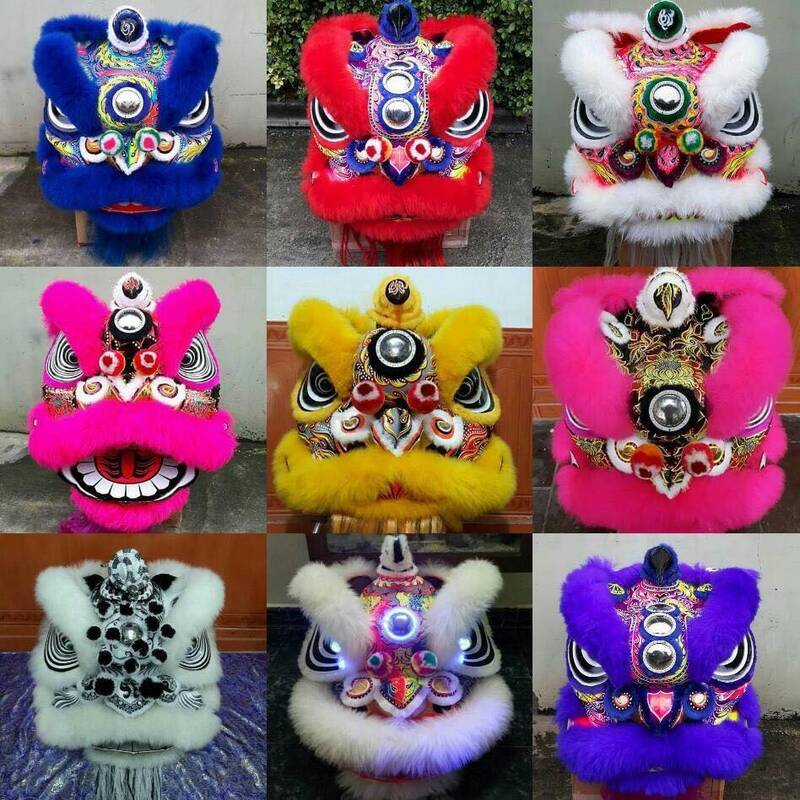
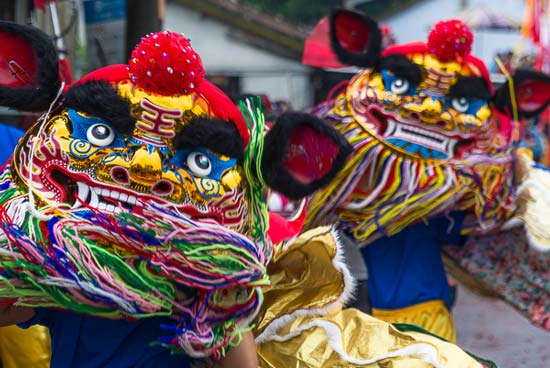
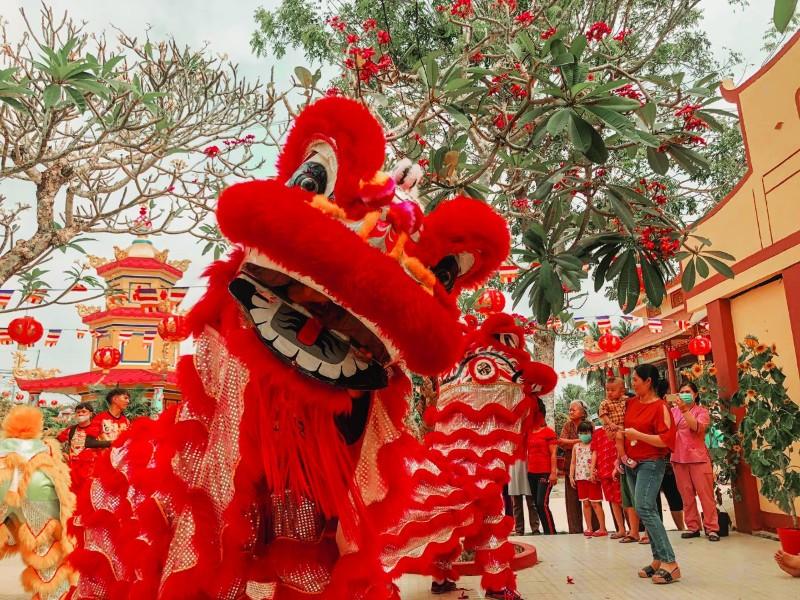
Vietnamese Lion Heads come in a variety of colors and variations.
2. The Rhythmic Music of Võ Thuật (Martial Arts)
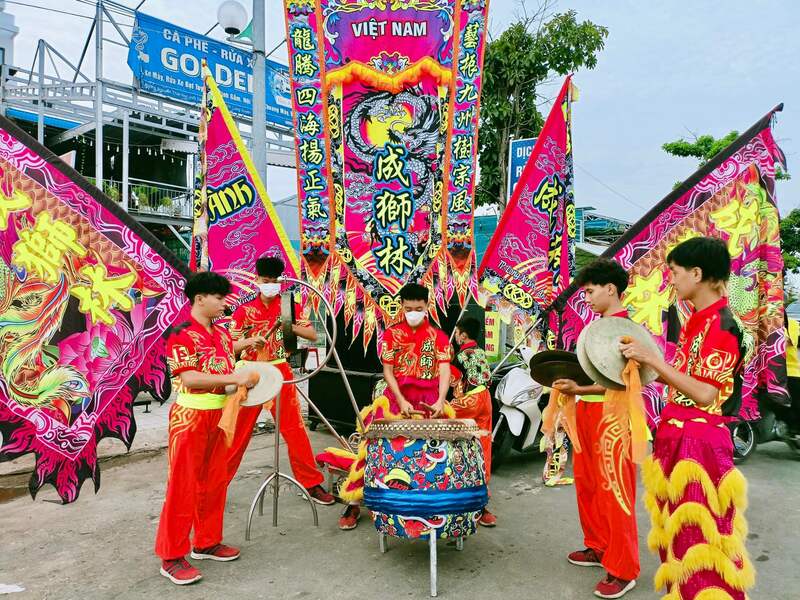
No performance is complete without its heartbeat. The synchronized rhythm of the massive wooden drum, the clash of brass cymbals, and the ringing of chiêng (gongs) drive the entire performance. In Vietnam, these beats are deeply rooted in traditional martial arts (Võ Thuật) training. The drummer acts as the commander, shifting tempos to tell the dancers when to crouch, launch an attack, or sleep.
The drum team coordinates directly with the performers to control the pace of the show.
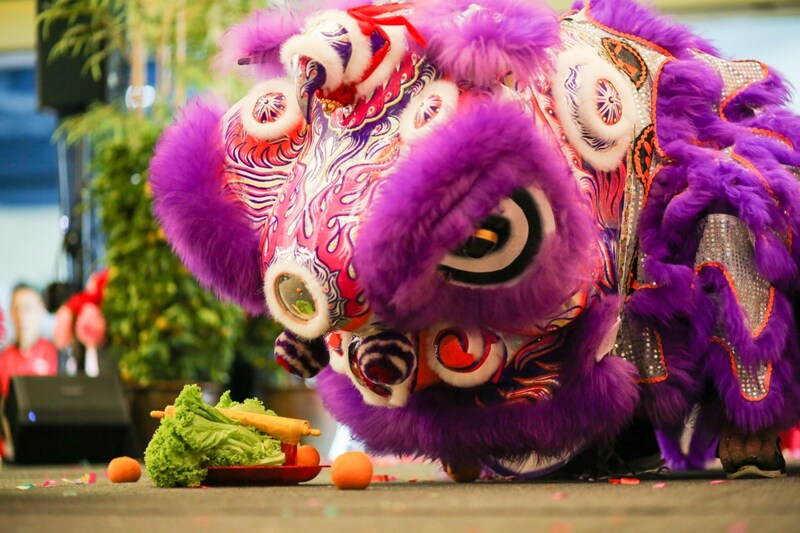
3. The Acrobatics & The "Lettuce Eating" Ritual
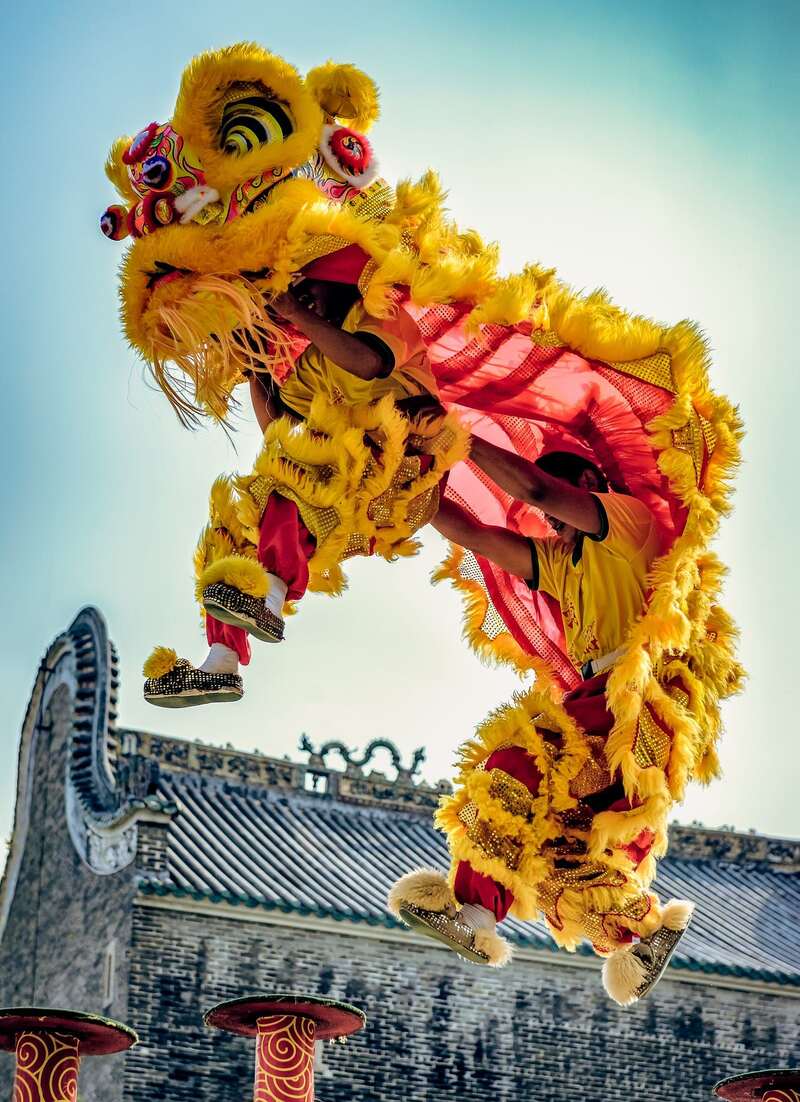
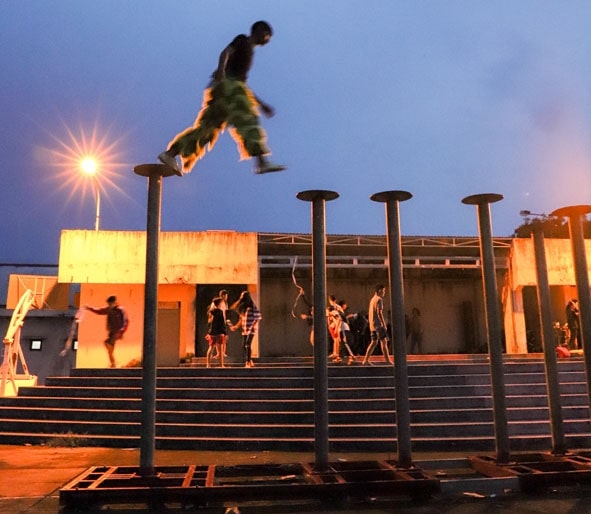
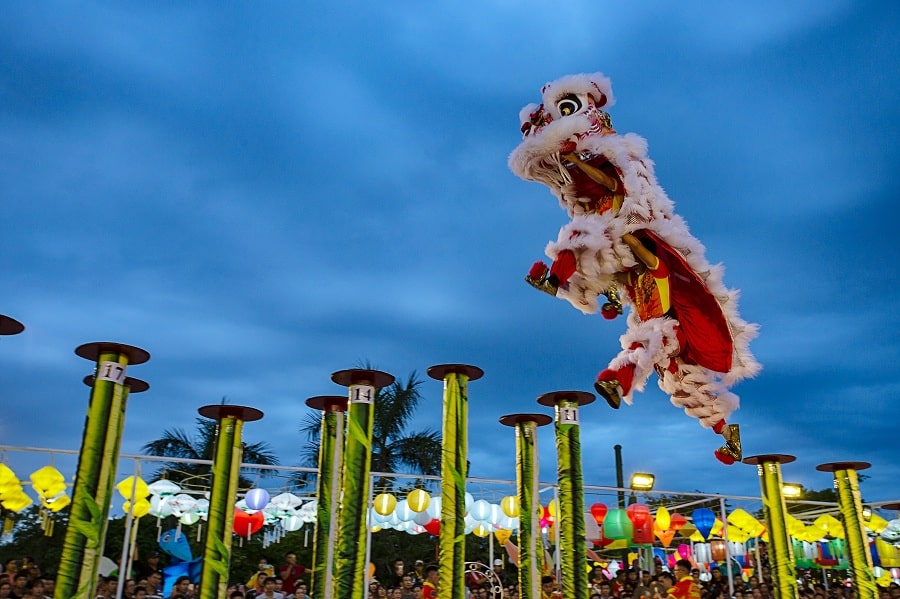
The performance requires flawless teamwork between the "head" and "tail" dancers hidden completely beneath the fabric. They weave martial steps with risky jumps, sometimes balancing on high metal poles. A narrative peak of many corporate shows is the "eating lettuce" act.
Moving across high poles is one of the most difficult skills in Lion Dance.
Why “lettuce eating”?
In the lion dance, the famous “eating lettuce” move (Cai Qing – 採青) carries deep cultural meaning. In Cantonese, the word for lettuce (sang choi, 生菜) sounds the same as sang choi (生財), which means “to generate wealth”. This clever wordplay makes the act a symbolic highlight of the dance, representing prosperity, good fortune, and thriving business.
4. Ông Địa (The Earth God) – The Soul of the Performance
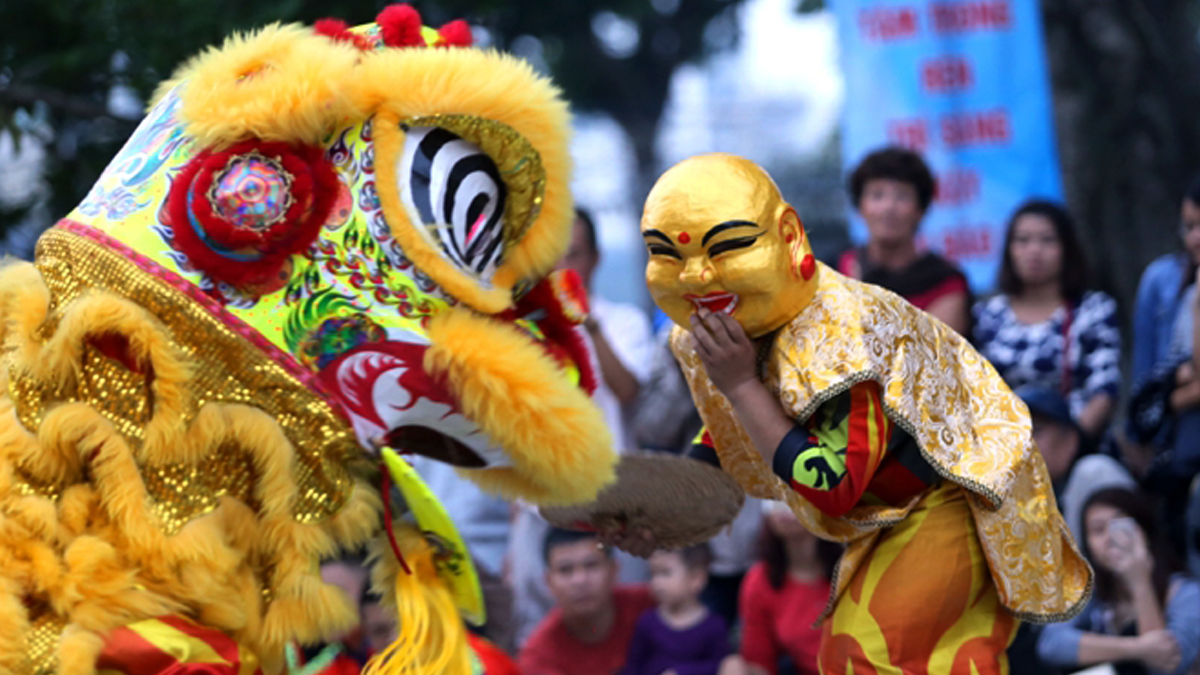
With his round bald head, rubbery grinning mask, and a massive bare belly symbolizing the earth's raw fertility, Ông Địa adds essential humor to the show. He interacts directly with the audience, plays tricks on the lion, and hands out blessings. His comical presence breaks the tension of the dangerous acrobatics, making children laugh and adults smile.
Ông Địa acts as a crucial emotional bridge connecting the crowd to the mythical spirit.
Life Inside a Lion Dance Troupe: The Sweat Behind the Spectacle
Few audiences realize how much physical grit, sweat, and intense sacrifice lie behind the dazzling lion dance shows they see during festivals in Vietnam.
The Daily Grind of Martial Arts Practice
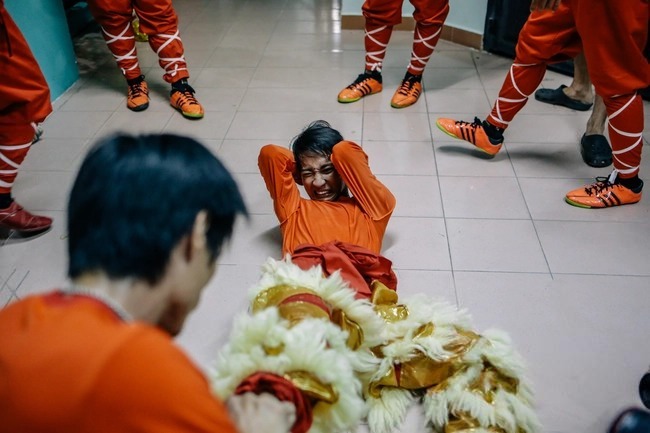
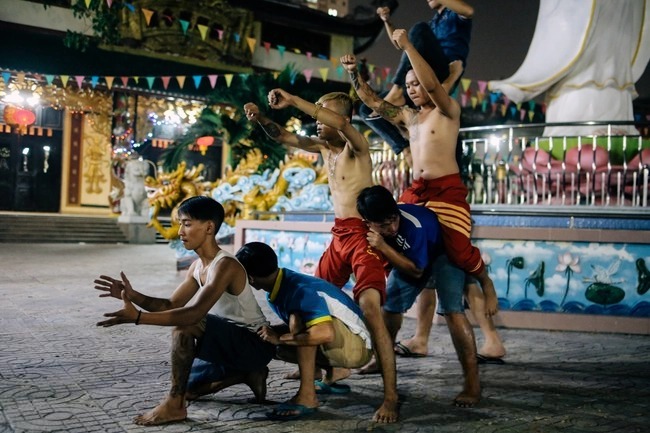
Training usually begins late in the evening when day jobs end and the streets grow quiet. Troupes gather in empty communal courtyards. The lead dancer shoulders the heavy 5 to 7 kg lion head, spinning and crouching continuously, while the tail dancer operates completely blind under layers of thick fabric, matching every stride in perfect synchronization. Because the movements are rooted in martial arts stances (Tấn Pháp), a single missed drumbeat can send both crashing down. Sprained joints, severe bruises, and broken bones are common risks of the job.
When everyone finished their long day, it was time for Khanh and the Lion Dance team to practice.
Earning a Living During Peak Festive Seasons
The ultimate hustle happens during Lunar New Year (Tet Holiday) and the Mid-Autumn Festival. A single troupe can rush through 7 to 10 performances a night, packing giant drums and heavy lion heads onto motorbikes, racing across city streets from dusk until 2:00 or 3:00 in the morning. While event fees sound high on paper, once split among a team of 20 to 30 people and accounting for equipment repairs, the take-home share is modest. Most dancers laugh it off, saying: "It’s like celebrating the New Year while getting paid to sweat."
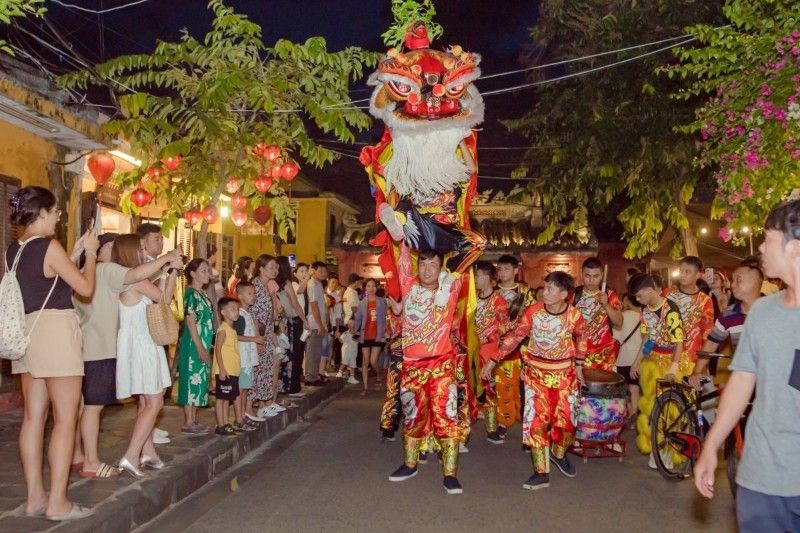
Large-scale Lion Dance event to celebrate the New Year.
To deliver a flawless show, these ordinary young artists pay with sweat and unseen injuries.
Brotherhood Behind the Papier-Mâché Masks
What keeps these teams alive isn't commercial profit; it is a shared passion and deep camaraderie. Dancers, drummers, and Ông Địa performers travel, eat, and suffer together through grueling schedules. Many view it as a lifelong spiritual calling rather than a job. The resilience to stand back up after a dangerous fall and the pride when a neighborhood crowd cheers are the ultimate rewards.
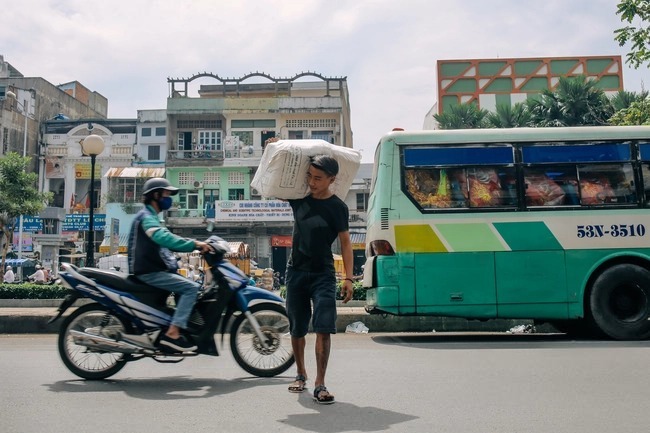
This is Khanh, a professional lion dancer, who works a grueling day job as a manual salesman and porter at a packaging store before practicing 3 hours every night.
Only after completing his regular shifts does Dung have time to practice with his brothers late into the night.
👉 So the next time you watch a lion dance on a busy Vietnamese street, remember: behind those acrobatic jumps and thunderous drums lie months of training, nights of hard work, and the unshakable passion of ordinary people keeping an extraordinary tradition alive. Anyways, you can give them a round of applause, or small red envelopes with some money inside, to thank them for their dedication to art.
Hoo-weeeee
Dragon Dance and Unique Regional Variations in Vietnam
Beyond the standard urban performances, Vietnam's diverse geography and ethnic minority heritage have birthed fascinating, localized variations of this sacred art form.
The Multi-Person Dragon Dance (Múa Rồng)
International travelers often confuse the lion and dragon dances. Here is the easiest visual distinction: while a lion costume requires exactly two performers hidden completely inside the body, the Vietnamese Dragon Dance (Múa Rồng) uses a massive team of 9 to 15 people. Each performer holds a pole attached to a segment of a long, winding dragon body. The performance focuses on sweeping, grand team choreographies that mimic a dragon uon-luon (weaving) through the air to summon heavy rains for a successful harvest.
The Indigenous Lạng Sơn Cat Lion (Múa Lân Mèo)
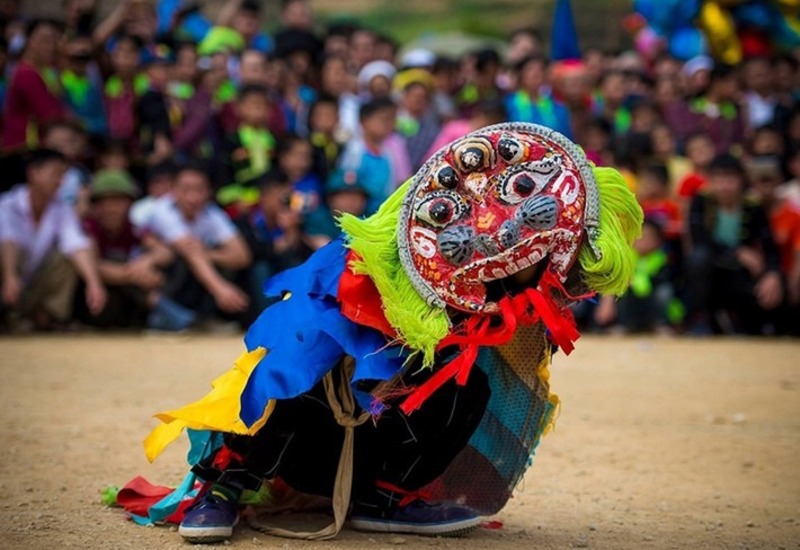
Preserved meticulously by the Tày and Nùng ethnic minority groups in the mountainous border province of Lạng Sơn, this ancient style is officially recognized as a National Intangible Cultural Heritage. The mask features a wild, cat-like face with large eyes and earthy tones. It is performed alongside traditional martial arts weapons to protect remote border villages from wild beasts and negative spirits.
The rare, mountain-born Lạng Sơn Cat Lion (Lân Mèo).
The Mysterious Celestial Dog of Hội An (Thiên Cẩu)
Unique to the historic port town of Hội An, the Thiên Cẩu (Celestial Dog) features a fearsome, single-horned canine head. Requiring up to four synchronized performers, this ancient variation is directly tied to Hội An’s Mid-Autumn Lantern Festival. It reflects centuries of maritime cultural exchange between Vietnamese, Chinese, and Japanese merchants and is performed specifically to swallow evil omens and bless homes with harmony.
The fearsome Celestial Dog (Thiên Cẩu) exclusive to the streets of Hội An.
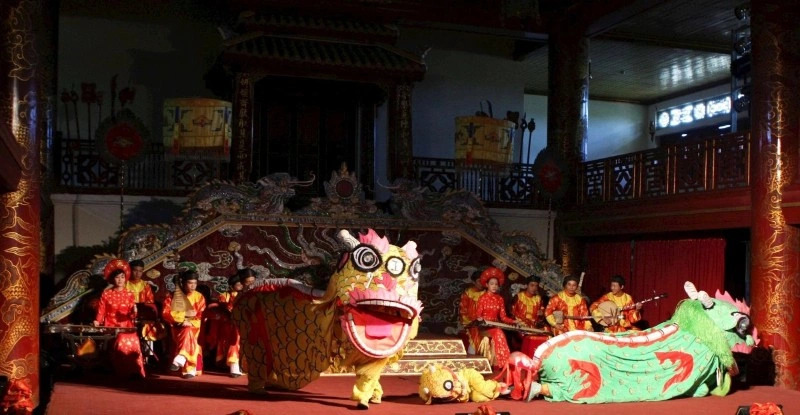
The Regal Hue Royal Court Lion Dance
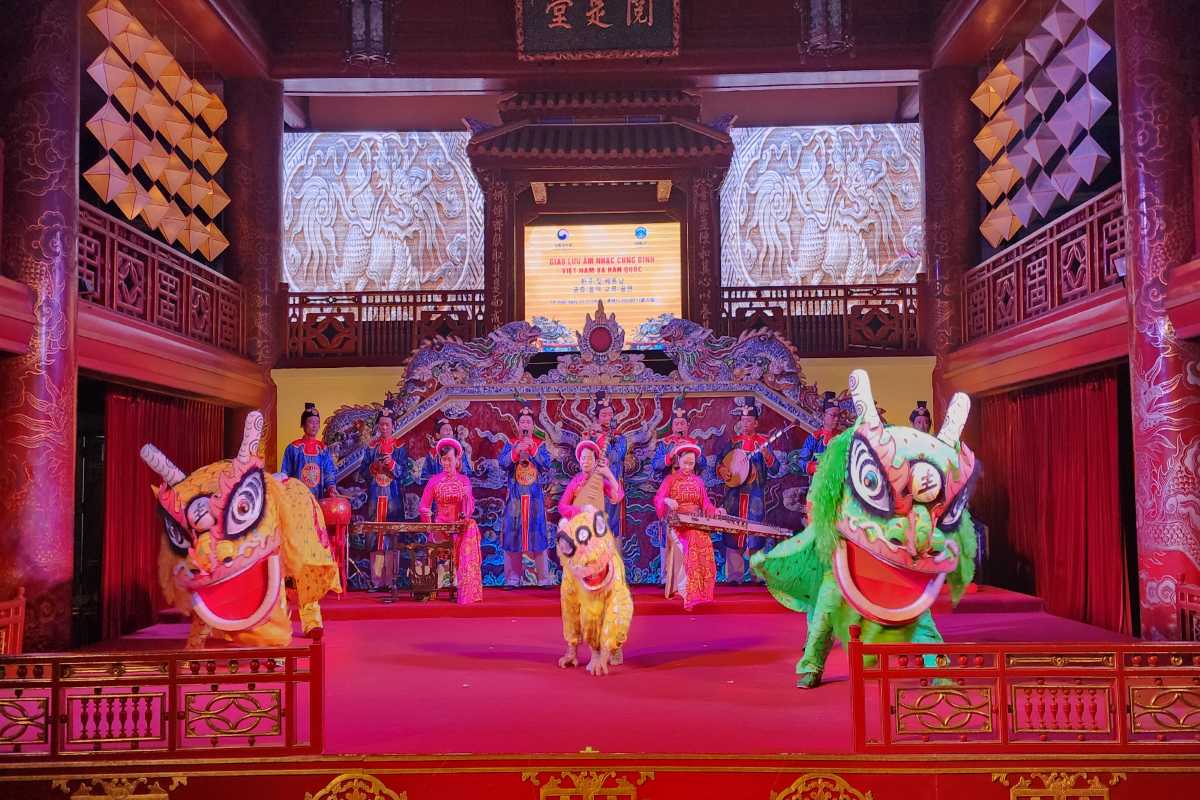
Once performed exclusively for the emperors and royal nobility of the Nguyễn Dynasty, the Hue Royal variation values solemn, elite grace over chaotic street energy. Today, this court ritual is beautifully reenacted during the biennial Hue Festival, giving travelers a portal into imperial Vietnamese heritage.
The elegant, imperial Hue Royal Court Lion Dance reenactment.
Unicorn Dance (Múa Kỳ Lân)
The unicorn, or Kỳ Lân, is another legendary creature in East Asian culture. In Vietnam, the unicorn dance is especially popular within the Hakka community in areas such as Saigon, Đồng Nai, and Bình Dương. The unicorn, with its single horn, symbolizes luck, compassion, and prosperity. It often appears during religious festivals, weddings, and important ceremonies.
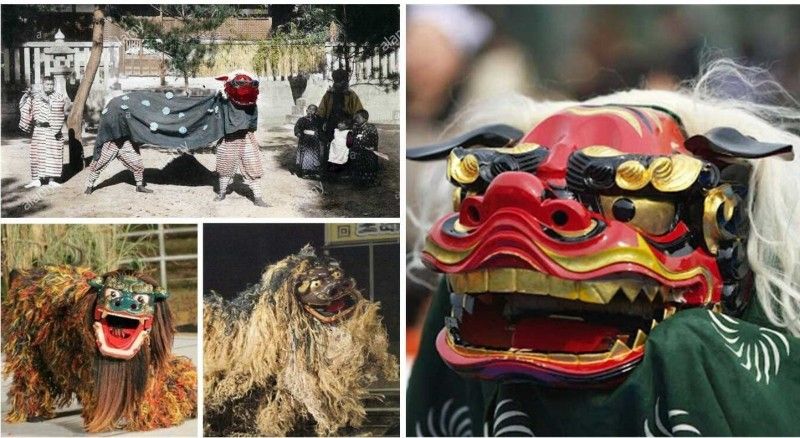
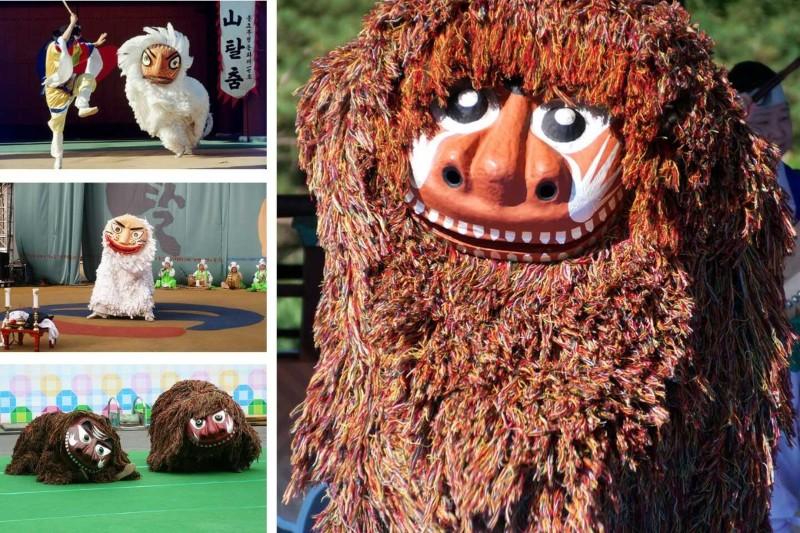
Bonus: Distinct Shapes Across Countries
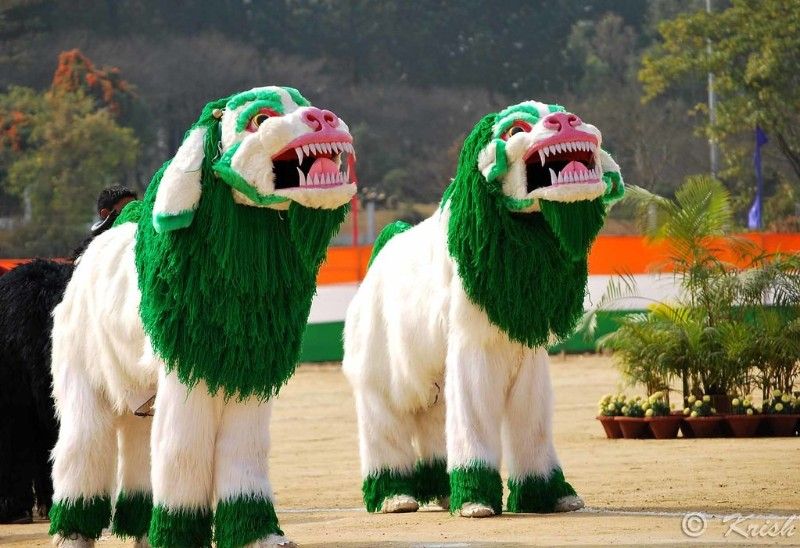
As I mentioned earlier, the lion is a sacred animal in many East Asian countries. The cultural exchange between tribes and kingdoms during the feudal period has shaped each country’s unique identity, reflected in the various lion dance forms. Below are some of the different lion from styles from other countries.
Cultural Etiquette & FAQs for International Travelers
When I was a child, the lion dance felt like pure, unadulterated fun. My earliest memories are wrapped in the thunder of drums, running barefoot alongside other neighborhood kids chasing after the giant lion, and watching elders smile warmly from their doorways. Only much later did I realize that this performance carries a deeper, unbreakable social fabric. Beyond the spiritual blessings, the true magic of Múa Lân lies in its power to bring people together. Its festive rhythm instantly transforms ordinary concrete streets into shared celebrations, strengthening community bonds across generations.
Attending a street performance in Vietnam is exhilarating, but it helps to understand local spiritual boundaries to show proper respect:
Q: Is the Vietnamese lion dance a Buddhist religious ritual?
A: No. While you will frequently see professional troupes performing at Buddhist pagodas during New Year celebrations, Múa Lân is actually a cultural blend of ancient animism, Taoism, and local folklore. It is an inclusive community celebration—meaning everyone, regardless of their personal religious background, is warmly welcome to watch and participate.
Q: Is it okay to touch or pet the lion's head during a street show?
A: No, please avoid this. In local spiritual culture, once a lion head undergoes its eye-dotting ceremony (Khai Quang Điểm Nhãn), it is treated as a consecrated, living spiritual protector. Touching its head or horns without an invitation from the troupe leader is considered disrespectful and is believed to disrupt its protective energy. You can, however, touch the fabric body tail if it brushes past you.
Q: How do I give lucky money (Lì Xì) to the lion?
A: Giving lucky money is a beautiful way to interact with and support the team. Place a small note, ideally 20,000 VND to 50,000 VND (about $1 to $2 USD), inside a red envelope (Lì Xì). Hold the envelope up high in the air. The performers will make the lion spot it, run over, and playfully "snap" it out of your hand with its beak, then bow to thank you for the blessing.
Q: Are drones allowed to capture street performances?
A: Generally, no. Festive street performances draw massive, densely packed crowds. Flying a drone poses a severe safety hazard to the audience and can dangerously distract acrobats performing high-pole jumps (Mai Hoa Thung). For the safety of the performers, capture your memories using a handheld phone or a GoPro on a compact mount.
Conclusion
So, we’ve explored everything you need to know about lion dance in Vietnam. It’s an indispensable art form in East Asia and, especially, in Vietnam. The next time you travel during one of the holidays I mentioned, make sure to witness these incredible dances. They’re an essential part of the cultural identity that no traveler should miss.
So, get a free quote for a tour with Kampá Tour today and dive into the excitement of Vietnamese festivals!
Hey Oliver, great article! Just a quick question; I noticed all the different unicorn heads, whiskers, and colors. Do those variations mean anything, or are they just for looks?
0Reply
Oliver Phung19 Sep 2025
Hello Victor!
That's an interesting question. You're right, each type of unicorn has different shapes, like their whiskers and colors, and they all have their own meanings. I'd be happy to explain this to you.
Just like many other art forms, lion and dragon dances also have a ranking system to distinguish the skill level and class of the dance teams. This ranking system is often shown through the color of the unicorn's whiskers and the number of people participating in the dance.
Ranking by whisker color:
Black whiskers: This is the lowest rank, for newly established lion dance teams or those with less than 10 years of experience.
Black and silver whiskers: This is for lion dance teams that have been active for 10 to 20 years, showing more extensive experience and more skillful dance techniques.
Silver whiskers: This is the highest rank, for lion dance teams that have been active for over 30 years, and they are considered masters in the field of lion and dragon dancing.
I hope the information I provided is enough to satisfy you.
Planning your trip?
Save time and get expert advice for FREE!
✅ 15 years of local experience
✅ Save up to 40 hours of planning
✅ Travel stress-free from start to finish
Book your free consultation today!





 Our team
 Our team
 Our team
 Our team

.jpg)


 Other
Other Add us as a preferred source




Hello Victor!
That's an interesting question. You're right, each type of unicorn has different shapes, like their whiskers and colors, and they all have their own meanings. I'd be happy to explain this to you.
Just like many other art forms, lion and dragon dances also have a ranking system to distinguish the skill level and class of the dance teams. This ranking system is often shown through the color of the unicorn's whiskers and the number of people participating in the dance.
Ranking by whisker color:
I hope the information I provided is enough to satisfy you.